
Packaging Insights
Long before a customer uses a product, they may already have formed an impression based on how it is presented. Understanding how packaging affects customer experience helps businesses create packaging that is practical, presentable, easy to handle, and appropriate for the product and occasion.
Packaging influences several parts of the customer journey — from the first visual impression and the moment a product is received to opening, handling, and storing the packaging afterward. A well-chosen box or bag can support product protection and presentation, while poorly sized or unsuitable packaging can create unnecessary frustration.
This guide explains how packaging influences customer experience, including its impact on customer perception, buying decisions, satisfaction, unboxing, and brand experience. It also covers practical considerations businesses can use when selecting packaging for retail and gifting.
Quick Takeaways
✔ Packaging contributes to the first impression of a product
✔ Appropriate packaging can support product presentation and perceived quality
✔ Consistent packaging can reinforce recognition across customer touchpoints
✔ The unboxing moment can influence satisfaction with the overall experience
✔ Poor sizing, protection, or presentation can create unnecessary customer frustration
✔ Material and sustainability choices can influence how customers perceive a business
Why Packaging Is Part of the Customer Experience
Customer experience doesn’t begin only when a product is used. It can start when a customer first sees the packaging, receives the product, picks it up, or opens it. For many retail and gifting purchases, packaging is one of the first physical elements through which a customer interacts with the product.
This makes packaging an important supporting part of the overall experience. The right packaging can help protect the product, make it easier to carry or open, and present the contents in an organized way. On the other hand, packaging that is too small, difficult to open, poorly secured, or unsuitable for the product can create unnecessary friction.
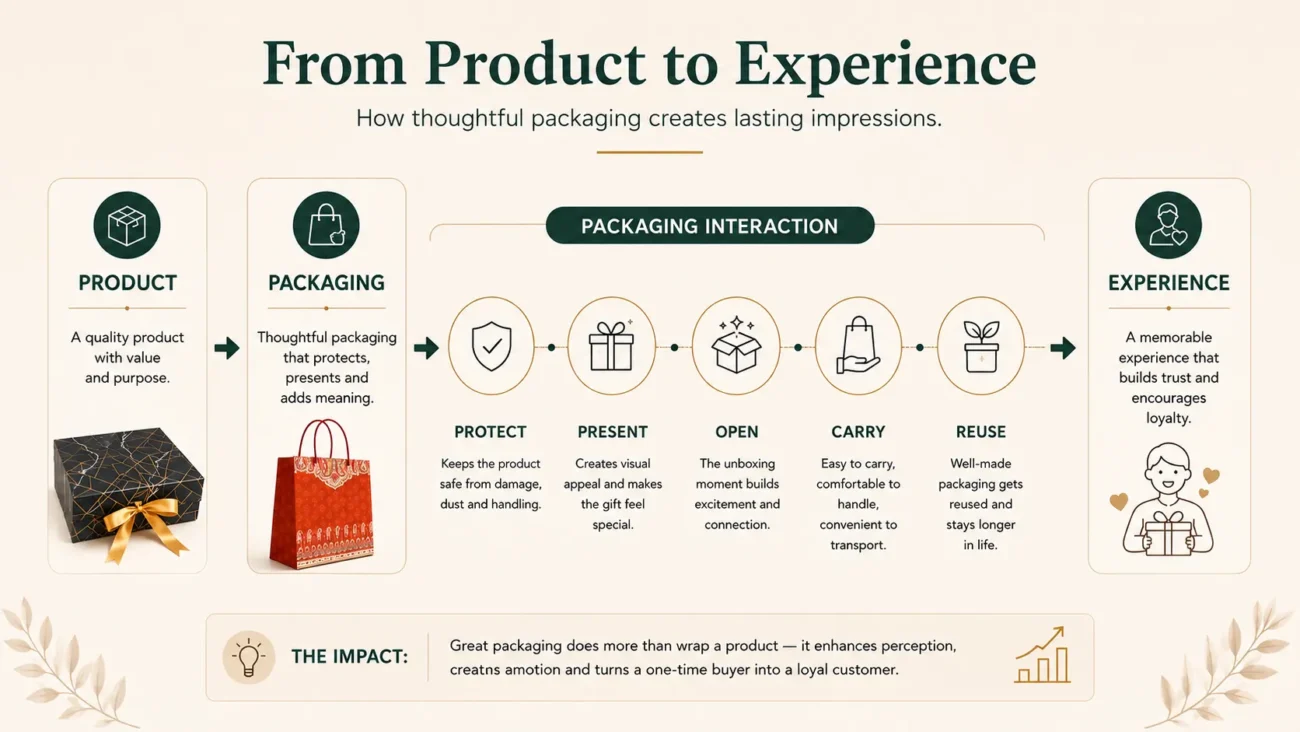
The relationship between packaging and customer experience is therefore not simply about appearance. It involves several practical factors:
- Protection — packaging should help keep the product secure during handling and transport.
- Presentation — the packaging should present the product appropriately for its purpose and occasion.
- Ease of use — customers should be able to open, carry, and handle the packaging without unnecessary difficulty.
- Consistency — businesses benefit when packaging quality and presentation remain consistent across orders.
- Appropriateness — the box, bag, or wrapping should suit the product, quantity, occasion, and intended use.
For gifting businesses and retailers in particular, these details can influence how customers perceive the overall purchase rather than viewing packaging as something separate from the product. Packaging can influence the initial impression a customer forms before the gift or product is even opened. Understanding why packaging matters for first impressions in gifting provides a closer look at this relationship.
How Packaging Influences Customer Experience at Every Stage
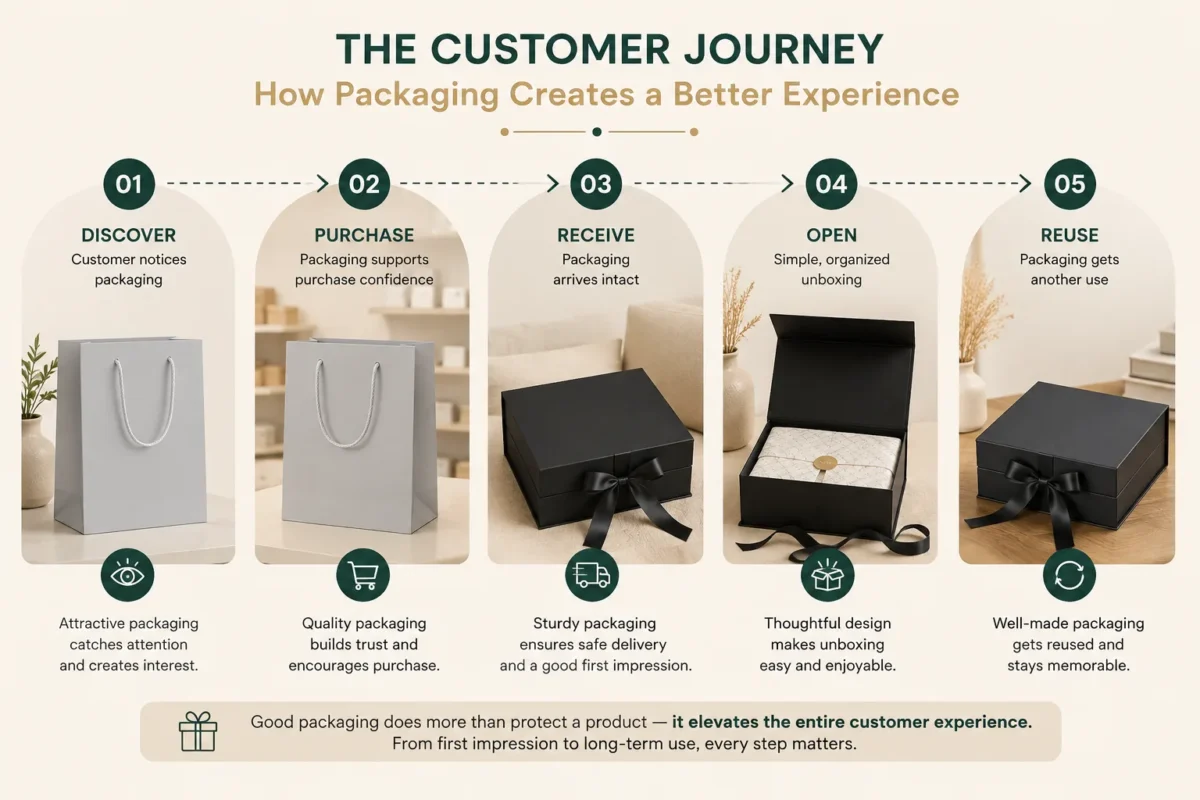
The way how packaging influences customer experience works can be understood by looking at the different points where customers interact with packaging.
- Discovery — In a retail environment, packaging can help a product attract attention and communicate what type of product or gift it contains. Color, shape, material, and overall presentation can make packaging easier to recognize and distinguish from surrounding products.
- Purchase — Packaging can reinforce confidence when it appears appropriate for the product and intended use. For gifting purchases, customers may also consider whether the packaging is suitable for presenting the gift directly or whether additional wrapping will be required.
- Receiving — The condition of the packaging when the customer receives the product matters. A box or bag that arrives damaged, crushed, or poorly handled can create a negative impression even when the product itself remains usable.
- Opening — The opening experience is where packaging becomes a direct physical interaction. A secure closure, clean presentation, and appropriately arranged contents can make opening a product or gift feel straightforward and satisfying.
- After use — Packaging can continue to influence the experience after the initial purchase. Reusable boxes and bags may find a second use for storage, gifting, or organizing small items, extending their practical value beyond the original transaction.
This makes packaging more than an outer covering. It can support the customer experience at multiple stages, provided that the packaging is appropriate to the product and purpose.
Packaging and Customer Perception
Packaging and customer perception are closely connected because packaging is often one of the first physical elements a customer sees and handles. Before using a product, customers can form impressions based on factors such as the packaging’s material, structure, appearance, and overall condition. Several packaging elements can contribute to how a product is perceived:
- Material and construction — A well-constructed box or bag can communicate that the packaging has been selected appropriately for the product and its intended use.
- Visual presentation — Clean layouts, balanced colors, patterns, and neat finishing can make the overall presentation feel more organized and considered.
- Color and design — Different colors, patterns, and design styles can create different associations depending on the product, occasion, and target audience.
- Packaging condition — Torn bags, crushed boxes, loose handles, or damaged surfaces can negatively affect the impression created by an otherwise well-presented product.
- Consistency — Businesses that use consistent packaging formats and visual elements across their products can create a more recognizable and predictable customer experience.
- Packaging should therefore support the product rather than compete with it. For gifting and retail, the box or bag should be appropriate to the product’s size, purpose, and occasion while providing a clean and practical presentation.
The perception created by packaging is not determined by decorative elements alone. Structure, material, usability, protection, and presentation all work together to influence how customers interpret the overall purchase. The choice of box structure can also affect how a product is presented. Businesses comparing different formats can refer to this guide to different types of gift boxes when evaluating rigid, foldable, and magnetic-closure options.
Packaging Impact on Buying Decisions
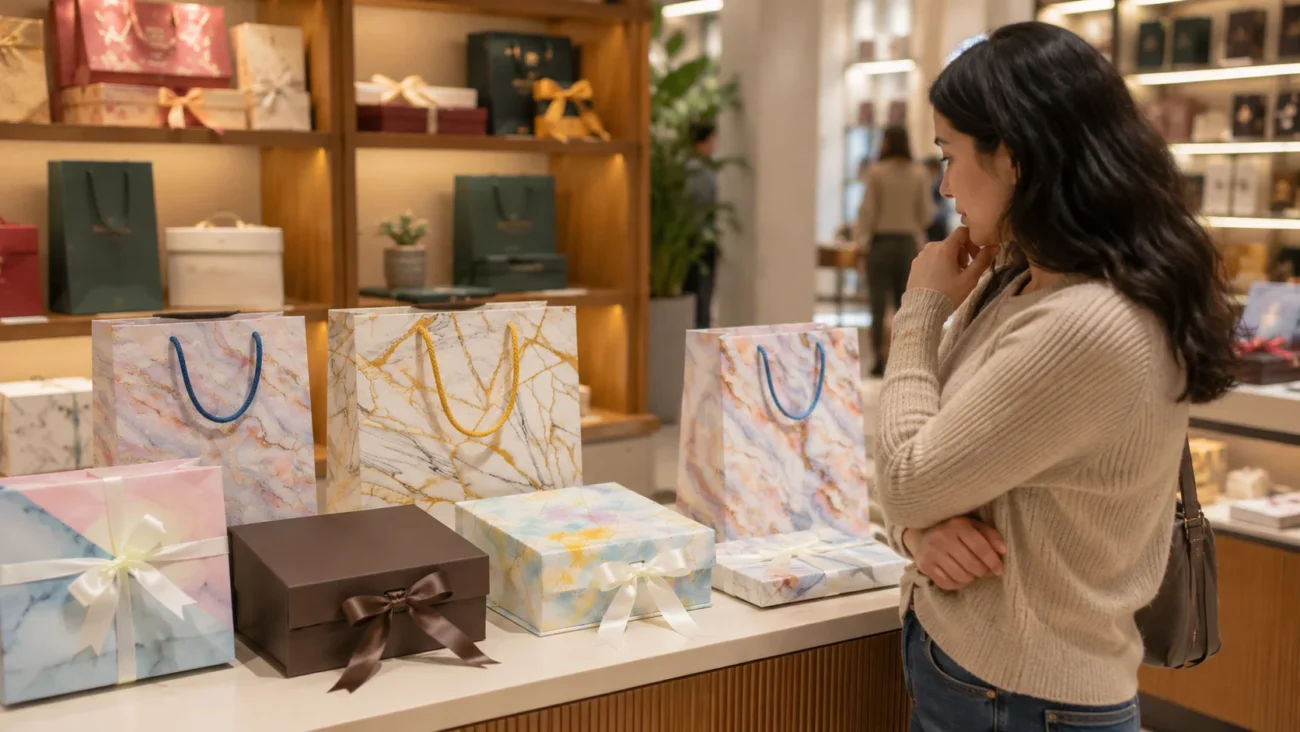
Packaging can influence a customer’s decision before they have had an opportunity to evaluate the product itself. In retail environments, customers often encounter several similar products at the same time, making packaging presentation, clarity, and overall condition important parts of the initial decision-making process.
Choosing the right gift box size for different products can also make the purchasing and gifting process easier, particularly when the packaging needs to accommodate the product securely without excessive empty space.
The packaging impact on buying decisions is particularly noticeable when customers are comparing products, choosing gifts, or purchasing from an unfamiliar business.
- First impression : Clean, well-presented packaging can create an immediate sense of care and reliability, while damaged, poorly assembled, or inconsistent packaging can create doubt.
- Shelf and display appeal : Packaging that is visually clear and appropriate for the product can help attract attention when several products are displayed together.
- Purchase confidence : A properly constructed box or bag can reassure customers that the business has considered how the product will be handled, presented, and protected.
- Gift suitability : For products purchased as gifts, packaging becomes part of the overall offering. A suitable gift box or paper gift bag can make the product easier to present without requiring additional packaging.
- Product expectations : The size, structure, material, and presentation of packaging can influence what customers expect from the product inside. Packaging should therefore create an appropriate expectation rather than overpromise.
- Ease of purchase : Practical packaging can also make the buying process easier. A correctly sized gift box, convenient paper bag, or secure closure can reduce the need for additional wrapping or handling.
Customers may also benefit from understanding the different types of gift boxes available, since rigid, foldable, and magnetic-lid constructions serve different presentation and storage needs.
For retailers and gifting businesses, the goal is not simply to make packaging stand out. It is to ensure that the packaging supports the product, communicates the right level of quality, and makes the purchase feel straightforward and reliable.
Packaging and Customer Satisfaction
Packaging and customer satisfaction are closely connected because packaging affects several parts of the customer’s experience before and after they receive a product. A package that protects the contents, is easy to handle, and presents the product neatly can create a smoother overall experience.
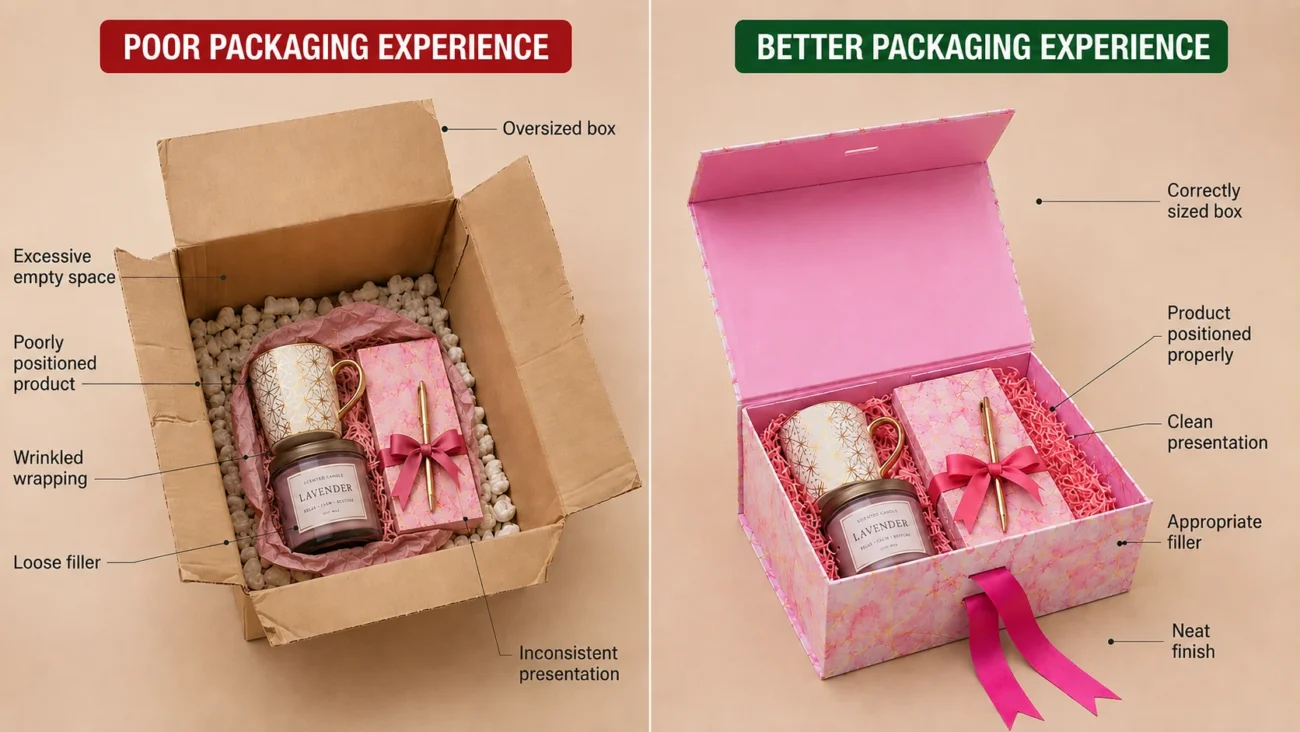
On the other hand, packaging that is damaged, difficult to open, poorly sized, or unsuitable for the product can create frustration even when the product itself is good.
Several packaging factors can influence customer satisfaction:
- Product protection — A suitable box or bag helps protect the product from unnecessary damage during handling, storage, and delivery. This is particularly important when packaging is being used for fragile or delicate items.
- Ease of opening — Packaging should be practical to open without requiring excessive force, complicated steps, or unnecessary handling. A straightforward opening experience reduces friction for the customer.
- Proper sizing — Packaging that fits the product appropriately looks more organized and can reduce unnecessary movement inside the package. Choosing the right size also helps businesses avoid excessive packaging material.
- Neat presentation — Clean folds, secure closures, properly positioned products, and an uncluttered presentation can contribute to a more positive first impression.
- Consistent packaging — For retailers and businesses, using consistent packaging across orders can make the customer experience more predictable and recognizable. This becomes especially useful when customers purchase from the same business repeatedly.
- Suitable packaging for the occasion — Gift packaging has an additional responsibility because the packaging itself forms part of the gift presentation. A suitable gift box, paper bag, or wrapping paper can make the handover feel more complete.
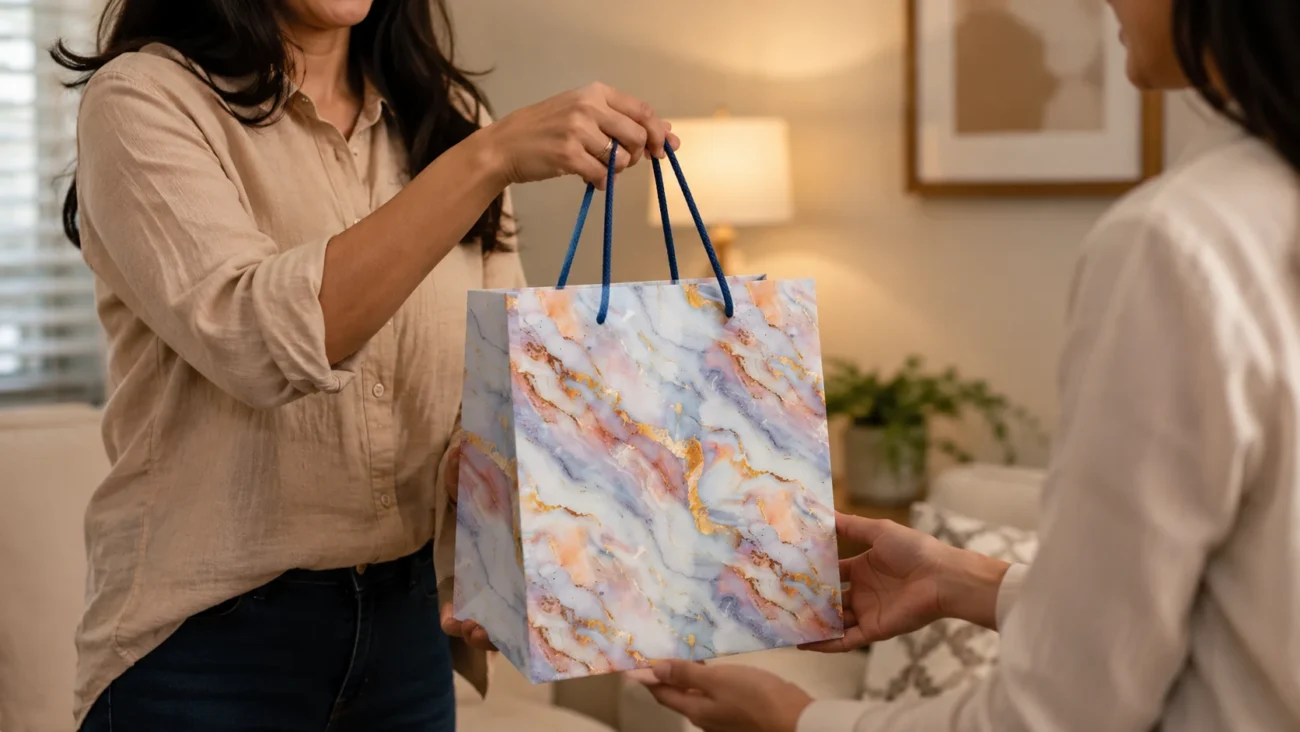
For businesses, customer satisfaction is not only about how the product performs. Packaging also contributes to how smoothly the product is received, opened, handled, and presented.
Businesses can also improve customer satisfaction by avoiding common issues such as incorrect sizing, weak packaging materials, poor presentation, and insufficient protection; these are among the common gift packaging mistakes that can negatively affect the customer experience.
Product Packaging and the Unboxing Experience
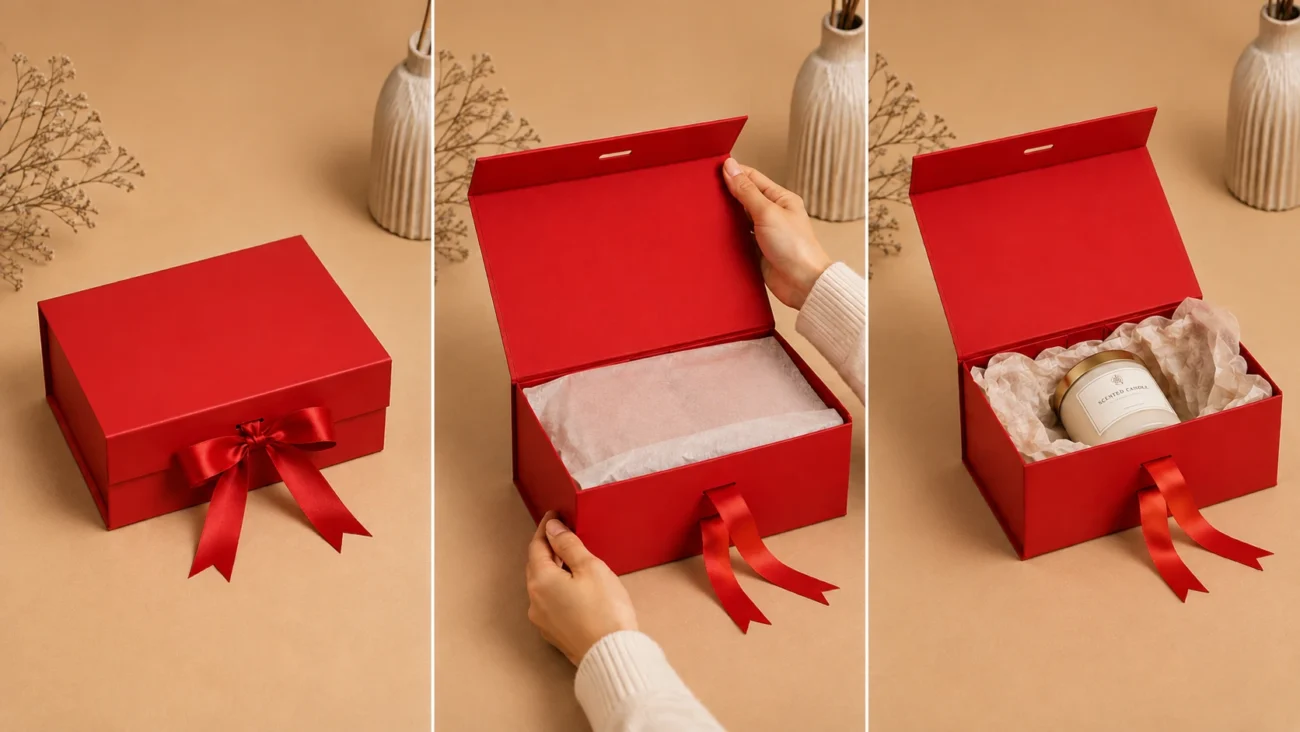
Product packaging and customer experience come together most visibly during the unboxing process. The moment a customer opens a package is often their first direct interaction with the product, so the way the packaging opens, holds the product, and presents its contents can influence their overall impression.
A good unboxing experience does not necessarily require complicated packaging. It comes from making the opening process simple, secure, and visually organized.
Several elements contribute to a better unboxing experience:
- Anticipation — Packaging creates the first moment of interaction before the product is revealed. A well-presented box or bag can build interest while keeping the opening process straightforward.
- Ease of opening — A secure closure should still be practical to operate. Features such as a properly functioning magnetic lid can make opening and closing a box simple without adding unnecessary steps.
- Product presentation — How the product sits inside the packaging matters. Excessive empty space, loose contents, or poorly arranged items can make the package feel less organized, while appropriate sizing and positioning create a cleaner presentation.
- Protection during opening — Packaging should keep the product secure without making it unnecessarily difficult to remove. For fragile or delicate products, suitable internal protection can be particularly important.
- Overall appearance — Clean surfaces, properly assembled packaging, and coordinated presentation can influence how customers perceive the care taken with the product.
- Reusability — Some sturdy gift boxes can be retained and reused for storage or future gifting, allowing the packaging to remain useful after the initial product has been removed.
For businesses, the goal should be to create an unboxing process that feels easy, organized, and appropriate for the product. A well-executed unboxing experience can support customer satisfaction without relying on excessive decorative elements or complicated packaging.
Packaging and Brand Experience
Packaging and brand experience are deeply connected, since packaging is one of the few brand touchpoints a customer physically holds.
- Visual identity reinforcement — consistent colors, patterns, and finishes across packaging reinforce brand recognition
- Tone and personality — packaging choices communicate a brand’s personality just as much as its marketing copy does
- Memorability — distinctive packaging is more likely to be remembered and associated with a specific brand over time
- Trust building — consistent, high-quality packaging across every purchase builds a track record of reliability in the customer’s mind
For businesses building long-term recognition, packaging often communicates brand identity as effectively as logos or marketing materials — sometimes more so, since it’s physically experienced rather than simply seen.
Packaging and Consumer Behavior
Packaging and brand experience are closely connected because packaging is one of the physical touchpoints through which customers interact with a business. While the product remains the main part of the purchase, consistent and suitable packaging can reinforce how customers perceive the business before they use the product.
For retailers, maintaining consistent packaging across products can also make day-to-day presentation easier to manage; organized gift packaging for retail stores can help businesses maintain consistency while handling different products and gifting occasions.
For retailers and For retailers and businesses, packaging can contribute to the overall brand experience in several practical ways:
- Consistency across purchases — Using the same packaging styles, colors, or formats across orders can create a more consistent experience for returning customers.
- Visual recognition — Packaging that follows a recognizable visual style can help customers associate the presentation with a particular business, especially when the same packaging is used repeatedly.
- Product presentation — A box or bag that is appropriately sized, clean, and properly assembled helps present the product in an organized way. This supports the overall impression customers form about the business.
- Reliability — Consistent packaging quality can help businesses create a more predictable customer experience. Customers are less likely to encounter major differences in presentation from one purchase to another.
- Occasion and product fit — Packaging should make sense for what is being sold and how it is being given. Gift boxes, paper gift bags, and wrapping paper can each serve different presentation requirements depending on the product and occasion.
- Practicality — Brand experience is not only about appearance. Packaging that is easy to carry, open, store, and handle can make the customer’s interaction with the product more convenient.
For businesses, this means packaging does not need to be complicated to support a strong brand experience. Consistency, appropriate product presentation, reliable construction, and practical usability can all contribute to how customers remember and evaluate a business.
Packaging Aesthetics: What Shapes Perceived Quality
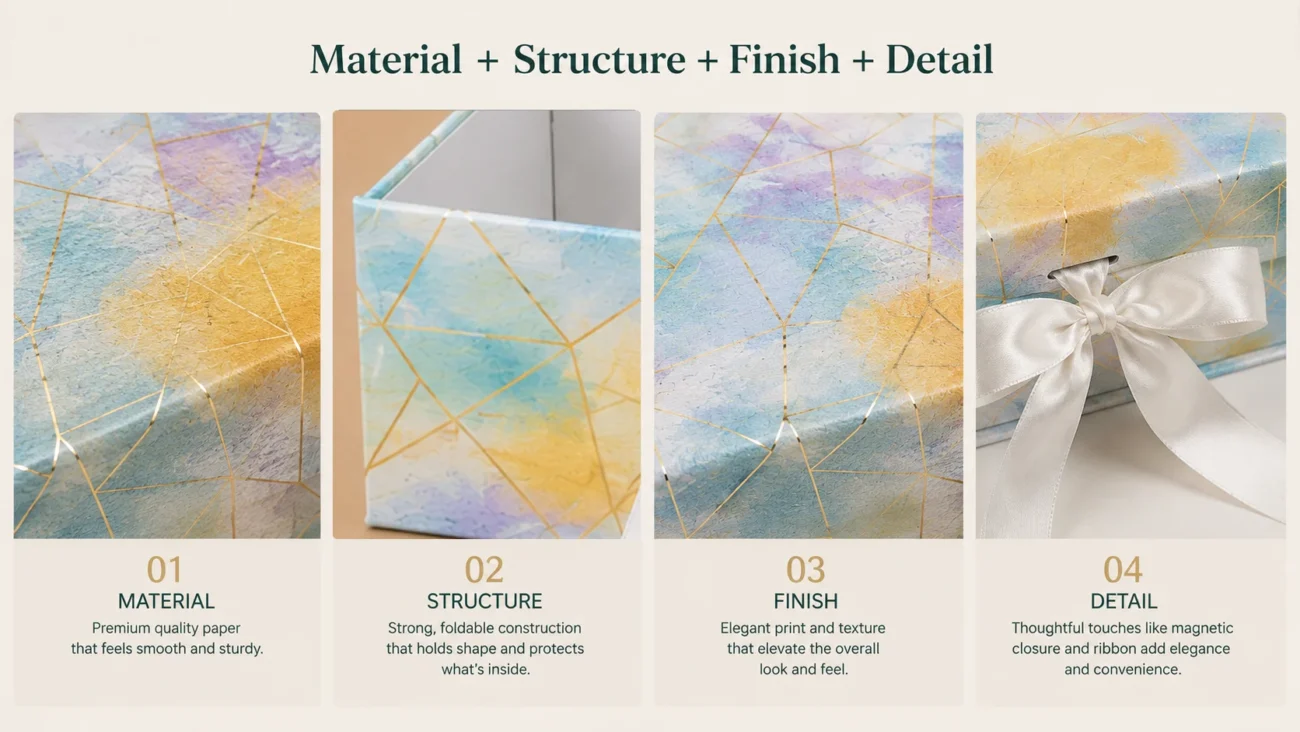
Packaging aesthetics influence how customers initially perceive a product. Before they use what’s inside, customers can notice the packaging’s color, material, shape, finish, and overall presentation. When these elements work together, they can make the product appear more organized and carefully presented.
Several factors contribute to the peSeveral factors contribute to the perceived quality of gift packaging:
- Clean and balanced design — Packaging that is visually organized and free from unnecessary elements is generally easier to understand and appreciate. A clear layout can help the product remain the main focus.
- Material appearance — The appearance and feel of paperboard, paper bags, and other packaging materials contribute to the overall presentation. A suitable material should also match the product and the way the packaging will be handled.
- Color and pattern — Color can influence the overall tone of packaging. For example, different colors and decorative patterns can make packaging feel more appropriate for festive gifting, personal occasions, or business-related gifting.
- Shape and structure — The physical form of a box or bag affects how the product is presented. A properly structured gift box can help maintain a neat appearance, while an appropriately sized paper bag can make carrying and presentation easier.
The physical form of a box or bag affects how the product is presented. For businesses using boxes for retail or gifting, understanding how gift boxes improve product presentation can help when selecting packaging for different products. - Surface finish — Matte, glossy, textured, or printed surfaces can create different visual impressions. The important consideration is whether the finish suits the packaging format and intended use.
- Small construction details — Neat folds, properly aligned edges, secure closures, and well-attached handles can contribute to the overall impression of packaging quality.
These elements do not need to be elaborate to be effective. Good packaging aesthetics are primarily about choosing visual and structural elements that work together and suit the product, occasion, and intended customer.
For businesses, this is particularly important because packaging often becomes part of the product presentation. A consistent and well-maintained packaging style can help create a more organized customer experience without relying on excessive decoration.
Sustainable Packaging and Customer Expectations
Sustainable packaging is becoming an important consideration for businesses that want to reduce unnecessary material use while still maintaining practical product protection and presentation. For gift packaging, sustainability is not simply about choosing a particular material; it also involves using the right amount of packaging and considering what happens to it after use.
Several factors can influence how packaging aligns with sustainability expectations:
- Material efficiency — Using packaging that is appropriately sized for the product can reduce unnecessary material and empty space. Oversized boxes and bags may require additional filler and take up more storage and transport space.
- Recyclable materials — Paper and paperboard packaging can often be recycled through appropriate recycling systems, depending on the material composition, coatings, adhesives, and local recycling facilities. Businesses should therefore check the specifications of the packaging they source rather than assuming every paper-based product is automatically recyclable.
- Reusability — Some sturdy gift boxes and paper bags can be reused for storage, gifting, or other purposes after their initial use. Reusing packaging can extend its useful life before disposal.
- Reducing unnecessary components — Excessive decorative elements, additional layers, or materials that serve little practical purpose can make packaging more difficult to manage after use. Keeping the packaging functional and appropriately designed can help reduce unnecessary material.
- Packaging-to-product fit — Sustainable packaging should still protect and present the product effectively. Reducing material at the expense of product protection can create additional waste if products become damaged during handling or delivery.
- Clear material information — Businesses sourcing packaging for retail or gifting should understand what materials, coatings, and components are used so they can communicate disposal or recycling information accurately where appropriate.
For businesses, the most practical approach is to balance product protection, presentation, material use, and end-of-life considerations rather than treating sustainability as a separate feature. The goal is not simply to use less packaging. It is to use appropriate packaging that performs its purpose without unnecessary material or components. Businesses comparing packaging materials can also consider the practical differences between paper gift bags and plastic bags, including their use, durability, and disposal considerations.
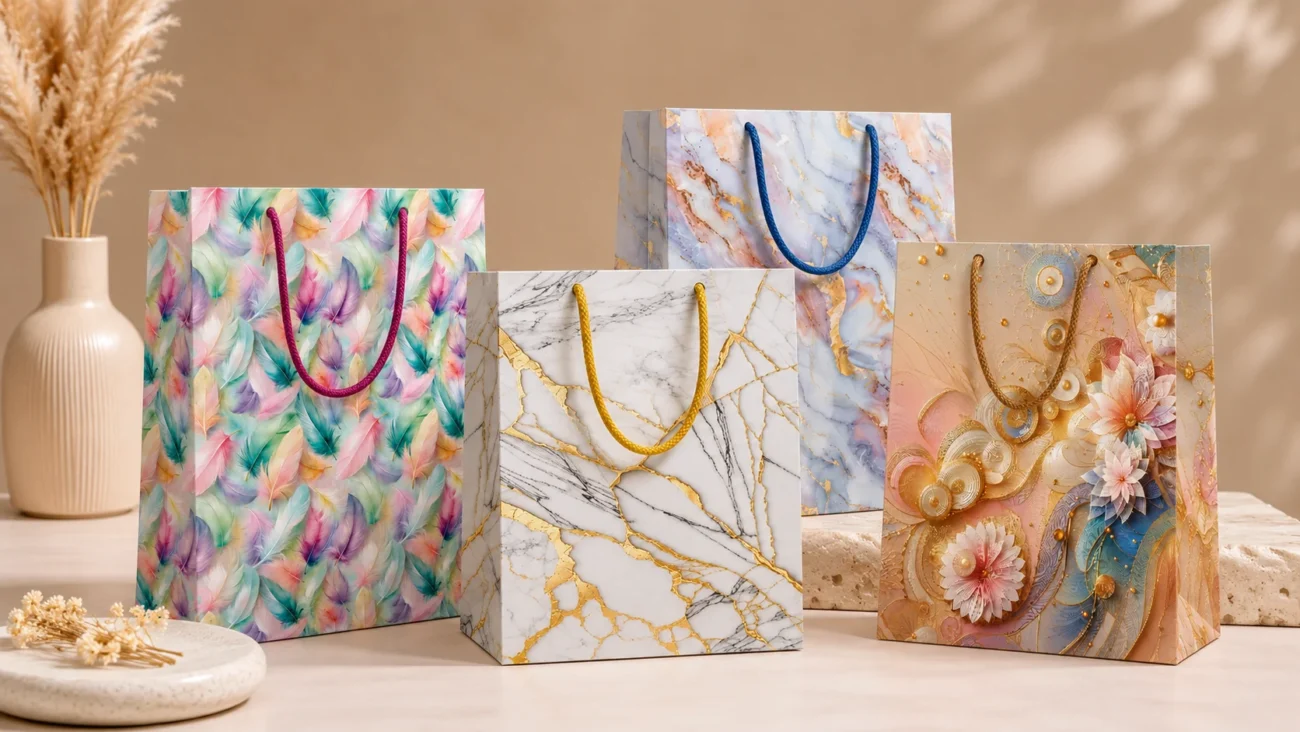
How Businesses Can Improve Customer Experience Through Packaging
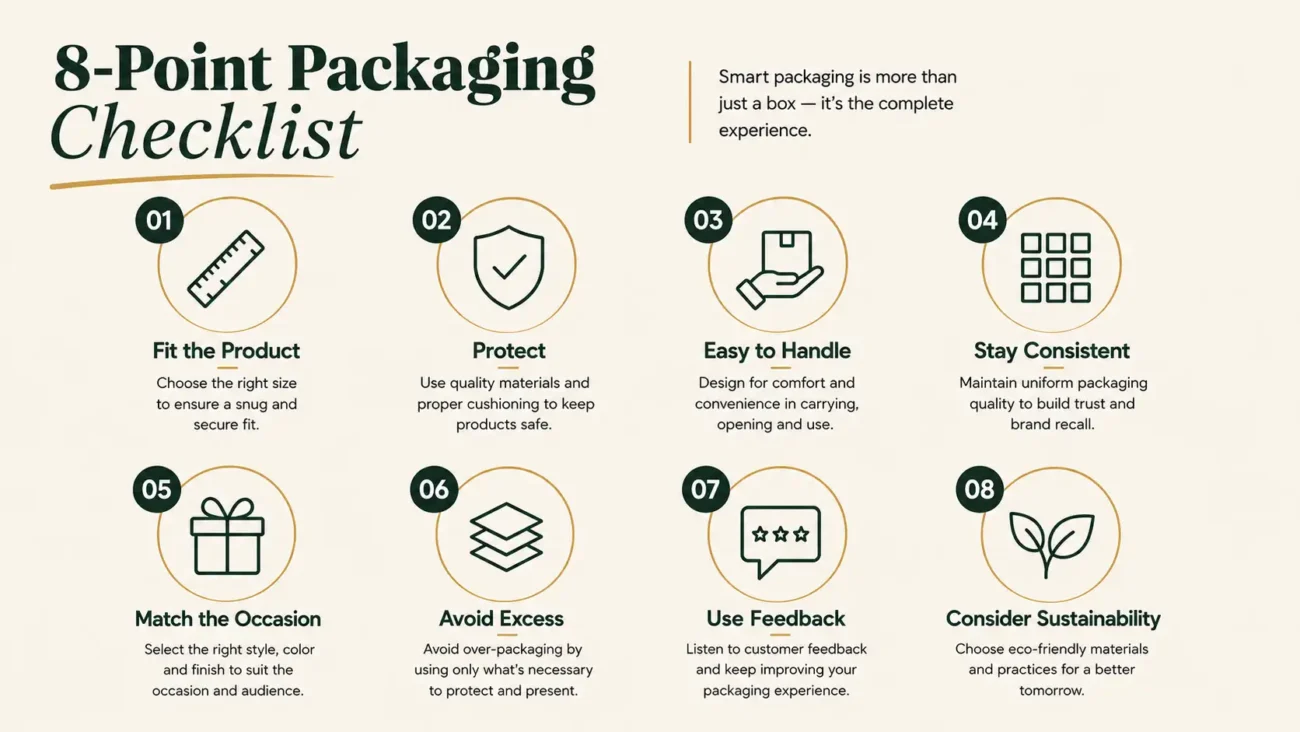
Businesses do not necessarily need complicated packaging to create a better customer experience. In many cases, the biggest improvements come from getting the fundamentals right: choosing an appropriate size, protecting the product, maintaining a consistent presentation, and making the packaging easy to handle.
The following gift packaging tips can help businesses improve the customer experience while keeping packaging practical and consistent.
- Choose Packaging That Fits the Product : Packaging should provide enough space for the product without leaving excessive empty room. A box or bag that is too small can damage or distort the contents, while an oversized package may allow unnecessary movement and require additional filler. Before selecting packaging, businesses should consider the product’s dimensions, weight, shape, and any additional protection required.
- Prioritize Product Protection : Customers expect their purchases to arrive in good condition. Suitable packaging can reduce the risk of damage during handling, storage, and delivery. For products that need additional cushioning, businesses should select appropriate protective materials rather than assuming that the outer box alone will provide sufficient protection.
- Make the Packaging Easy to Open and Handle : Packaging should be secure without becoming unnecessarily difficult to open. Closures, handles, folds, and lids should function properly and be appropriate for the product. For gifting applications, ready-made magnetic lid foldable boxes can provide a straightforward opening and closing mechanism while also offering the practical advantage of flat storage before use.
- Maintain Consistent Presentation : For retailers and businesses handling multiple orders, consistency matters. Using appropriate packaging formats across similar products can create a more organized customer experience. Consistent sizing, colors, patterns, and presentation can also make it easier for staff to package products correctly and maintain a recognizable appearance across orders.
- Match Packaging to the Occasion and Product : Packaging should make sense for what the customer is purchasing. A gift box, paper gift bag, or wrapping paper may each serve different purposes depending on the product and occasion. For gifting businesses, selecting packaging according to the type, size, and presentation requirements of the gift can make the final handover feel more complete.
- Avoid Unnecessary Packaging Elements : Adding more material does not automatically create a better customer experience. Excessive filler, unnecessary layers, or decorative elements that make the package difficult to open can create additional waste and inconvenience. Businesses should focus on packaging that performs a clear function while keeping the overall presentation organized.
- Review Packaging Based on Customer Feedback : Packaging decisions should not be treated as permanent. Businesses can review recurring customer comments, damaged products, difficult opening experiences, and presentation issues to identify areas for improvement. For example, repeated complaints about damaged products may indicate a need for better protection, while difficulty carrying a package may suggest that the bag size or handle design needs reconsideration.
- Consider Sustainability Alongside Function : Sustainability should be considered together with product protection and presentation. Businesses can look at material efficiency, potential reuse, recyclability where applicable, and the amount of unnecessary packaging used. The goal should be to select appropriate packaging that performs its intended function without unnecessary material or components.
Before selecting packaging, businesses should consider the product’s dimensions, weight, shape, and any additional protection required. A detailed guide to choosing the right gift box size for different products can help businesses avoid oversized or undersized packaging. When these factors are considered together, packaging becomes more than a container. It becomes part of the overall customer journey—from receiving and opening the product to carrying, using, storing, or reusing the packaging.
Why Choose GiftNGreet
GiftNGreet is a paper packaging manufacturer based in New Delhi, offering ready-made paper gift bags, Foldable Magnetic Lid Boxes, and wrapping paper for retail, gifting, and business requirements.
The Foldable Magnetic Lid Boxes are available in ready-made designs, including marble-pattern designs and solid-color variations, giving buyers practical options without presenting the range as custom-made packaging.
For businesses looking for ready-made gift packaging, selecting a suitable box or bag based on product size, presentation requirements, and intended use can help create a more consistent customer experience.
Explore:
Wrapping Paper Sheets for Gift Packaging
Ready-made Magnetic Lid Gift Boxes
Ready-made Paper Gift Bags for Retail and Gifting
To enquire about available products and bulk purchasing requirements, contact GiftNGreet.
Frequently Asked Questions
Packaging shapes first impressions, perceived value, and satisfaction at multiple stages of the customer journey — from discovery through to the unboxing moment.
Well-designed, protective packaging reduces frustration, reinforces confidence in a purchase, and contributes to how a customer remembers the overall experience.
Yes. Packaging affects shelf appeal, perceived value, and trust, all of which play a role in purchase decisions, particularly for gifting and retail purchases.
Consistent, well-designed packaging reinforces brand identity and recognition, since it’s one of the few brand touchpoints customers physically interact with.
A smooth, well-presented unboxing moment builds anticipation and leaves a stronger, more memorable impression than a plain or difficult-to-open package.
Yes, positive and consistent packaging experiences can build trust over repeat purchases, contributing to longer-term customer loyalty.
Material quality, clean design, color choices, and finishing details like handle strength and seam neatness all contribute significantly to perceived quality.
Businesses can improve customer experience by investing in consistent materials, prioritizing protective packaging, designing for the unboxing moment, and reviewing packaging choices regularly.
While the product remains central, packaging plays a meaningful supporting role — particularly for first impressions, gifting purchases, and building long-term brand perception.
Related Reading
- Why Packaging Matters: First Impressions in Gifting
- How Retail Stores Benefit from Organized Gift Packaging
- Common Gift Packaging Mistakes to Avoid
- How Gift Boxes Improve Product Presentation
Manufactured in New Delhi
Packaging Designed For Every Occasion
Explore GiftNGreet’s collection of gift boxes, paper gift bags, wrapping paper, and packaging solutions suitable for gifting, retail businesses, celebrations, and everyday presentation.
Looking for packaging solutions? Visit our Contact Us page for retail and bulk enquiries.