
Packaging Insights
Walk into almost any store in India right now and you’ll notice something that would have looked out of place five years ago: kraft paper where there used to be plastic, cleaner labels where there used to be busy print, and boxes designed to look just as good in a delivery photo as they do on a shelf. Retail packaging in India isn’t quietly evolving anymore — it’s moving fast, and the businesses paying attention are the ones adapting most effectively.
This isn’t a list of buzzwords. It’s a grounded look at what’s driving change in Indian retail packaging, why these shifts are happening, and what they mean if you’re a retailer, gift business, or brand deciding what to do about packaging.
Packaging decisions today are influenced by more than appearance. Material choices, e-commerce logistics, product presentation, sustainability expectations, and the need to maintain consistency across different sales channels are all becoming part of the conversation.
The Short Version
If you want the quick answer, the biggest retail packaging trends in India include:
- Sustainability has moved from a nice-to-have toward a regulatory and consumer expectation.
- E-commerce is reshaping packaging design, even for products sold through physical stores.
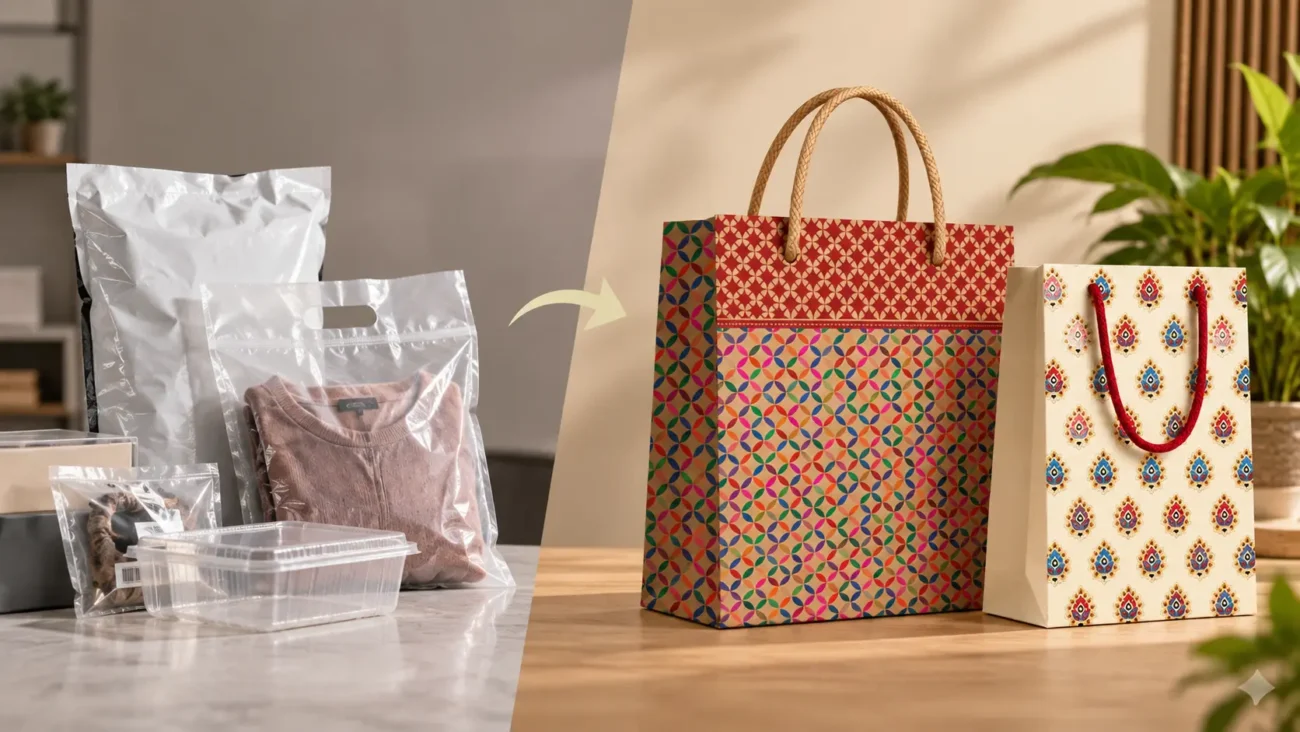
- Paper-based materials are gaining ground, partly because of restrictions on single-use plastics.
- Minimal, clean design is replacing busy and cluttered packaging across many categories.
- Packaging now needs to work across retail shelves, e-commerce listings, deliveries, and social media.
- India-specific storytelling, regional influences, and craft traditions are becoming more visible in packaging.
- Businesses are paying greater attention to packaging consistency across different products and sales channels.
The common thread is that packaging now has to perform several jobs at once: protect the product, support presentation, work within operational requirements, and contribute to how customers experience the business.
Why Retail Packaging Is Changing So Quickly Right Now
A few forces are converging at once, which is part of why the shift feels faster than in previous years.
Tightening regulations on single-use plastics are encouraging businesses to consider paper and other alternative materials, while consumers are paying more attention to the materials and packaging choices behind the products they purchase. At the same time, the continued growth of online shopping is forcing packaging to do double duty — protecting products through logistics networks while still creating a strong first impression once the package is received.
None of this is happening in isolation. A retailer’s in-store packaging choices are increasingly being shaped by pressures that originated in e-commerce, and vice versa. That is exactly why retail packaging trends today cannot really be separated from broader packaging trends in India.
Businesses are therefore looking beyond individual packaging products and considering how their bags, boxes, wrapping materials, and other formats work together. For businesses reviewing their wider packaging strategy, our guide to packaging solutions for retail stores and everyday business needs offers a useful starting point.
Sustainable Retail Packaging: From Nice-to-Have to Requirement
Sustainable retail packaging is the trend that’s hardest to ignore, mostly because it is no longer optional in the way it once seemed.
Several factors are pushing businesses to examine the materials they use and how those materials fit into broader packaging requirements:
- Regulatory pressure is real — restrictions on single-use plastics across Indian states are encouraging businesses to consider paper-based and other alternative materials.
- Paper and paperboard are gaining ground — particularly in e-commerce packaging, where paper-based formats are increasingly being used alongside changing regulatory and consumer expectations.
- Biodegradable and compostable materials are receiving greater attention — businesses are exploring these formats where they make practical sense for the product and its intended disposal route.
- Consumers are paying closer attention to sustainability claims — which makes straightforward material choices and accurate communication more important than simply using sustainability-related marketing language.
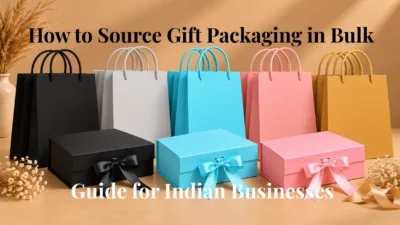
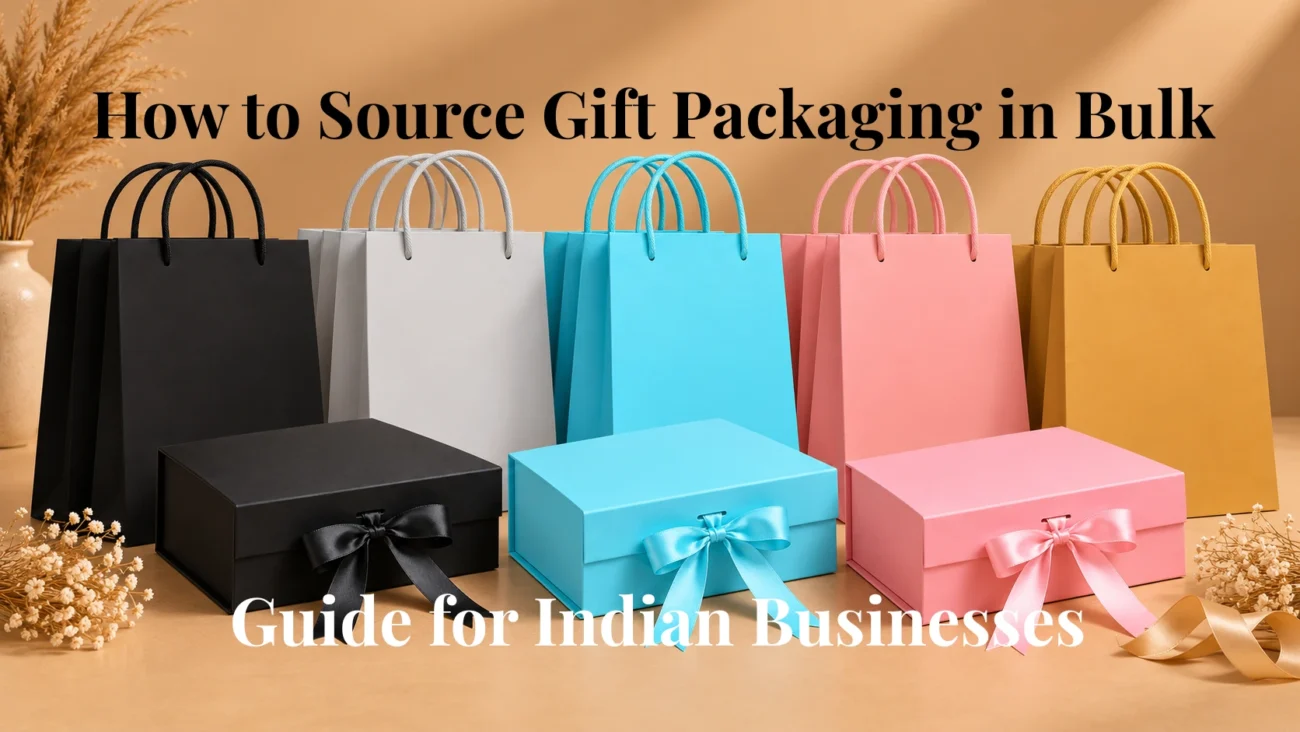
For businesses that already work primarily with paper — including gift bags, kraft packaging, and paper-based boxes — this shift creates an opportunity to evaluate whether their existing packaging choices align with changing market expectations.
However, sustainable packaging should not be treated as a single material choice. Businesses also need to consider size, durability, construction, intended use, reuse potential, and end-of-life disposal when evaluating packaging options. If you’re comparing materials and trying to understand what makes paper packaging a more responsible choice, see our guide to eco-friendly paper packaging and what businesses should know.
E-Commerce Packaging: Designing for a Screen Before a Shelf
E-commerce packaging has become one of the most influential forces in Indian retail packaging, even for businesses that continue to sell primarily through physical stores.
The growth of digital retail has changed what packaging needs to achieve:
- Packaging now has to survive logistics, not just look good — as e-commerce continues to grow, packaging increasingly needs to withstand courier handling and movement through distribution networks.
- Right-sizing matters more than ever — businesses are paying greater attention to package dimensions and unnecessary space because shipping efficiency affects overall fulfillment costs.
- The market is growing quickly — the continued expansion of digital retail is contributing to increased demand for packaging that can work across fulfillment and delivery environments.
- First impressions now happen twice — once on a screen through product photographs or videos, and again when the customer physically receives the package.
This represents a meaningful shift for smaller retailers and D2C businesses especially. Packaging decisions can no longer be made with only the in-store shopper in mind.
A package may first appear as a small image on an e-commerce listing, then travel through warehouses and courier networks, and finally become part of the customer’s physical experience with the business. Packaging therefore needs to perform consistently across each stage.

Paper Packaging Trends: Why Paper Is Having a Moment
Of all the material shifts happening in Indian retail right now, paper packaging trends are arguably among the most visible.
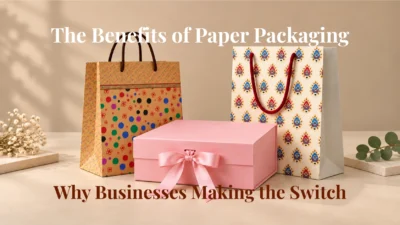
Paper-based packaging is appearing across retail, gifting, food, e-commerce, and other business applications. Its growing presence is being influenced by changing regulations, consumer expectations, and the practical versatility of paper as a packaging material.
- Paper is becoming increasingly important in fast-growing packaging categories — particularly e-commerce packaging, where paper and paperboard formats are gaining ground alongside changing expectations around plastic use.
- Kraft finishes are being used deliberately, not just as a default — the natural appearance of kraft paper has become associated with a straightforward, material-focused packaging style.
- Mono-material design is gaining attention — packaging made primarily from a single material can make material separation and recycling considerations simpler, depending on the specific construction and local recycling infrastructure.
- Paper’s versatility is a genuine advantage — paper can be produced and finished in different weights, textures, colors, and formats, allowing businesses to use the same broad material category across different packaging requirements.
For retailers, this means paper packaging is no longer limited to a particular visual style. It can range from straightforward kraft bags to printed paper bags, gift bags, boxes, and wrapping materials.
Businesses choosing paper packaging should still look beyond appearance. The right option depends on the product being carried or presented, required strength, size, handling conditions, and intended use.
Minimal Packaging: The “Less Is More” Shift
For years, standing out in Indian retail often meant louder, busier packaging. That’s beginning to change.
Across many categories, businesses are experimenting with cleaner layouts, fewer visual elements, and more deliberate use of color and typography.
- Cluttered designs are giving way to clean, minimal layouts — in an increasingly crowded retail environment, simpler packaging can make important information easier to notice and understand.
- Tactile finishing is doing more of the visual work — techniques such as embossing or foil details can add visual and physical interest without requiring a heavily decorated design.
- Typography has simplified too — clear, easy-to-read fonts combined with restrained color palettes can create a more organized appearance.
- Structural design is becoming a differentiation on its own — distinctive box shapes, folds, closures, and other structural details can contribute to packaging recognition without relying entirely on printed graphics.
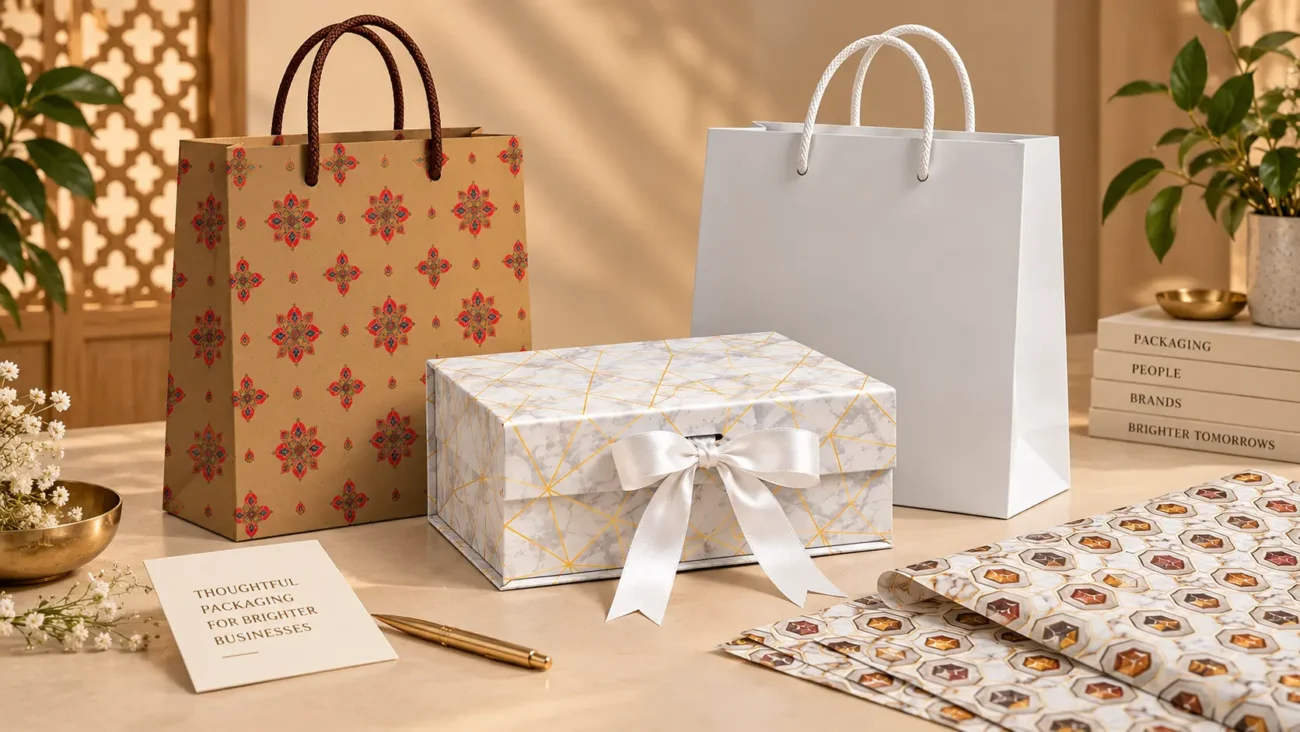
The important point is that minimal packaging does not necessarily mean plain packaging. It means being more deliberate about what is included and what is left out.
This can be especially useful for businesses using multiple packaging formats. A paper bag, gift box, or wrapping paper design can each have its own layout while still following a similar visual direction.
Smart and Personalized Packaging: Where India Is Headed Next
Not every trend is fully mainstream yet, but a few developments are worth watching closely.
- Smart Packaging Is Moving Toward Utility : QR codes and other digital elements can connect physical packaging with online information such as product details, care instructions, sourcing information, or brand stories. Rather than adding technology simply for novelty, the more useful approach is to give customers a clear reason to interact with it.
- Personalized Packaging Is Growing Alongside D2C : As more Indian businesses sell directly to consumers, packaging is increasingly being treated as part of the customer interaction rather than simply a way to contain the product. However, personalization does not necessarily need to mean changing every package individually. It can also involve adapting communication, product information, seasonal messaging, or packaging elements to suit particular campaigns or customer groups.
- Automation Is Scaling Behind the Scenes : Automation and AI-driven processes are increasingly being explored across packaging production, inventory management, order processing, and logistics. Much of this change is invisible to the customer, but it can influence how efficiently businesses manage packaging volumes, fulfillment, and supply requirements. For most small and mid-sized retail businesses, these developments matter less as something to adopt immediately and more as a signal of where packaging operations are heading. The practical priority is still getting the fundamentals right: suitable materials, appropriate sizing, reliable construction, and packaging that works for the way the business actually sells and delivers its products. of where larger players are already investing.
Omnichannel Packaging: One Design, Multiple Jobs
Omnichannel packaging has become increasingly relevant for businesses operating across both retail and digital channels.
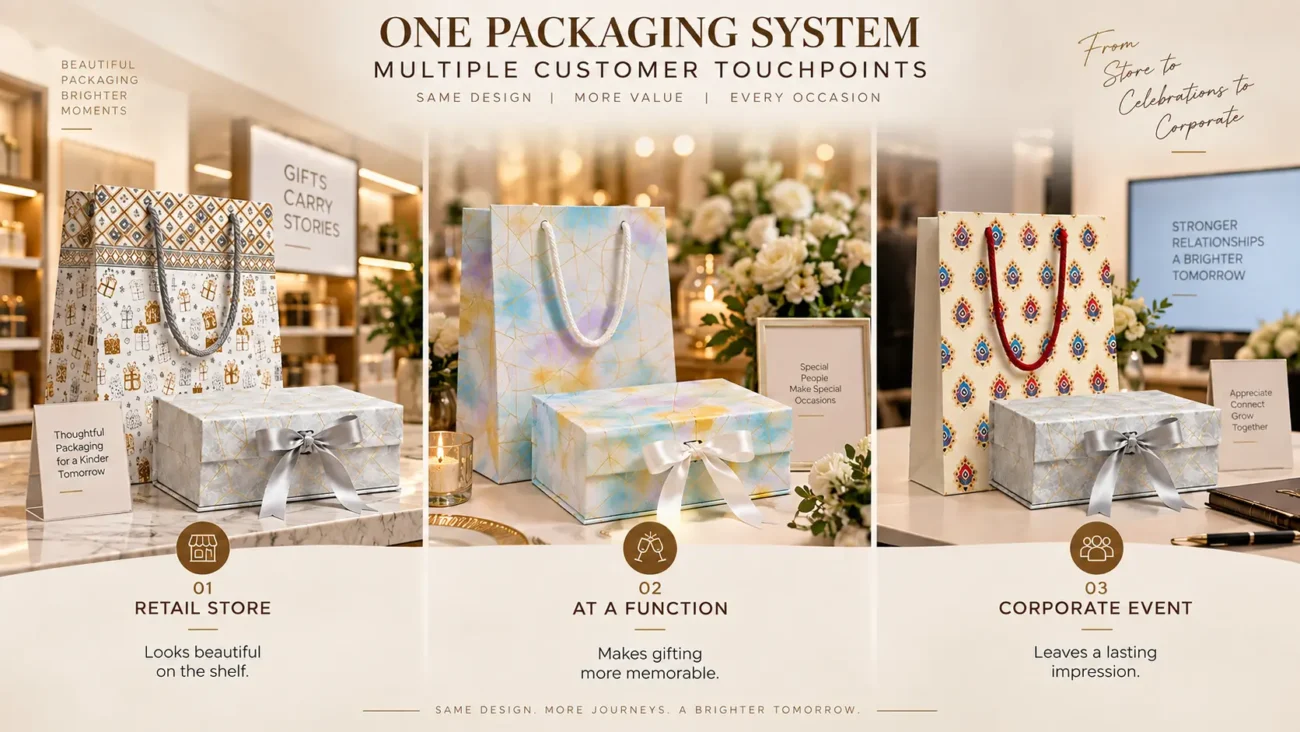
A package may be displayed in a physical store, photographed for an online listing, handled during delivery, and eventually appear in a customer’s social media post. That means packaging needs to work across several environments rather than being designed for only one point in the buying journey.
- Packaging has to work on a shelf and on a screen — retail packaging needs to remain recognizable in-store while also reading clearly in smaller e-commerce images and product listings.
- Consistency across channels builds familiarity — when the same product looks noticeably different online and offline, it can create unnecessary uncertainty for customers.
- Social sharing has become an unofficial packaging consideration — packaging that photographs clearly and presents well in videos can become part of a business’s wider online visibility.
- Packaging needs to remain functional across the journey — visual appearance matters, but the packaging must also withstand handling, storage, transportation, and the conditions in which customers receive it.
This is where consistency becomes particularly valuable. Businesses do not necessarily need identical packaging across every channel, but maintaining recognizable colors, logos, design elements, and overall presentation can help connect the different customer touch-points.
Maintaining this kind of visual consistency becomes easier when businesses establish clear packaging guidelines, as explained in our guide to creating consistent packaging for stronger brand presentation.
Shelf-Ready and Retail-Ready Packaging: The Practical Side of the Trend List
Not every retail packaging trend is about aesthetics. Shelf-ready packaging and retail-ready packaging address a more operational concern: how efficiently packaging moves through a store’s actual workflow.
For retailers handling regular stock movement or high-volume periods, packaging can influence how quickly products are unpacked, organized, displayed, and replenished.
- Faster restocking — packaging designed with retail handling in mind can help products move more efficiently from delivery to shelf, reducing unnecessary staff time.
- Consistent presentation — well-organized packaging formats can help maintain a more uniform appearance across shelves and displays, particularly during busy retail periods.
- Reduced handling damage — packaging designed around storage and movement can hold up better through repeated handling than packaging considered only from an aesthetic perspective.
- Better organization — appropriately sized and structured packaging can make storage, sorting, and movement easier for retail teams.
For smaller retailers, this does not necessarily mean adopting complex shelf-ready systems. Even straightforward choices around bag size, box structure, material strength, and packaging quantity can make everyday retail operations easier.
The practical lesson is simple: packaging should be considered as part of the retail workflow, not only as something customers see.
Where India Is Setting Trends, Not Just Following Them
A number of India-specific dynamics are shaping packaging in ways that aren’t simply borrowed from global markets.
- Hyper-Localisation : Packaging that reflects regional culture, craft traditions, or local storytelling is becoming increasingly relevant for Indian businesses. Regional design influences can help packaging feel more connected to the market it serves rather than simply replicating international styles.
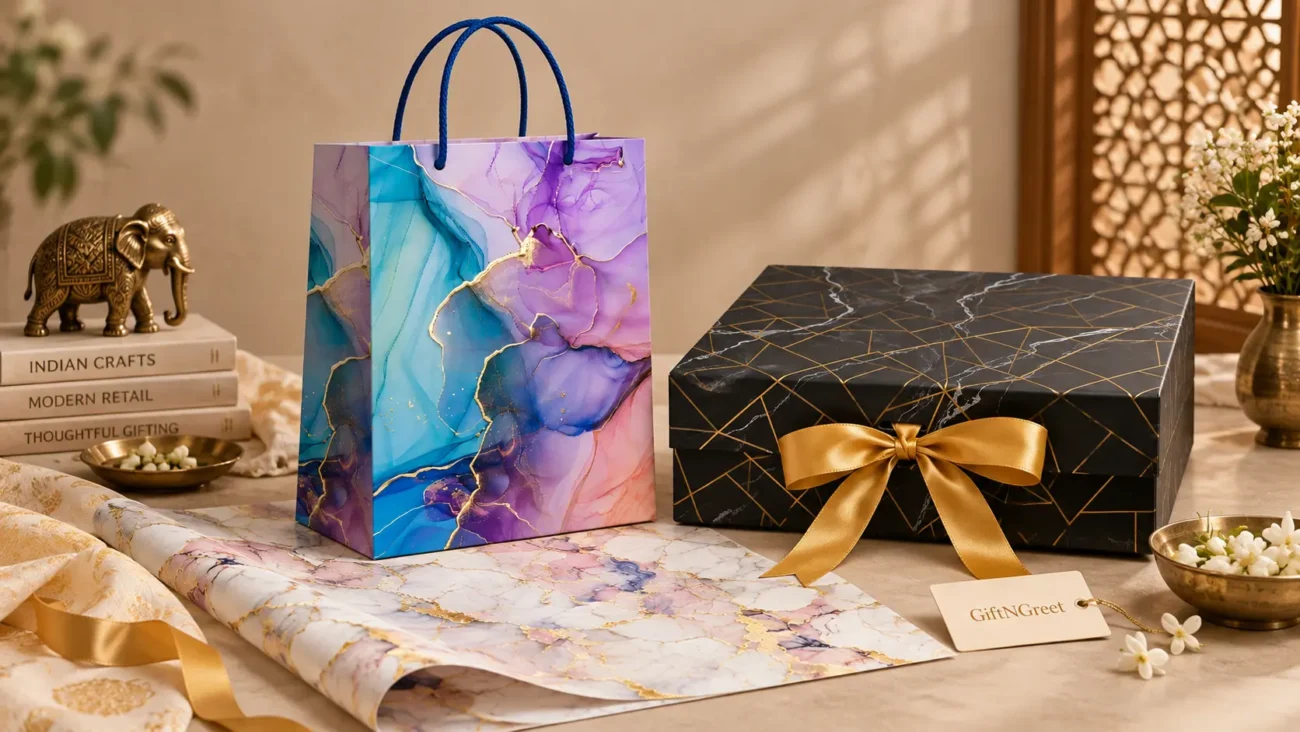
- Craft and Artisanal Influence :India’s strong craft traditions are also influencing packaging materials, patterns, textures, and finishing approaches. This influence can be particularly noticeable in gifting, festive, lifestyle, and retail categories, where packaging itself can contribute to the overall presentation of the product. The opportunity is not necessarily to make every package heavily decorative. Instead, businesses can draw from familiar Indian visual influences while keeping the packaging practical and appropriate for its intended use.
- Unboxing as a Cultural Moment : Unboxing has become an increasingly visible part of the customer experience, particularly for e-commerce and gifting. For Indian businesses, this creates an opportunity to think about packaging as part of the complete product experience — from the moment an order arrives to the moment the customer or recipient opens it. This is particularly relevant during festivals, celebrations, and gifting occasions, when packaging can become part of the presentation rather than simply a means of transporting the product.
What This Means for Retail and Gifting Businesses
Pulling all of these trends together, a few practical takeaways stand out for retail and gifting-focused businesses specifically:
- Paper-based packaging is well-positioned — regulatory pressure around plastic and growing interest in paper-based alternatives make paper an important material to consider.
- Simplicity photographs well — clean, well-organized packaging can work effectively across both physical retail and online contexts.
- Consistency matters more as channels multiply — the same packaging may need to work across a store shelf, delivery process, product photograph, and social media post.
- Functionality still matters — material strength, size, construction, storage, and handling requirements should be considered alongside appearance.
- Packaging choices should match the business model — a retailer selling directly from a store may have different requirements from a D2C business shipping products across India.
- Sourcing matters — working with a paper packaging manufacturer that offers suitable paper-based packaging options can make it easier for businesses to respond to changing packaging requirements without changing everything at once.
For businesses reviewing their packaging in 2026, the goal should not be to adopt every new trend. Instead, identify the changes that genuinely fit the products, customers, sales channels, and operational requirements of the business. Businesses planning packaging for corporate orders can also explore practical corporate gift packaging ideas for different business requirements.
The Takeaway
None of these trends are asking Indian retail businesses to reinvent themselves overnight.
Most of them point in a similar direction: simpler, more practical, more carefully considered, and increasingly suited to multiple retail and digital environments.
For businesses already working with paper-based materials, that direction is less of a disruption and more of a confirmation that the fundamentals remain important.
The strongest approach is to focus on the areas that have a direct impact on the business: choosing appropriate materials, reducing unnecessary packaging, maintaining consistent presentation, selecting practical formats, and making sure packaging can handle the way products are actually sold and delivered.
Retail packaging in India will continue to evolve, but businesses do not need to chase every new development. Understanding the major shifts and selectively responding to the ones that matter most can lead to better packaging decisions in the long term.
Explore:
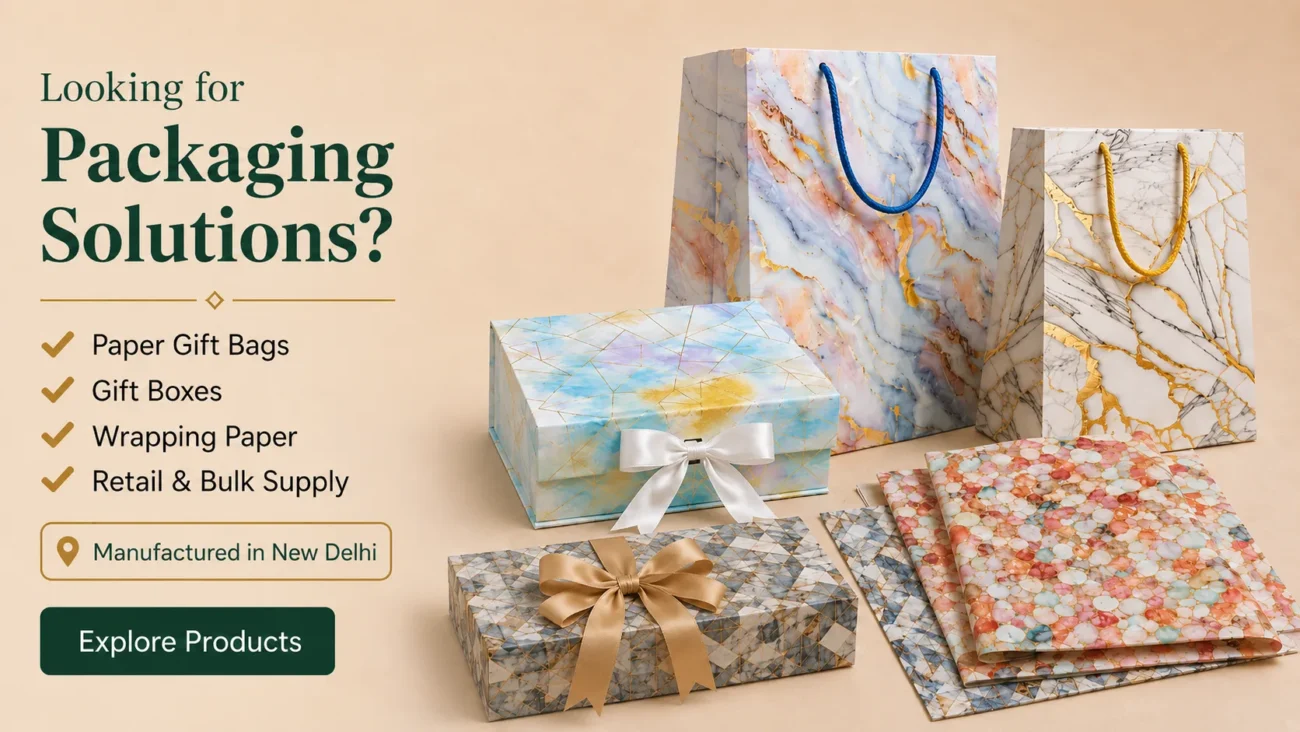
- Ready-made Magnetic Lid Gift Boxes
- Ready-made Paper Gift Bags for Retail and Gifting
- Wrapping Paper Sheets for Gift Packaging
To enquire about available products and bulk purchasing requirements, contact GiftNGreet.
Frequently Asked Questions
The biggest retail packaging trends include increased use of paper-based materials, greater attention to sustainability, cleaner and more minimal designs, e-commerce-ready packaging, and packaging that works across both physical and digital retail channels.
Paper packaging is gaining attention because of changing regulations around single-use plastics, increasing consumer interest in packaging materials, and the versatility of paper and paperboard across retail, gifting, and e-commerce applications.
Minimal packaging can be effective because it makes important information easier to notice and can create a more organized visual presentation. However, the right approach depends on the product, target customer, category, and retail environment.
E-commerce is making packaging more important beyond the physical store. Packaging increasingly needs to withstand transportation, use space efficiently, present well when received, and remain visually clear in product photographs, online listings, and social media content.
Omnichannel packaging refers to packaging designed to work consistently across different sales and customer touch-points, including physical retail stores, e-commerce platforms, deliveries, and social media.
Indian businesses are influenced by global packaging trends, but local culture, regional design influences, craft traditions, festive occasions, and gifting habits are also shaping packaging choices in distinctly Indian ways.
Shelf-ready or retail-ready packaging refers to packaging designed to make handling, stocking, and product display more efficient. It can help reduce unnecessary handling and support more consistent shelf presentation.
Sustainability is increasingly becoming an important consideration rather than simply a marketing trend. Regulatory requirements, consumer expectations, material choices, and end-of-life considerations are all influencing how businesses approach packaging.
Businesses can start with practical improvements such as evaluating paper-based packaging options, simplifying unnecessary design elements, improving packaging consistency, and selecting formats that work across their actual sales and delivery channels.
Related Reading
- Eco-Friendly Paper Packaging: What Businesses Should Know
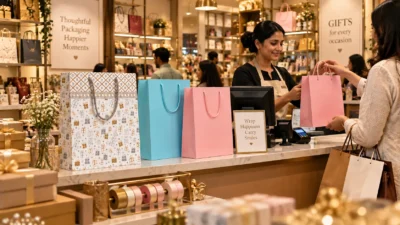
- How Retail Stores Benefit from Organized Gift Packaging
- Why Consistent Packaging Helps Brand Presentation
- Guide to Paper Gift Bags for Retail Businesses
Manufactured in New Delhi
Packaging Designed For Every Occasion
Explore GiftNGreet’s collection of gift boxes, paper gift bags, wrapping paper, and packaging solutions suitable for gifting, retail businesses, celebrations, and everyday presentation.
Looking for packaging solutions? Visit our Contact Us page for retail and bulk enquiries.