
Packaging Insights
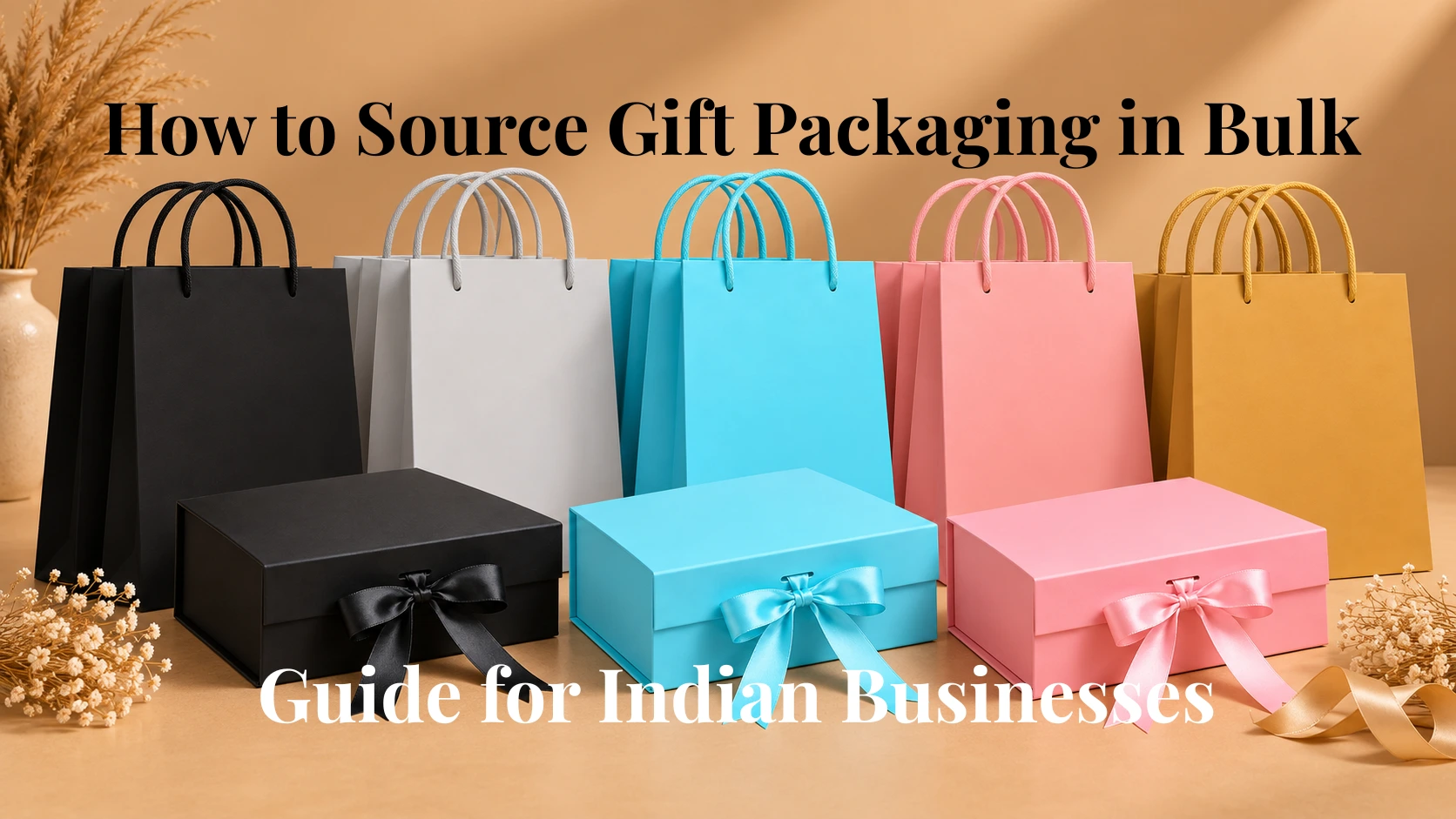
The first time most businesses source gift packaging in bulk, they treat it like any other purchase: find a supplier, get a price, and place the order. The trouble often starts a few weeks later, when the packaging arrives in the wrong size, the delivery comes after the festival, or the next batch doesn’t quite match the first. Bulk buying isn’t just one decision. It’s a sequence of smaller decisions, and the order in which you make them can affect the final cost, quality, and delivery.
This guide explains how to source gift packaging in bulk from start to finish: what to decide first, which suppliers to approach, what questions to ask, how to compare quotations, and how to make repeat orders easier. If you’re still evaluating the factors involved in a bulk purchase, our guide to choosing packaging for bulk orders and comparing cost, quality, and supplier reliability provides a useful starting point.
The Short Version
- Decide on packaging types, sizes, and quantities before contacting suppliers.
- Work backward from your required delivery date.
- Understand the difference between manufacturers, wholesalers, distributors, and marketplace sellers.
- Test a physical sample using the products you intend to pack.
- Compare quotations using the same specifications and terms.
- Confirm the agreement in writing and inspect the delivery on arrival.
- Keep records of successful orders to make future purchases more predictable.
Why Bulk Sourcing of Gift Packaging Is a Process, Not a Purchase
Buying a single gift bag is a relatively low-risk decision. If it doesn’t meet your expectations, the loss is limited. However to source gift packaging in bulk, the same mistake can affect hundreds or thousands of units, and the problem may not become apparent until the entire shipment arrives.
Incorrect dimensions, weak handles, inconsistent finishes, and delayed deliveries can create avoidable costs. During a busy festive season or before a scheduled event, there may be little time to find a replacement.
Businesses that source packaging effectively usually follow a clear process. They establish their requirements, evaluate suppliers, test samples, confirm the terms, and inspect the delivery. None of these steps is particularly complicated, but each is easier to manage before placing the order than after a problem occurs.
Step 1: Work Out What You Actually Need
It’s tempting to start by asking suppliers what they have available. A more effective approach is to identify your gift packaging requirements first because those requirements determine which products, suppliers, and quantities are suitable.
- Sort by Packaging Type: Begin with a basic question: do you need paper bags, gift boxes, wrapping paper, or a combination?
Different products serve different purposes. Paper bags can be useful for retail purchases and gifting, while boxes can provide more structure for items that need it. Some businesses need only one packaging type; others benefit from sourcing several formats together. Make a list of the packaging products you need and separate them by purpose.
This helps prevent unnecessary purchases and makes it easier to source gift packaging quotations accurately. - Get Sizes From Real Products: Don’t estimate dimensions from memory. Measure the actual products you intend to pack and note the largest and smallest items in your range.
If your business sells products of different sizes, you may need more than one bag or box format. Also consider how the product will sit inside the packaging and whether enough room is needed for an inner container or protective material.
For boxes, our guide to choosing the right gift box size for different products explains how to approach sizing more carefully. - Estimate Quantities, Then Add a Buffer: Base your order quantity on realistic demand. Retailers can use previous sales figures, while businesses arranging events can estimate quantities from their expected recipient or guest lists.
Once you have a reasonable estimate, consider adding a modest buffer. Running out of packaging during a busy period can disrupt operations, while a small surplus may be easier to manage.
The appropriate buffer depends on how predictable your demand is, how much storage space you have, and whether additional stock can be sourced quickly. Avoid ordering far more than you can reasonably use simply to obtain a lower unit price.
Step 2: Set a Realistic Timeline and Budget for Gift Packaging Supplies
Work backward from the date you need gift packaging in hand, not the date you need it used. Build in time for sampling, production, delivery, and a margin for delays.
- Event or festival date: the hard deadline
- Minus delivery time: including transport to your location
- Minus production time: ask the supplier, don’t assume
- Minus sampling and approval time: usually the step people forget
- Minus a buffer: for the delays that happen more often than anyone plans for
On budget, decide what you’re comfortable spending in total, not just per unit. Include storage, transport, and a small contingency. A slightly higher cost per unit from a reliable supplier often turns out cheaper overall than chasing the lowest quote.
Step 3: Find Bulk Gift Packaging Suppliers
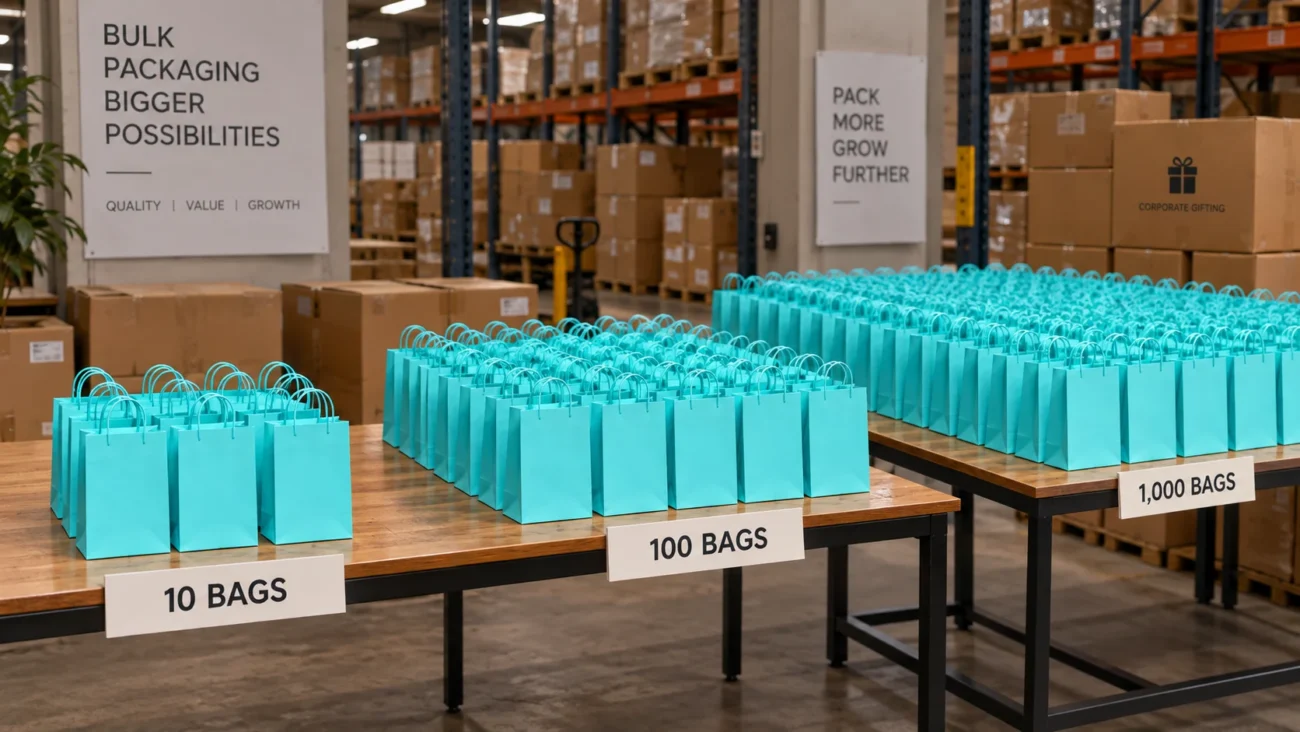
Not every seller operates in the same way, and understanding who you’re buying from helps you know what to expect. Wholesale gift packaging in India is available through several types of suppliers, each with its own advantages and limitations.
| Supplier type | What it usually means | What to consider |
|---|---|---|
| Manufacturer | Produces the packaging itself | Can often explain materials, construction, quality checks, and repeat-order consistency |
| Distributor or wholesaler | Purchases products in volume and resells them | May offer a wider selection, but may have less direct control over production |
| Trader | Buys and sells products, sometimes through multiple suppliers | Ask detailed questions about specifications, availability, and product consistency |
| Online marketplace seller | Lists products on an online platform | Convenient for comparing options, but product quality and supplier reliability need to be checked |
Searching for a gift packaging supplier in India may bring up all four categories. Rather than relying only on a listing or product photograph, ask specific questions about the packaging.
For example, ask about the paper weight, handle attachment, available sizes, quality checks, and expected lead time for your required quantity. The clarity of the answers can help you understand how well the supplier knows the product.
For paper bags, understanding the production process can make these conversations more productive. Our guide to how paper gift bags are manufactured and what affects their quality provides useful background for evaluating bag construction and specifications.
Step 4: Shortlist Gift Packaging Requirements With the Right Questions
Once you’ve identified three or four potential suppliers, use the same set of questions with each one. This makes comparisons more consistent and helps you identify gaps before committing to an order.
Ask each supplier:
- What is your minimum order quantity (MOQ), and does it apply per product, size, or design?
- What is the expected lead time for my quantity, particularly during the festive season?
- Do you manufacture the packaging or source it from another supplier?
- What paper weight or board thickness does the product use?
- How is the packaging checked for quality across a large batch?
- What happens if some products arrive damaged or do not match the agreed specifications?
- Can the same product be reordered later, and how do you maintain consistency between batches?
Pay attention to how suppliers answer these questions. Clear, specific responses make it easier to understand what you’re buying and what to expect. Vague answers about quality, delivery, or faulty products deserve further clarification.
You should also check whether the supplier’s available range matches your requirements for the gift packaging. A supplier may be suitable for paper bags but not for the boxes or wrapping paper you also need. Confirm product availability rather than assuming every category can be supplied.
Step 5: Ask for Samples, and Test Them Properly
Requesting and testing a sample is one of the most useful steps in bulk sourcing. It allows you to assess the actual product before committing to a large quantity.
Follow these checks:
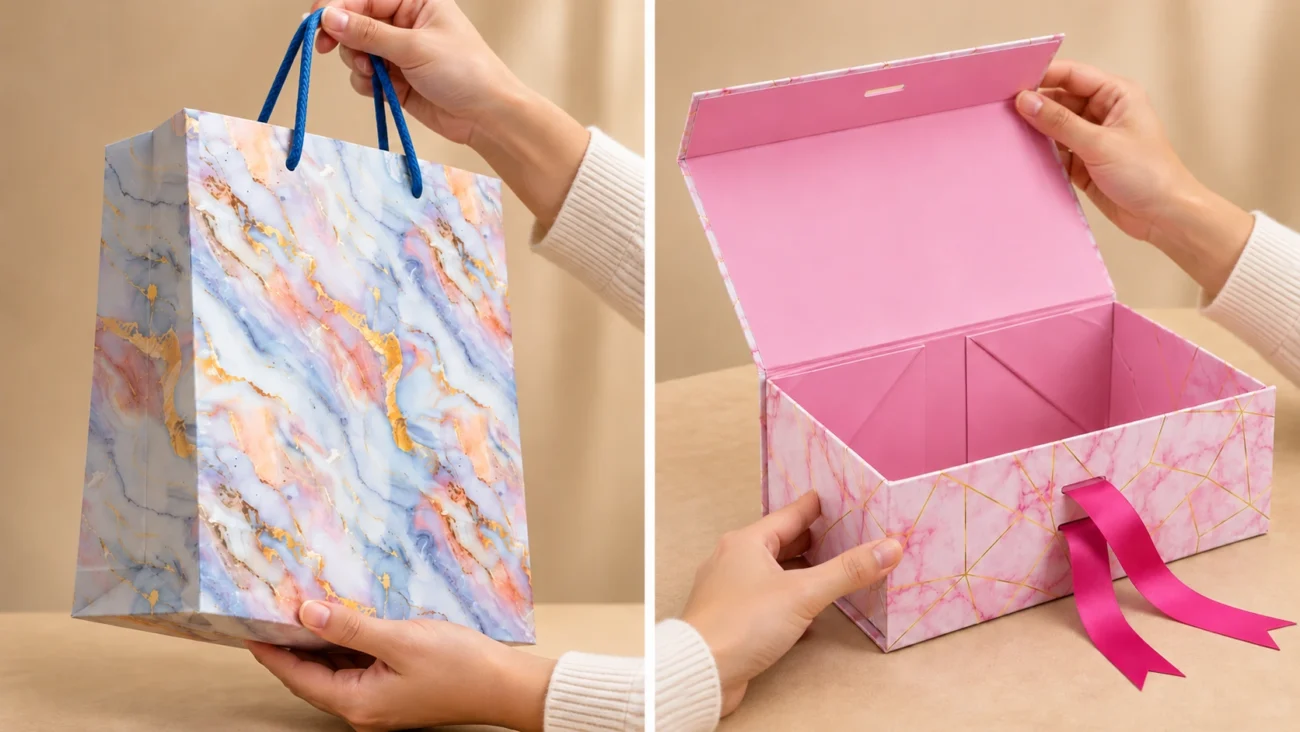
- Request a sample from the actual product range. Check that it represents the product you intend to order, rather than relying solely on a photograph.
- Load it with your real product. If the actual product is unavailable, use something with a similar size and weight.
- Carry and handle it normally. Check how it performs under the conditions in which customers or recipients will use it.
- Inspect the handles and base. For bags, these areas are particularly important because they bear much of the load.
- Check the finish and colour in natural light. Screen images may not represent the physical product accurately.
- Keep the approved sample. Use it as a reference when the bulk delivery arrives.
For boxes, check the dimensions, construction, closure, and whether the intended product fits comfortably. For bags, check the dimensions, handle attachment, base construction, and suitability for the intended load. If a supplier cannot provide a sample, ask what alternatives are available for checking the product before ordering. The important thing is to establish a reasonable way to assess quality before committing to a large quantity.
Step 6: Compare Quotes on the Same Terms
Once you’ve reviewed the samples and shortlisted suitable products, compare the quotations. The common mistake is to focus on the headline price without checking whether every supplier is quoting for the same specifications and terms.
Before comparing, make sure each quotation clearly states:
- Exact product and size: Avoid general descriptions that could refer to different specifications.
- Quantity: Confirm the number of units covered by the quoted price.
- Price per unit: Check whether different order quantities qualify for different rates.
- Delivery charges and timeline: Confirm whether transport is included and when the order is expected to arrive.
- Payment terms: Check any advance payment and the remaining payment schedule.
- Taxes: Confirm the applicable tax treatment and whether GST is included in the quoted amount.
A simple spreadsheet can help you compare suppliers side by side. It also makes missing information easier to spot.
For example, the lowest quotation might exclude delivery charges, refer to a different bag size, or offer a lighter construction than the sample you tested. Comparing identical specifications gives you a more reliable basis for deciding.
Step 7: Confirm Everything in Writing
Before making payment, get the agreed terms in writing. An email or other written confirmation can help prevent misunderstandings about what was ordered, what was included in the price, and when the packaging should arrive.
Confirm the following details:
- Product type, size, design, and quantity
- Final price and included charges
- Expected delivery date and delivery address
- Payment schedule
- Procedure for reporting damaged or faulty products
- Agreed specifications and any applicable quality requirements
- Tax invoice and other relevant purchase documentation
Keep the approved sample and quotation alongside the order confirmation. These records provide a reference when checking the delivery and make it easier to resolve discrepancies.
For repeat purchases, retaining these details also helps you reorder the same product without having to establish every specification from scratch.
Step 8: Plan for Delivery and Storage
Storage and delivery arrangements may seem minor when placing an order, but they can create practical problems if overlooked.
- Prepare the storage space: Make sure there is sufficient room before the shipment arrives.
- Keep paper packaging dry: Store bags, boxes, and wrapping paper away from damp floors, walls, and other sources of moisture.
- Consider foldable formats: Flat-packed boxes can take up less storage space than fully assembled boxes, depending on the product.
- Arrange for receipt: Ensure someone is available to receive the delivery, check the cartons, and record any visible damage.
- Plan access and handling: Consider where the shipment will be unloaded and how the packaging will be moved to its storage area.
For businesses with limited storage, the packaging format matters almost as much as the quantity ordered. Foldable packaging can be useful when it meets the product requirements and is available in a suitable format.
Planning storage before placing the order helps prevent cartons from obstructing work areas or being stored in conditions that could damage the packaging.
Step 9: Inspect on Arrival, Before You Sign Off
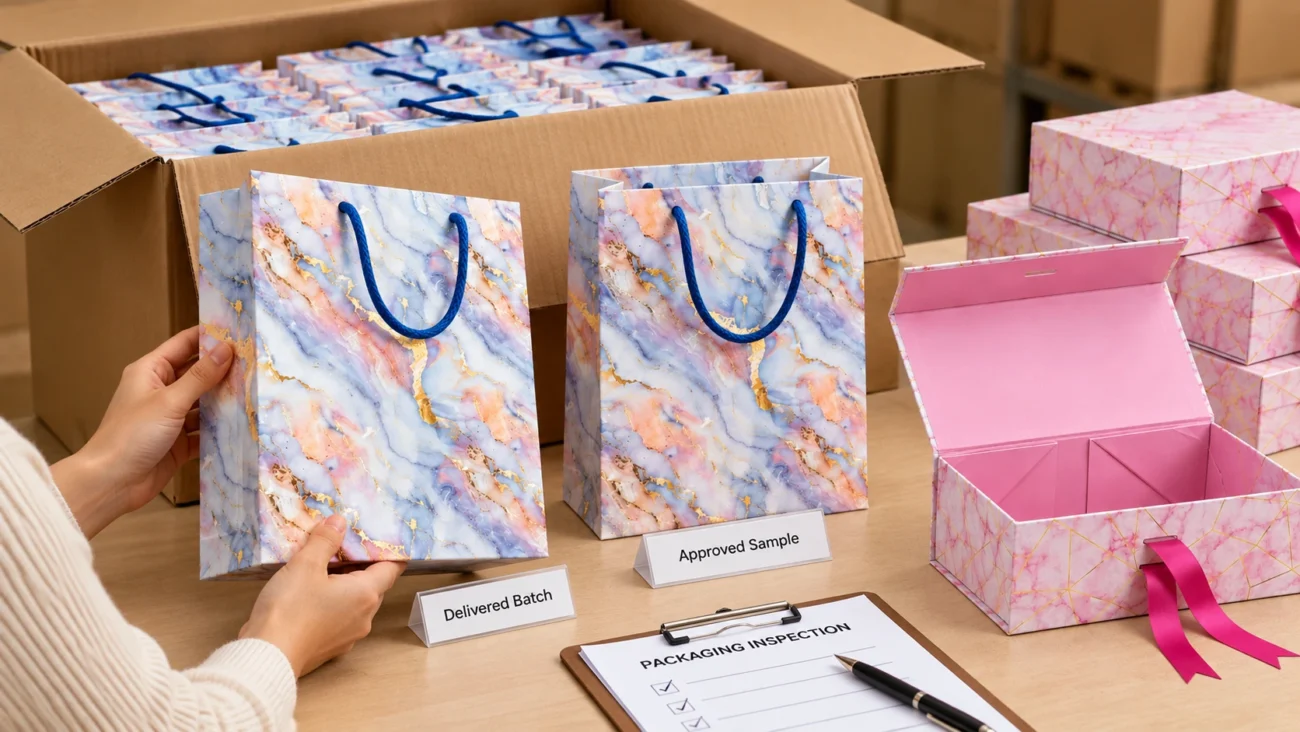
When the delivery arrives, check it against your order confirmation and approved sample. Do not assume that the entire shipment matches simply because the outer cartons look intact.
Use this inspection checklist:
- Count the quantity and compare it with the order.
- Check dimensions on a selection of products.
- Open cartons from different parts of the shipment, not just the carton on top.
- Compare colour, finish, and construction with the approved sample.
- Test a few pieces using the products they are intended to carry or contain.
- Photograph any visible problems and report them to the supplier promptly.
For paper bags, inspect the handles, base, folds, and adhesive joints. For boxes, check the dimensions, corners, closure, and overall construction.
If something is incorrect or damaged, document the issue and refer to the agreed order terms when contacting the supplier. Problems are generally easier to investigate when reported promptly and supported by clear records.
Step 10: Build a Repeat-Order Rhythm for Gift Packaging
The second bulk order should be easier than the first. Once you’ve identified a suitable supplier and product, maintain records that make future purchasing more predictable.
- Record what you ordered: Keep product specifications, sizes, quantities, and the approved sample.
- Track stock usage: Note how long each packaging type lasts under normal business conditions.
- Record actual lead times: Compare the promised delivery date with the date the packaging arrived.
- Reorder before stock runs low: Allow additional time before festive seasons and other periods of high demand.
- Share useful feedback: Tell the supplier what worked well and what needs attention.
- Inspect repeat batches: Compare subsequent deliveries with your saved sample and order specifications.
Repeat orders become easier when both sides have a clear record of the product and the expectations. This is particularly valuable for retailers and gift shops that need packaging throughout the year rather than for a single event.

How the Process Changes Depending on Your Business
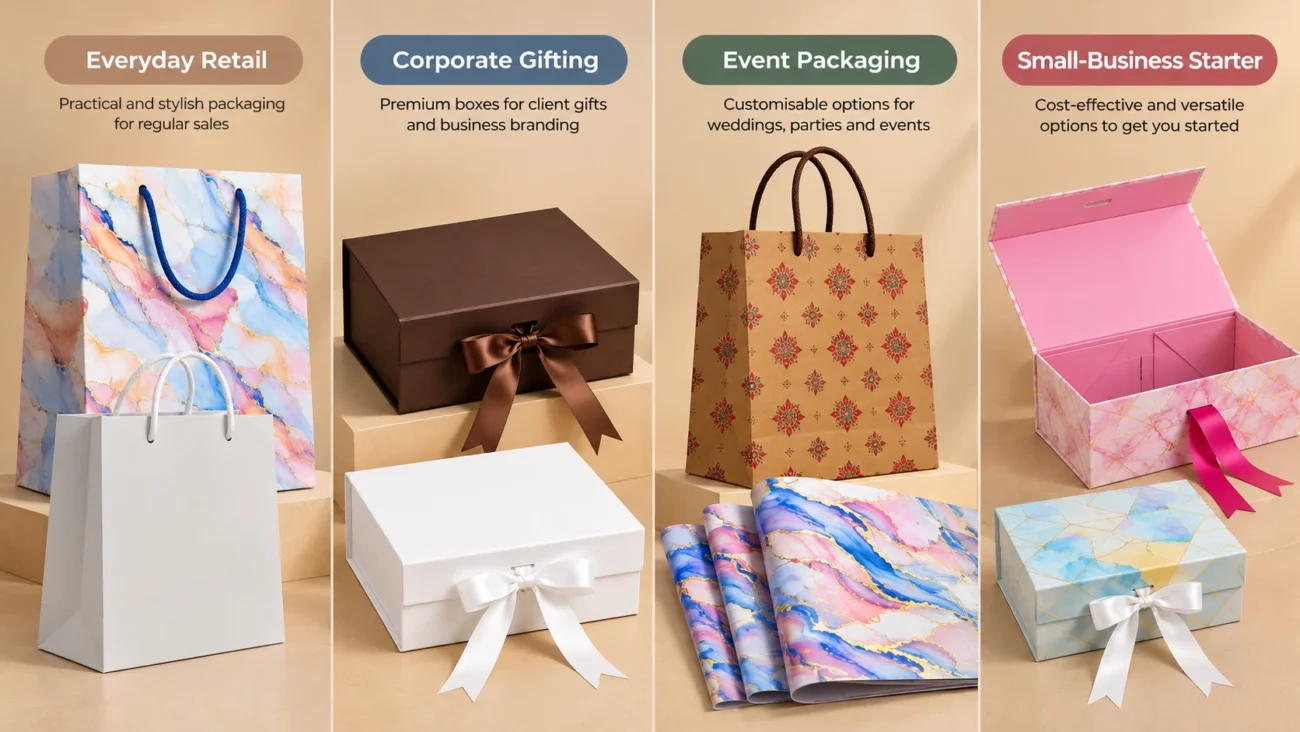
The ten steps remain broadly the same, but the priorities change depending on the type of business and how it uses packaging.
- Retail Stores and Gift Shops: For retail stores and gift shops, consistency and regular availability are particularly important. Packaging is often needed throughout the year, with demand increasing during festivals and other busy shopping periods. Plan bag and box sizes around the products you sell regularly.
Track how quickly your stock is used and reorder before supplies run low.
Our guide to packaging solutions for gift shops and choosing the right mix of bags, boxes, and wrapping paper explains how to organize packaging requirements for a retail business. - Corporate Gifting and Events: For corporate gifting and events, the delivery deadline is often the main concern. Event dates are usually fixed, so late packaging can disrupt the preparation and distribution process.
Confirm quantities, packaging specifications, and delivery timelines early. Allow a reasonable buffer above the expected recipient count, and make sure the packaging arrives with enough time for inspection and assembly. - Wedding and Occasion Planners: Wedding and occasion planners often coordinate several packaging types for one event. Bags, boxes, and other packaging items may need to arrive together or follow a consistent visual direction.
Confirm the gift categories and approximate guest count early. If the final count may change, plan a reasonable quantity buffer and discuss availability with the supplier before the order is finalized. - Resellers and Small Businesses Starting Out: For resellers and smaller businesses, controlling inventory and limiting unnecessary spending are important priorities. Look for suppliers whose minimum order quantities are suitable for your expected demand.
Starting with a carefully selected range of two or three sizes may be more practical than purchasing many different formats at once. Once you understand which sizes and products sell consistently, you can expand your range based on actual demand.
Across all these business types, the same principle applies: match the order quantity to demand, and give yourself enough time to source and inspect the packaging properly.
Red Flags to Watch For When Sourcing Wholesale Gift Packaging
Most suppliers are straightforward to work with, but certain warning signs deserve attention when comparing wholesale gift packaging options.
- Reluctance to provide a sample: It becomes harder to assess the actual product before committing to a large order.
- Vague answers about lead times or quality: Unclear commitments can make planning difficult.
- A quotation far below competing offers without explanation: Check whether the specifications, quantity, and delivery terms are genuinely comparable.
- No clear process for faulty or delayed deliveries: Understand how problems will be reported and handled.
- Product photographs that don’t clearly represent the actual item: Ask for more information or a sample before relying on the listing.
- Pressure to pay the full amount upfront without written terms: Make sure the order details and payment conditions are documented.
One warning sign alone does not necessarily mean a supplier is unreliable. However, several together should prompt you to ask more questions or consider other options.
Common Mistakes When Sourcing Gift Packaging in Bulk
Avoid these common mistakes when planning a bulk purchase:
- Contacting suppliers before deciding on sizes and quantities: This can lead to inaccurate quotations and unsuitable purchases.
- Planning forward from today instead of backward from the deadline: This can leave too little time for samples, delivery, and inspection.
- Comparing only the unit price: Delivery charges, specifications, and payment terms also affect the total cost.
- Skipping sample testing: A bag or box may look suitable but fail to meet practical requirements.
- Placing a large first order without evaluating the supplier: Where the supplier’s MOQ permits, a smaller trial order can help assess consistency.
- Failing to keep an approved sample: Without a reference, comparing repeat deliveries becomes more difficult.
- Waiting until stock is nearly exhausted to reorder: This increases the risk of running short during busy periods.
A structured purchasing process helps reduce these risks and makes bulk sourcing easier to manage over time.

Making the Next Order Easier
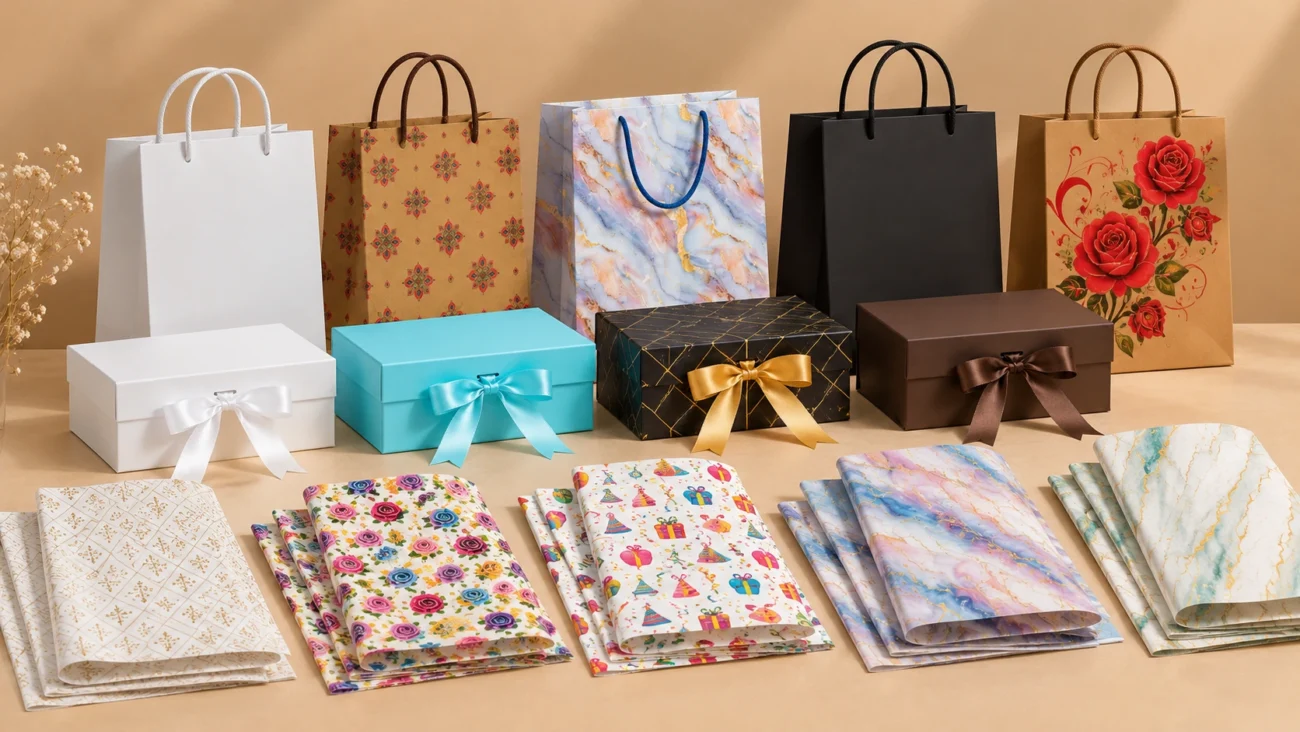
Sourcing packaging in bulk becomes more manageable when each step is completed in the right order. Identify what you need, plan around your deadline, test a sample, compare quotations carefully, and document the agreement. Once the first order has been evaluated, retain the product specifications and sample so that future purchases can be checked against the same requirements. GiftNGreet supplies a ready-made range of Kraft Paper Carry Bags, Decorative Paper Carry Bags, Solid Color Paper Carry Bags, Foldable Magnetic Lid Boxes, and Wrapping Paper for businesses sourcing paper packaging in bulk.
For businesses looking for ready-made gift packaging, selecting a suitable box or bag based on product size, presentation requirements, and intended use can help create a more consistent customer experience.
Explore:
Wrapping Paper Sheets for Gift Packaging
Ready-made Magnetic Lid Gift Boxes
Ready-made Paper Gift Bags for Retail and Gifting
To enquire about available products and bulk purchasing requirements, contact GiftNGreet.
Frequently Asked Questions
Start by listing the packaging types, sizes, and quantities you need based on your actual products. Then work backward from your deadline to establish a timeline before contacting suppliers.
Manufacturers can often answer detailed questions about materials, construction, and production quality. Wholesalers and distributors may offer a wider selection of products. Compare both options based on your requirements, order quantity, and supplier reliability.
Ideally, request at least one sample of each product or size you are considering. Test each sample using the intended contents before confirming a large order.
A reasonable buffer can help account for damaged pieces, unexpected demand, or last-minute additions. The appropriate quantity depends on demand predictability, storage capacity, and how quickly replacement stock can be obtained.
Start planning well before peak demand. Allow enough time for samples, quotation comparisons, order confirmation, delivery, and inspection. Confirm the actual lead time with the supplier rather than relying on a general estimate.
Count the quantity, inspect samples from different cartons, compare dimensions and finish against the approved sample, and test a few pieces before accepting the delivery.
Sometimes. This depends on the supplier’s minimum order quantity and available purchasing options. If a smaller trial order is possible, it can help you evaluate the product before increasing the quantity.
It can simplify ordering and communication, particularly when you need several packaging types. However, this approach works best when the supplier can meet the requirements for each product reliably.
Businesses can source packaging from manufacturers, wholesalers, distributors, and other suppliers serving commercial buyers. Compare product specifications, available quantities, pricing, and delivery terms before deciding.
GiftNGreet, a paper packaging manufacturer based in New Delhi, supplies paper gift bags and gift boxes for retail and business requirements.
Related Reading
- Choosing Packaging for Bulk Orders
- How Manufacturers Produce Quality Paper Gift Bags
- Packaging Solutions for Gift Shops
- Choosing the Right Gift Box Size for Different Products
Manufactured in New Delhi
Packaging Designed For Every Occasion
Explore GiftNGreet’s collection of gift boxes, paper gift bags, wrapping paper, and packaging solutions suitable for gifting, retail businesses, celebrations, and everyday presentation.
Looking for packaging solutions? Visit our Contact Us page for retail and bulk enquiries.