
Packaging Insights
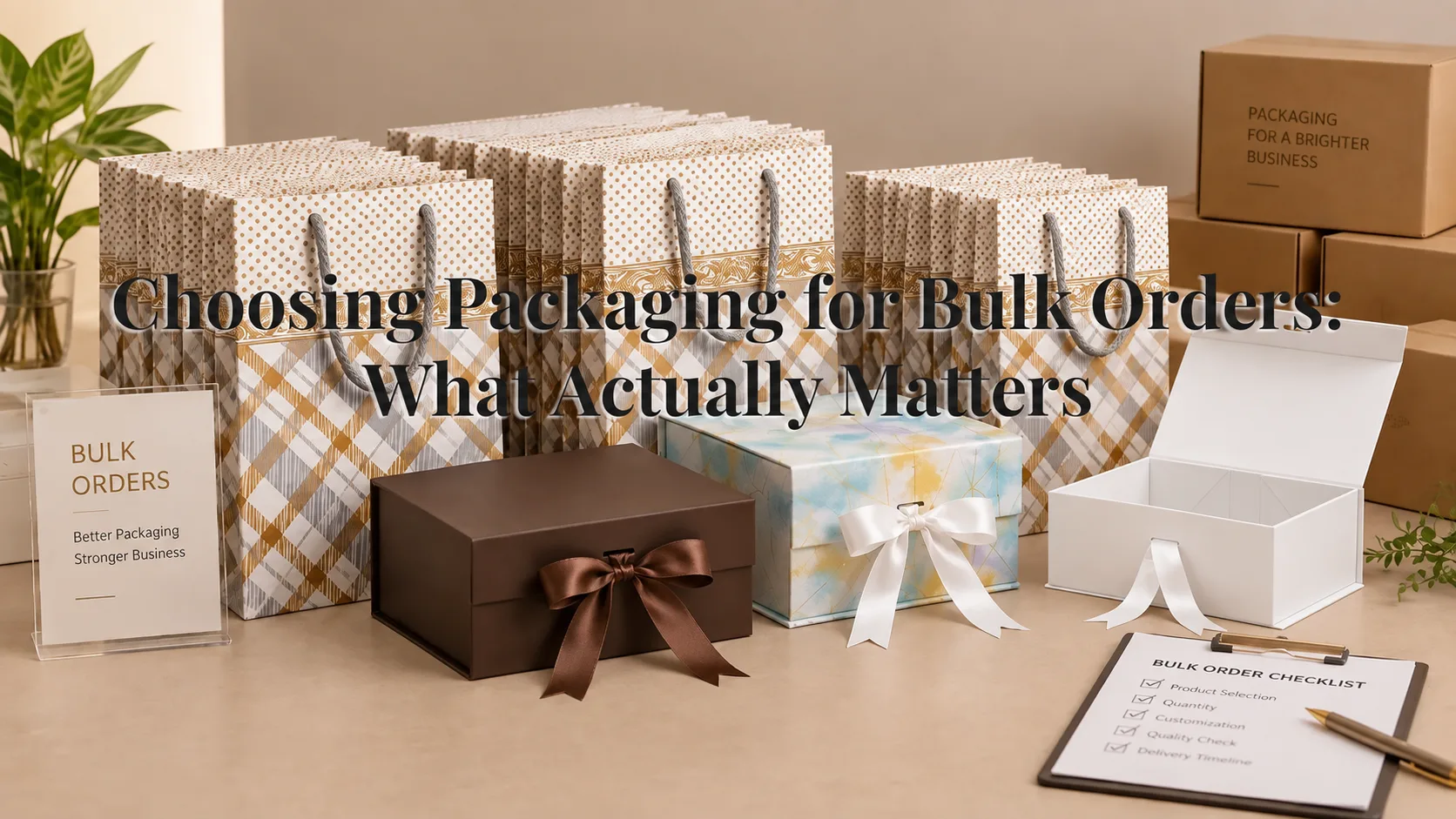
Ordering packaging in bulk always looks simple on paper: pick a size, pick a design, place the order. Then the boxes arrive, and it turns out the handles tear under normal use, the sizes are slightly off, or the second batch doesn’t quite match the first one. Packaging for bulk orders is one of those decisions where the mistakes don’t show up until you’re already committed to a few thousand units.
This is a practical rundown of what actually separates a good bulk packaging decision from a costly one — not just price per unit, but the handful of factors that tend to get overlooked until they cause a real problem.
The Short Version
When choosing packaging for a bulk order, the main factors to evaluate are:
- Price per unit matters, but it is rarely the only factor that determines the actual cost of an order.
- MOQ, lead time, and storage capacity need to be considered together rather than separately.
- Quality and durability are difficult to judge from appearance alone, so samples should be tested under realistic conditions before committing to a large quantity.
- Consistency across repeat orders matters, particularly for businesses that use the same packaging regularly.
- Packaging size and material should match the products being carried or packed, rather than being selected simply because they are readily available.
- Supplier reliability matters over time, especially when packaging is an ongoing requirement.
- The lowest cost per unit is not necessarily the lowest overall cost if the order creates quality, storage, delivery, or replacement problems later.
The basic idea is simple: bulk packaging should be evaluated as a complete purchasing decision, not just a unit-price comparison.
Why Bulk Packaging Decisions Are Riskier Than They Look
A single bag or box is easy to judge — you can hold it, test it, and see if it works for the intended product. Bulk packaging removes that safety net. A decision that’s slightly wrong doesn’t cost you one unsuitable bag; it affects however many units you ordered, along with the time and money required to identify the problem and arrange a replacement.
That’s really the core reason it’s worth slowing down on this decision specifically.
The factors that matter for choosing the right packaging in bulk aren’t dramatically different from choosing packaging generally — they simply carry much more weight when multiplied across a large order. A small difference in size, material quality, construction, or defect rate can become significant when repeated across hundreds or thousands of units.
This is also why businesses should evaluate packaging against its actual use case. A paper bag intended for lightweight retail purchases has different requirements from one expected to carry heavier products. Similarly, a gift box that needs to be stored in large quantities may need to be assessed differently from one purchased in small numbers.
Before comparing suppliers, it helps to establish the basic requirements first: what needs to be packed, how much packaging is required, how it will be stored, and when it needs to be available.
Packaging Cost and Cost Per Unit: Getting the Math Right
Packaging cost is usually the first thing anyone looks at, and cost per unit is where most of that conversation happens. But cost per unit on its own can be misleading if it’s the only number being compared.
A more useful comparison considers what you are actually getting for the quoted price.
- Lower cost per unit at higher volume is one of the main reasons businesses buy in bulk in the first place — pricing can become more favourable as order quantities increase.
- Cost per unit needs to be weighed against usable output. If part of a batch turns out defective or unsuitable for the intended application, the effective cost per usable unit becomes higher than the quoted price.
- Total cost includes more than the unit price. Delivery, storage, handling, and the possibility of having to reorder sooner than expected can all affect the final cost.
- The cheapest quote isn’t always the cheapest outcome, particularly if it comes from a supplier with inconsistent quality or unreliable delivery timelines.
- Over-ordering can also increase the effective cost, especially when packaging takes up storage space for longer than expected or becomes unsuitable as product requirements change.
For this reason, it is better to compare total purchasing cost and usable packaging output rather than simply choosing the lowest number on a quotation.
Understanding MOQ Before You Commit
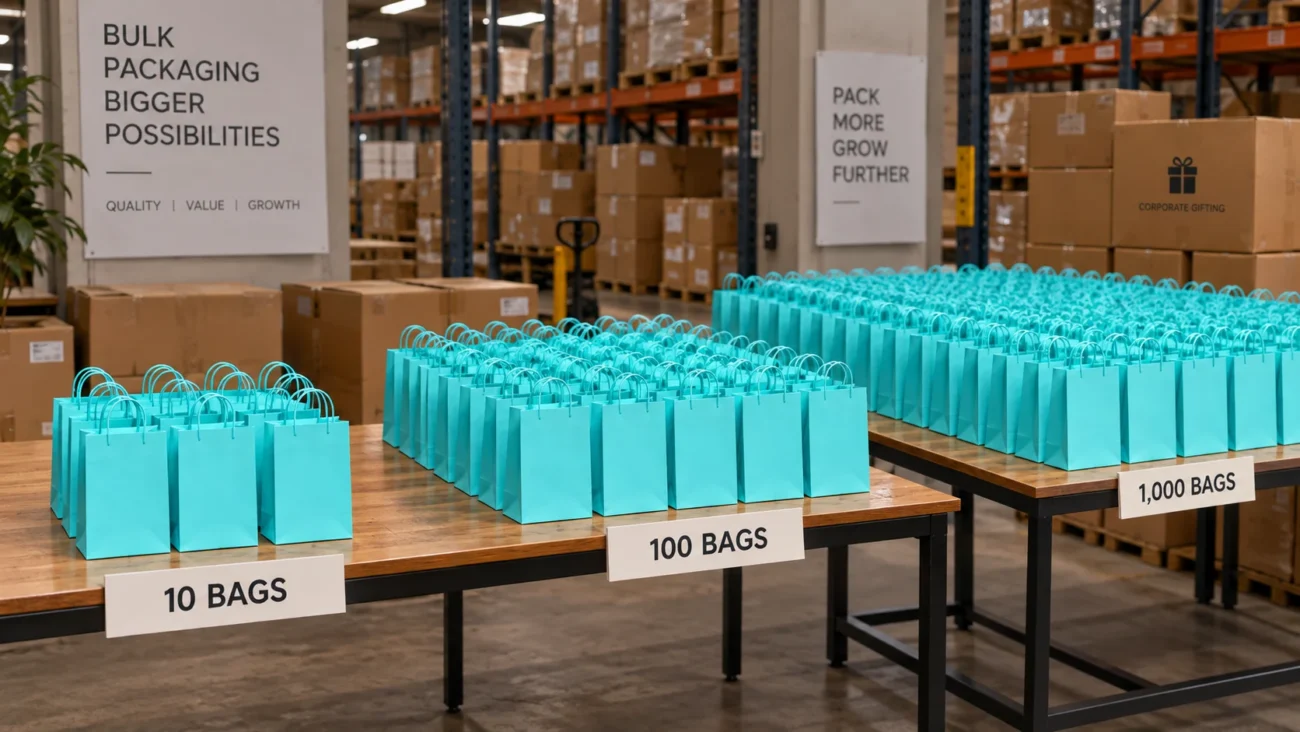
MOQ, or minimum order quantity, is often the first practical constraint businesses run into when sourcing packaging supplies in bulk.
A supplier may offer a particular packaging format, but the minimum quantity required to place an order can determine whether that option actually makes sense for your business.
- MOQs vary significantly by supplier and packaging type, so it’s worth comparing options rather than assuming one quantity is standard across the market.
- A lower MOQ isn’t automatically better if it comes with a meaningfully higher cost per unit.
- MOQ should be compared with actual usage, not simply the lowest quantity available. Ordering substantially more than you can reasonably use can tie up cash and storage space.
- Ask whether the MOQ applies per design, size, or overall order. This becomes especially important when a business needs multiple packaging formats or variations.
- Consider how quickly the stock will be used. A quantity that looks reasonable on paper may still be excessive if the packaging will take a long time to move.
The goal is to find an order quantity that gives you reasonable pricing without creating unnecessary inventory pressure.
Packaging Quality and Product Protection
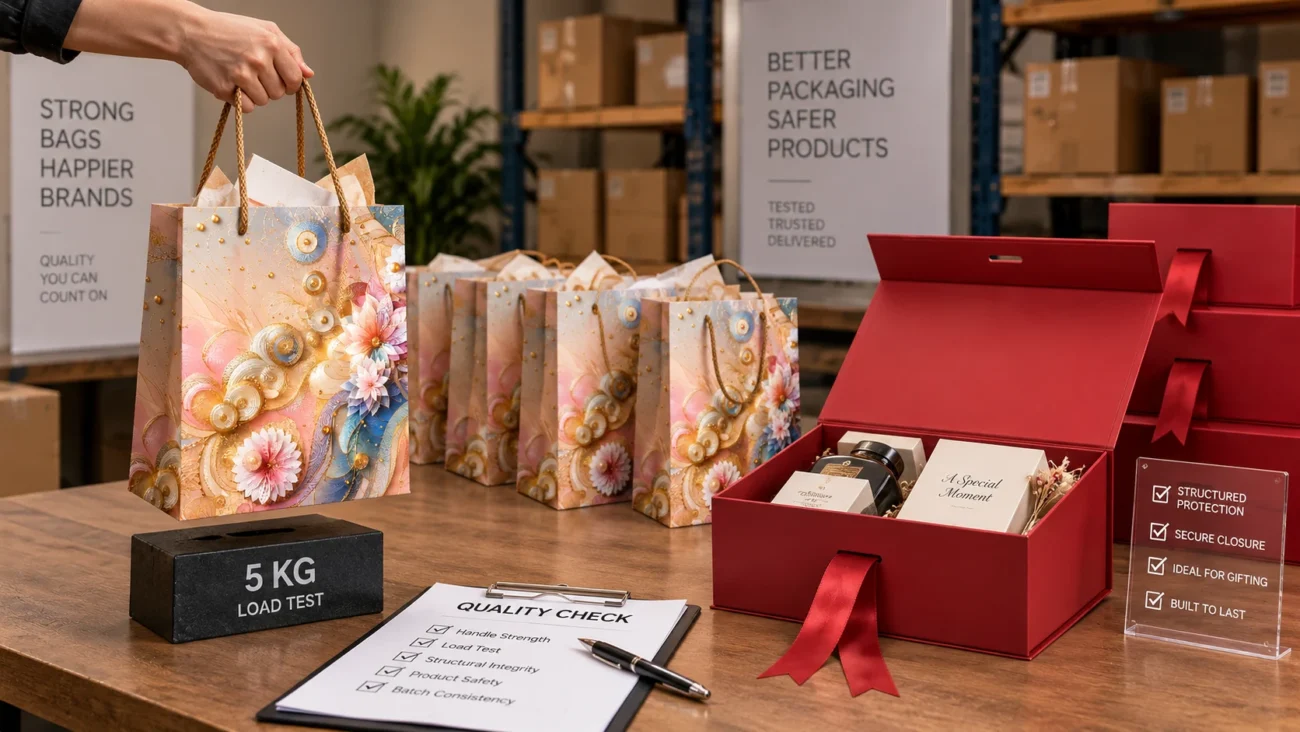
Packaging quality is where the real risk in bulk ordering tends to live, mostly because it’s one of the hardest things to judge from a distance or from a single sample.
A packaging product can look perfectly acceptable when displayed on a table and still perform poorly when it is loaded, carried, stacked, transported, or handled repeatedly.
When evaluating quality, consider:
- Product protection — the packaging needs to match the actual weight, size, and fragility of what it will carry or contain.
- Durability under real conditions — test a bag or box loaded with the type of product it will actually be used for rather than judging it empty.
- Construction quality — seams, folds, handles, closures, bases, and joining points can all affect how packaging performs.
- Consistency across the full order — a supplier who sends an excellent sample does not automatically guarantee that every unit in a large production run will be identical.
- Quality control — ask how the supplier checks dimensions, construction, printing, finishing, and other relevant production factors.
- Defect rates and usable output — even a relatively small percentage of unsuitable units can become significant when the order contains several thousand pieces.
This is why testing before committing to a large order is one of the most useful steps a bulk buyer can take.
For businesses that regularly use paper bags, understanding different types of paper gift bags and their uses can also help when deciding which bag format is appropriate for a particular product or application.
Packaging Size and Packaging Material: Matching to the Product
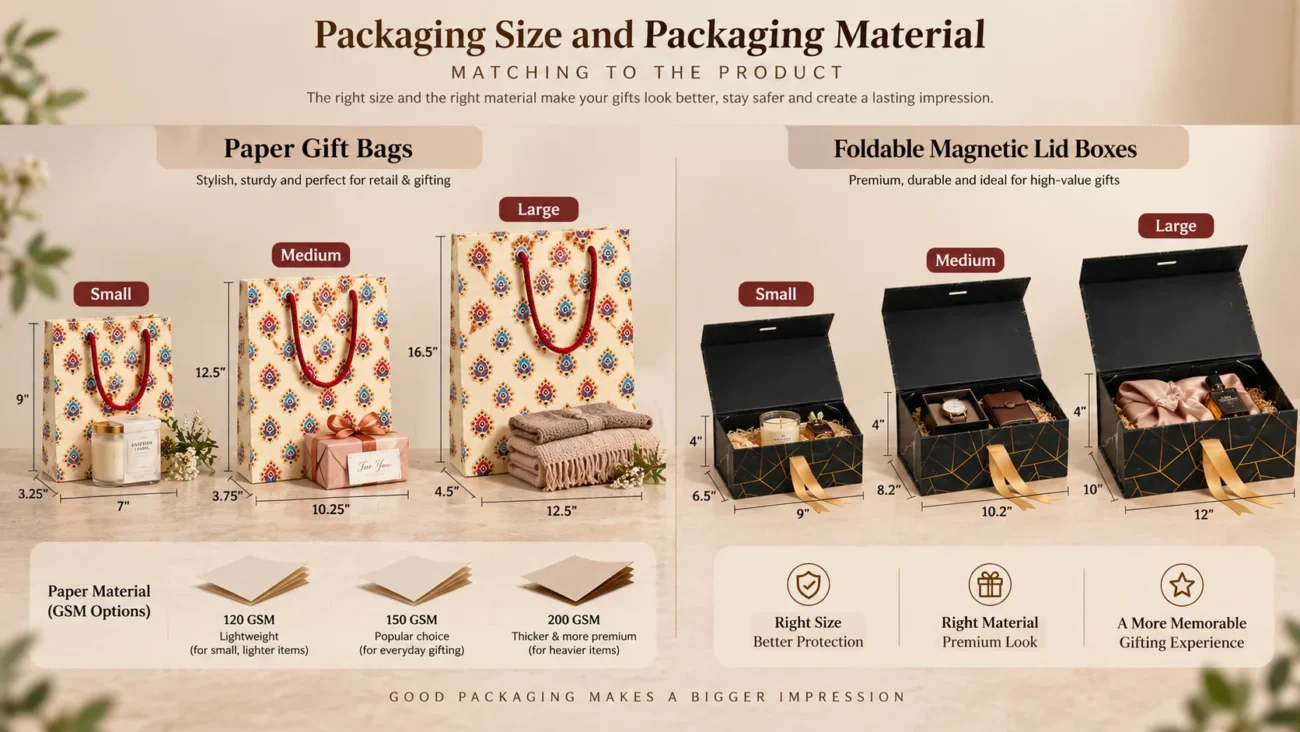
Getting packaging size and packaging material right is where a lot of the value of a bulk packaging decision is determined. The right packaging should suit the product, its weight, and the way it will be handled rather than being selected simply because a particular size or material is readily available.
- Size needs to match your actual product range, not just a single sample item. If your products vary considerably in size, your bulk packaging requirements may need to include more than one size.
- Material choice affects both protection and cost. Heavier GSM paper or thicker board may provide greater support for heavier items, while lighter materials can be suitable for smaller or lighter products.
- Oversizing “just in case” wastes money at scale. A packaging format that is slightly too large may require more material and storage space, and that difference becomes significant when multiplied across several thousand units.
- Undersizing creates its own problems. Forcing a product into packaging that is too small can affect presentation and may put unnecessary stress on the packaging.
- The product and packaging should work together. Consider the item’s dimensions, weight, shape, fragility, and how it will be handled before finalizing the packaging size.
For businesses buying paper bags in larger quantities, the choice between different paper specifications should also be based on intended use. A lightweight bag for small retail purchases does not necessarily require the same construction as a bag expected to carry heavier products.
The same principle applies to boxes. Box dimensions, board thickness, construction, and storage requirements should all be considered before ordering large quantities.
Durability, Printing, and Design and Finish Options
Beyond the basics, a few more specific factors shape how well bulk packaging performs and looks once it is actually in use.
- Durability : Ask specifically how a packaging type performs under the load and handling conditions your business actually needs — not just how it looks when new.
For paper bags, pay attention to factors such as paper GSM, handle attachment, seams, and bottom construction. For boxes, consider the board thickness, structure, closure, and how well the box maintains its shape during handling and storage.
If the packaging will carry a particular type of product, testing it with that product is much more useful than testing an empty bag or box. - Printing : Print quality and consistency matter even more at scale, because a small printing issue in a sample can become a much larger problem when it is repeated across thousands of units.
Before placing a bulk order, consider:- Whether colors appear consistent across samples
- Whether printed elements are positioned accurately
- Whether the print remains clear on the chosen paper or board
- Whether the finish affects the appearance of the printed surface
- How consistency is maintained throughout the production run
If packaging will be used repeatedly by a business, consistent printing can also contribute to a more recognizable and organized presentation.
This connects closely with the broader role of packaging in building consistent brand presentation across different packaging formats, particularly when the same packaging is used across multiple orders or product categories.
- Design and Finish Options : Rather than assuming a supplier can produce anything on request, check what is actually available within their ready-made design and finish range.
Colors, patterns, surface finishes, and packaging formats that are already part of an established production range can make purchasing simpler and may provide greater consistency across repeat orders.
The important point is to evaluate the options against your actual requirements. A visually appealing finish is useful only if the packaging still provides the required durability, storage practicality, and overall performance.
For bulk orders, consistency and suitability should generally take priority over adding unnecessary design elements.
Lead Time and Storage: The Planning Factors Most Businesses Underestimate
Lead time and storage are two factors that businesses can easily overlook because neither one changes the packaging itself. But both can have a direct impact on whether a bulk order is practical.
- Lead Time : Lead time needs to be confirmed rather than assumed.
Ask the supplier how long production and delivery are expected to take, and allow additional time where possible for unexpected delays. This becomes particularly important before periods of increased demand, such as festive seasons or major retail campaigns.
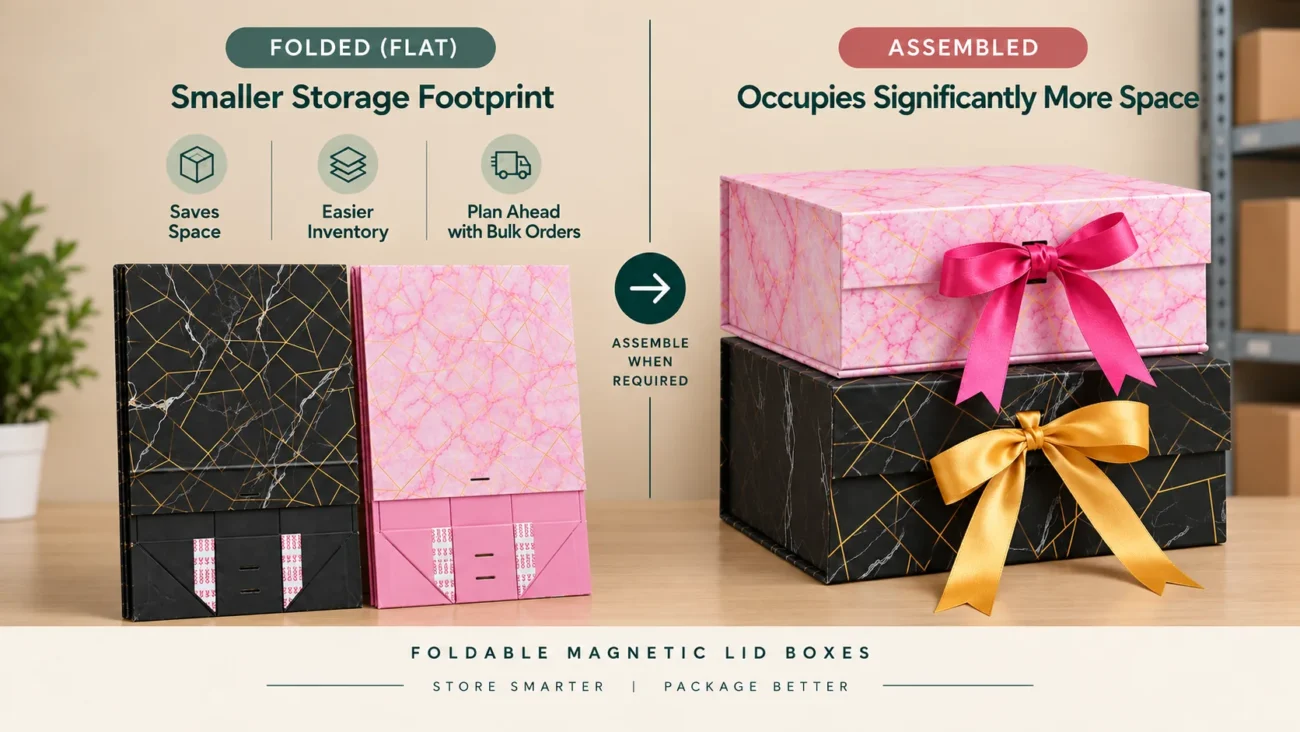
A packaging order that arrives after the products are ready to be sold is not particularly useful, even if the unit price was excellent. - Storage: Storage should also be considered before the order is placed. Several thousand bags or boxes can occupy considerably more space than expected, particularly when the packaging is supplied pre-assembled.
Businesses should consider:- Available storage area
- How the packaging will be stacked
- Whether it needs protection from moisture, dust, or excessive handling
- How quickly the stock is expected to be used
- Whether different sizes or designs need to be stored separately
Foldable packaging formats, where appropriate, can reduce the amount of space required compared with fully assembled alternatives. This can be particularly useful for businesses placing larger orders with limited storage capacity.
- Build in a Buffer : Planning should also include a reasonable buffer between the expected arrival of packaging and the date it is actually needed. This gives the business some room to deal with production delays, transportation issues, or unexpectedly higher packaging consumption without immediately running out of stock.
The basic rule is simple: don’t plan bulk packaging around the earliest possible delivery date. Plan around a realistic date with some room for delays.
Supplier Reliability: The Factor That Matters Most Over Time
Supplier reliability doesn’t always show up clearly in a first order — it becomes much more obvious in the second, third, and tenth order, when consistency either holds up or doesn’t.
For businesses that depend on packaging regularly, the supplier relationship needs to work beyond a single successful shipment.
- Consistent quality across repeat orders is a stronger signal than an excellent single shipment.
- Clear, responsive communication about lead times, delays, specifications, or issues matters more in bulk ordering because the consequences of a misunderstanding are much larger.
- A supplier’s experience with businesses ordering similar packaging quantities can be a useful indicator when evaluating whether they can handle repeat requirements.
- Reliable availability matters when packaging is part of an ongoing retail or gifting operation. Running out of commonly used bags or boxes can disrupt sales and fulfilment.
- A clear understanding of specifications helps reduce differences between one order and the next, particularly when the same size, material, or packaging format is being reordered.
Reliability is also worth considering alongside price. A slightly higher cost per unit from a dependable bulk packaging supplier may be more practical in the long run than repeatedly dealing with inconsistent quality, missed timelines, or unexpected changes.
For businesses looking for packaging on an ongoing basis, the goal should not simply be to find a supplier who can fulfil one bulk order, but one who can maintain a dependable standard as requirements continue.
Sourcing Paper Bags and Gift Boxes in Bulk
For businesses specifically sourcing paper bags in bulk or gift boxes in bulk, a few of the general principles above apply in more concrete ways.
- Paper Gift Bags Wholesale : When purchasing paper gift bags wholesale, check the GSM appropriate to the intended use, handle attachment, bottom construction, dimensions, and overall consistency.
It is also useful to evaluate a sample using the type of products the bag will actually carry. An empty bag may look and feel suitable while behaving differently once loaded.
Businesses can explore paper gift bags for retail and gifting requirements when looking for ready-made options suited to regular business and gifting applications. - Gift Bags in Bulk : If ordering across multiple sizes or designs, confirm whether the supplier’s MOQ applies per size or design or across the overall order.
This can make a significant difference to how much stock a business needs to purchase upfront. It is also worth considering which sizes will actually move regularly rather than dividing the order equally across every available option. - Wholesale Gift Boxes : For wholesale gift boxes, consider the box construction, dimensions, storage footprint, and intended use before deciding on quantity.
A foldable box format can be useful where storage space is limited because the packaging can occupy less space before use than a fully assembled alternative.
Businesses should also consider whether the box is appropriate for the products being packed and whether its construction provides the required support during handling. - Ready-Made Paper Bags and Gift Boxes : For businesses purchasing in quantity, ready-made paper bags and gift boxes can simplify the sourcing process because the available formats are already established.
Rather than assuming that more options automatically make a better bulk order, focus on packaging formats that fit your product range, storage capacity, expected usage, and ordering frequency.
Established product ranges can also make repeat purchasing easier when the same packaging needs to be reordered.

A Quick Framework for Comparing Bulk Packaging Suppliers
When comparing more than one wholesale packaging supplier, it helps to use the same criteria for each option rather than comparing quotations on price alone.
- Confirm the MOQ : Check the minimum order quantity and whether it applies per size, design, or overall order. Make sure the quantity is realistic for your actual usage.
- Evaluate a Suitable Sample : Request a sample and test it with the products it will actually carry or contain. Check dimensions, construction, handles, closures, and overall durability as relevant.
- Confirm Lead Time : Ask for a realistic production and delivery timeline. If the packaging is needed for a specific selling period, allow a reasonable buffer rather than planning around the earliest possible arrival.
- Compare the Effective Cost : Look beyond the quoted unit price. Consider usable quantity, expected defects, delivery costs, storage requirements, and the potential cost of having to reorder sooner than planned.
- Check Consistency : If the packaging will be reordered regularly, ask how consistency is maintained between production runs. This is particularly important for businesses using the same packaging across their day-to-day operations.
- Assess Supplier Communication : A supplier should be able to clearly explain relevant specifications, quantities, timelines, and production considerations. Clear communication becomes increasingly important as order volumes grow.
This simple framework makes it easier to compare suppliers on the factors that actually affect a bulk packaging order, rather than allowing the lowest quotation to make the decision automatically.
The Bottom Line
None of this is about over-complicating a packaging order. It’s about recognizing that a decision which seems small at the unit level gets a lot bigger once it’s multiplied by a few thousand.
A little extra time spent checking MOQ, testing a suitable sample, confirming packaging specifications, evaluating storage requirements, and establishing realistic lead times can save considerably more time and money than trying to fix a bulk order after the problems appear.
The best bulk packaging decision is therefore not necessarily the one with the lowest price. It is the one that provides a sensible balance of cost, quality, durability, consistency, availability, and supplier reliability for the way your business actually operates.

Explore GiftNGreet Packaging
Frequently Asked Questions
Look beyond price per unit to quality consistency, lead time, supplier reliability, and whether the packaging size and material match your product range. The right bulk packaging should also suit your expected usage, storage capacity, and handling requirements.
MOQ stands for minimum order quantity — the smallest amount a supplier will produce or supply per order. It matters because ordering significantly more than your actual requirements can tie up cash and storage space, while ordering too little may result in a higher cost per unit.
Request a suitable sample and test it under the real conditions your product will face — loaded, carried, stored, or handled as it normally would be. Check important factors such as dimensions, material, construction, handles, closures, and overall durability, depending on the packaging type.
Not necessarily. A lower cost per unit can be offset by inconsistent quality, unreliable lead times, higher defect rates, or unsuitable packaging specifications, making the overall cost higher than expected.
Order early enough to allow for the supplier’s stated production and delivery timeline, with a reasonable buffer for potential delays. This becomes particularly important ahead of seasonal demand periods, when packaging requirements and lead times may increase.
Cost per unit is the price of one packaging item. Total packaging cost can also include shipping, storage, handling, and the cost associated with defective or unusable units. Looking at the overall cost gives a more realistic picture of what a bulk order will actually cost.
Sourcing multiple packaging types from one reliable supplier can simplify ordering, communication, and logistics and may make repeat purchasing easier. However, this only makes sense if the supplier can provide the required quality and specifications across each packaging type.
Yes. Oversized packaging can increase material, storage, and handling costs, while undersized packaging can create problems with fitting, presentation, or product protection. These issues become much more significant when multiplied across hundreds or thousands of units.
One of the most common mistakes is focusing on price per unit alone without considering quality consistency, lead time, packaging suitability, storage, and supplier reliability. A slightly higher unit price can sometimes result in a better overall outcome when the packaging performs consistently and arrives when required.
Related Reading
- Different Types of Paper Gift Bags and Their Uses
- Guide to Paper Gift Bags for Retail Businesses
- Common Gift Packaging Mistakes to Avoid
- Kraft Paper Bags: Uses, Benefits & Applications
Manufactured in New Delhi
Packaging Designed For Every Occasion
Explore GiftNGreet’s collection of gift boxes, paper gift bags, wrapping paper, and packaging solutions suitable for gifting, retail businesses, celebrations, and everyday presentation.
Looking for packaging solutions? Visit our Contact Us page for retail and bulk enquiries.