
Packaging Insights
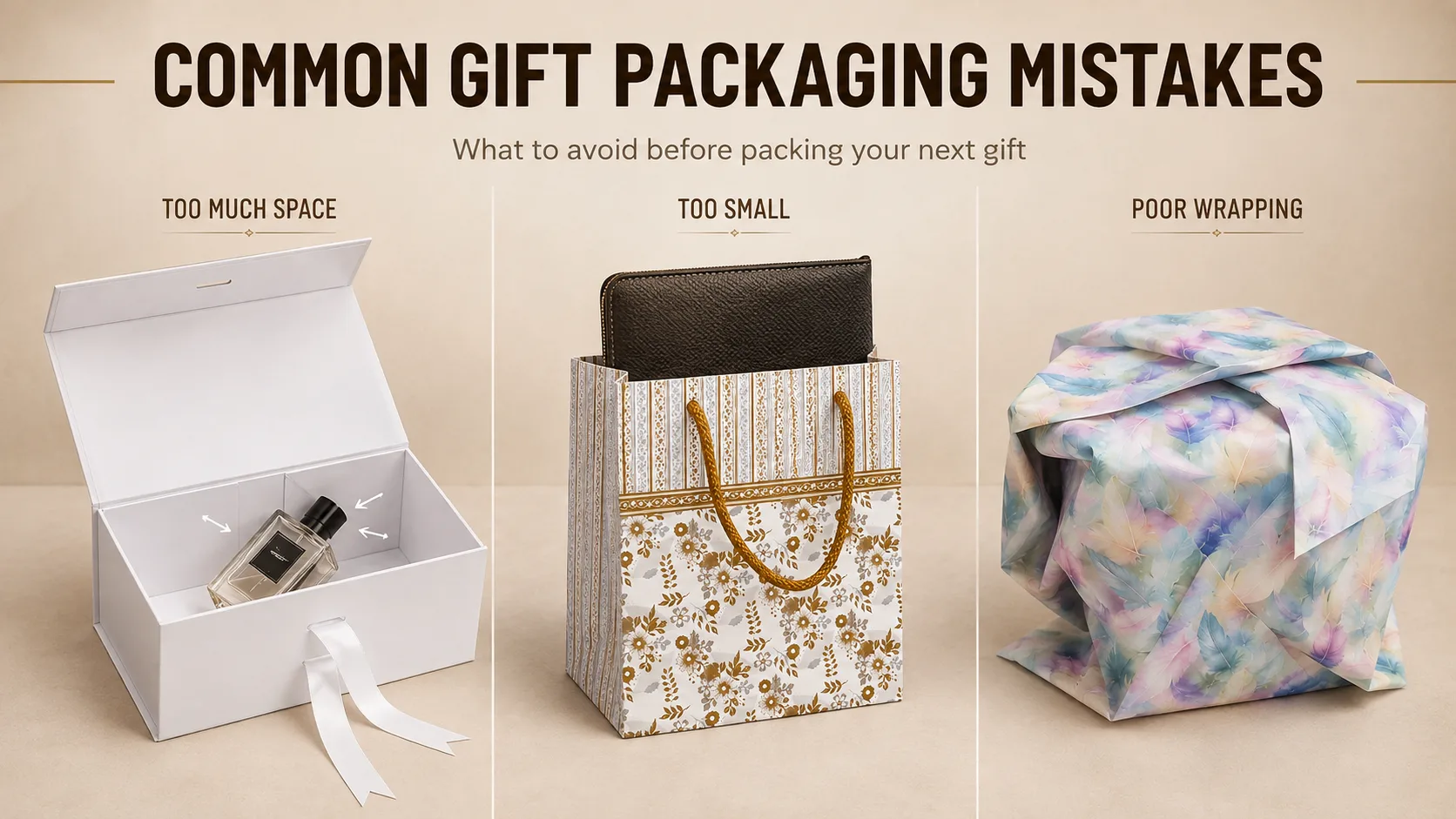
A thoughtful gift can lose some of its impact if the packaging around it works against it rather than for it. From choosing the wrong size box to skipping protective filler entirely, these common gift packaging mistakes show up more often than most people realize — whether it’s an individual wrapping a personal gift or a retail business packaging products at scale.
This guide walks through the mistakes that most frequently undermine presentation, protection, and overall gift packaging quality, along with practical fixes for each one.
Quick Takeaways
✔ Wrong sizing is the most common gift packaging mistake
✔ Skipping protective filler risks damage in transit
✔ Mismatched materials weaken durability
✔ Inconsistent packaging hurts retail presentation
✔ Ignoring sustainability considerations can turn off eco-conscious customers
✔ Small presentation details make a noticeable difference
Why Gift Packaging Mistakes Matter
Packaging does more than surround a gift. The choice of box, bag, wrapping material, size, and protective elements can affect product protection, presentation, handling, and the overall gifting experience. A box that is too large may allow the contents to move around, while packaging that is too small can put pressure on the product or make the package difficult to close properly.
Some mistakes also become more noticeable during handling. A paper bag with handles that are not suitable for the product weight can tear, while insufficient cushioning can leave fragile items vulnerable to impact. For businesses, repeated packaging problems can also create unnecessary material waste, inconsistent presentation, and additional packaging costs.
This is why understanding common gift packaging mistakes is useful for both individual gifting and businesses that package products regularly. The right packaging approach starts with matching the size, material, construction, and protection level to what is being packaged rather than selecting packaging based on appearance alone.
For businesses handling different products, this also means understanding how different box constructions and formats work. Our guide to different types of gift boxes for different occasions explains the key differences between rigid, foldable, and magnetic-lid box styles and where each type can be useful.
Sizing Mistakes: Choosing the Right Gift Box
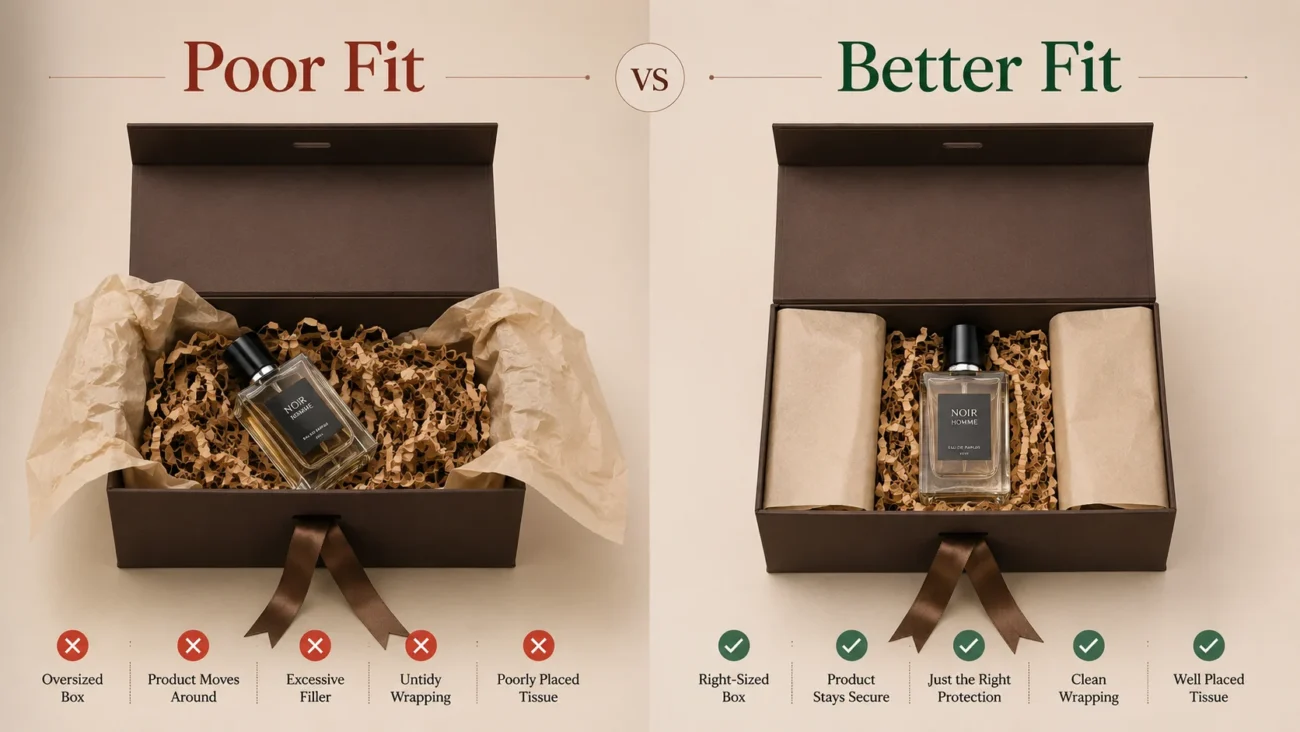
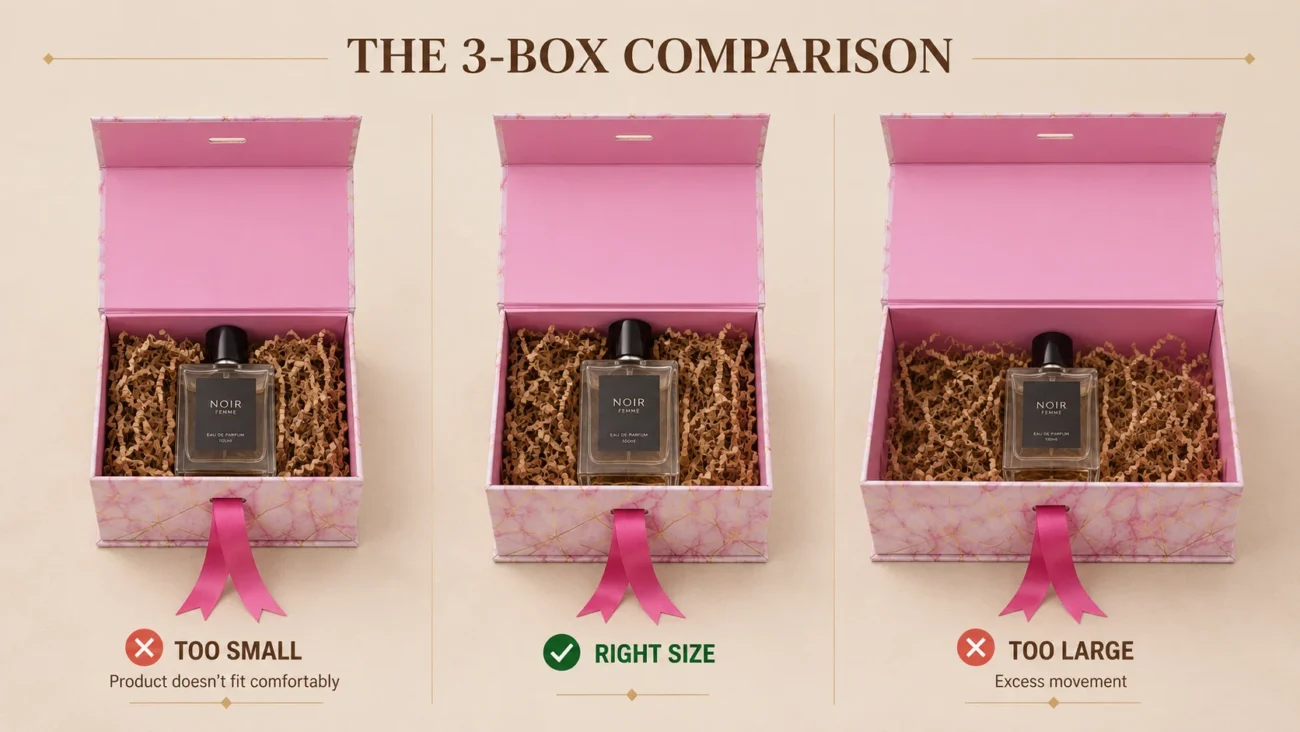
Choosing the right gift box starts with accurate measurement, yet incorrect sizing remains one of the most common gift packaging mistakes. A box should provide enough room for the product to fit comfortably and, where necessary, allow space for protective material without leaving excessive empty space.
- Oversizing “to be safe” — leaves excess empty space, allows products to shift, and can increase material use.
- Undersizing — creates a tight fit that can damage contents or prevent the box from closing correctly.
- Ignoring internal dimensions — external dimensions do not always represent the usable space available inside the box.
- Forgetting irregular shapes — handles, protrusions, rounded sections, and unusual product shapes may require additional clearance.
- Not allowing for protective material — filler and cushioning need their own space inside the package.
- Using one box size for every product — different products often require different dimensions to achieve a secure and presentable fit.
If you are unsure how much clearance to allow around different products, our guide to choosing the right gift box size for different products explains the key measurements and considerations to check before selecting a box.
Material and Durability Mistakes
Packaging material needs to be appropriate for the product it is carrying. One of the more common gift packaging mistakes is choosing packaging based only on appearance or price without considering the weight, shape, and handling conditions of the item.
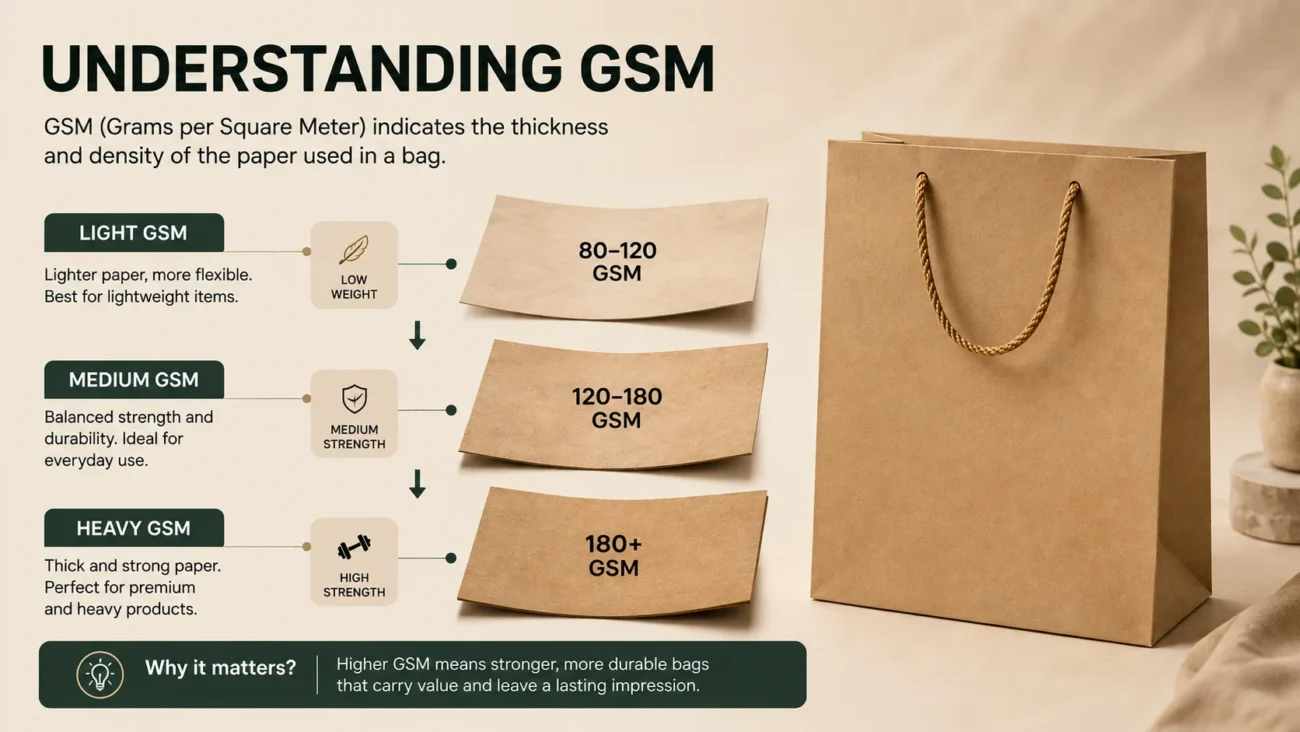
- Using paper with insufficient GSM for heavier products can result in tearing, sagging, or failure around the handle attachment points. For paper bags in particular, the paper weight should be considered alongside the expected carrying load rather than treated as an isolated specification.
- Choosing appearance over structural suitability can create another problem. A bag or box may look appropriate for an occasion but still be unsuitable for the product inside. Packaging should first provide adequate support and protection, while appearance and finishing should complement those practical requirements.
- Handle construction also matters for paper bags. The strength of the paper alone does not determine how much weight a bag can carry. The handle material, attachment points, and way the bag is reinforced all contribute to its carrying performance.
- Moisture and storage conditions should also be considered. Paper-based packaging can be affected by prolonged exposure to humidity or moisture, particularly when stored in unsuitable conditions. Businesses should therefore keep packaging in a clean, dry storage area and avoid placing stock directly where it can be exposed to water or damp surfaces.
- Finally, avoid assuming that one packaging material will work equally well for every product. A lightweight gift, a boxed product, a food item, and a heavier retail product may have very different packaging requirements. Matching the packaging construction to the intended use helps reduce tearing, deformation, product movement, and other avoidable problems.
Common Gift Wrapping Mistakes
Even when the gift itself is well chosen, poor wrapping can make the final presentation look untidy or make the package difficult to handle. Gift wrapping mistakes are often simple to avoid, but they become more noticeable when multiple gifts need to be prepared consistently.
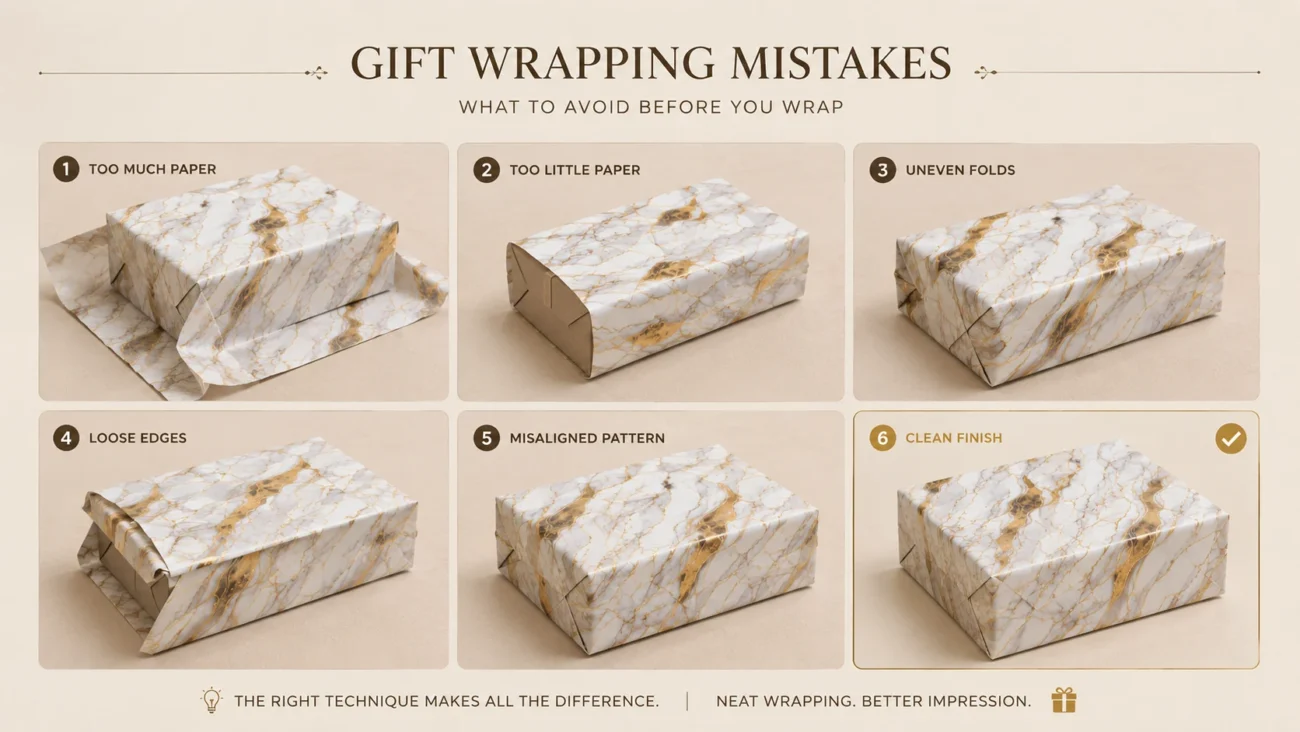
- Using wrapping paper that is too thin is one common problem. Thin paper can tear around corners, edges, and folds during wrapping, particularly when the product has sharp or uneven surfaces. The paper should be appropriate for the shape and handling requirements of the item.
- Using too much paper can also create problems. Excess material around the ends and sides can result in bulky folds and unnecessary creasing. On the other hand, using too little paper can leave parts of the product exposed or place excessive tension on the paper when the package is closed.
- Skipping reinforcement at stress points is another avoidable mistake. Corners, folds, and areas where several layers of paper meet can be more vulnerable during handling. Securing these areas properly helps prevent the wrapping from opening or tearing.
- Pattern direction should also be considered. Printed wrapping paper can look uneven when patterns, lines, or decorative elements are positioned inconsistently across the package.
- Finally, loose ends and uneven folds can make an otherwise suitable gift look unfinished. Taking a little extra time to fold edges cleanly and secure the final opening creates a more consistent presentation.
Paper Gift Bag Packaging Mistakes
Paper gift bag packaging can be practical for retail, gifting, and everyday product carrying, but choosing the wrong bag can create problems with fit, durability, and presentation. Unlike a box, a bag also needs to account for how the product sits inside it and how much weight the handles will carry during use.
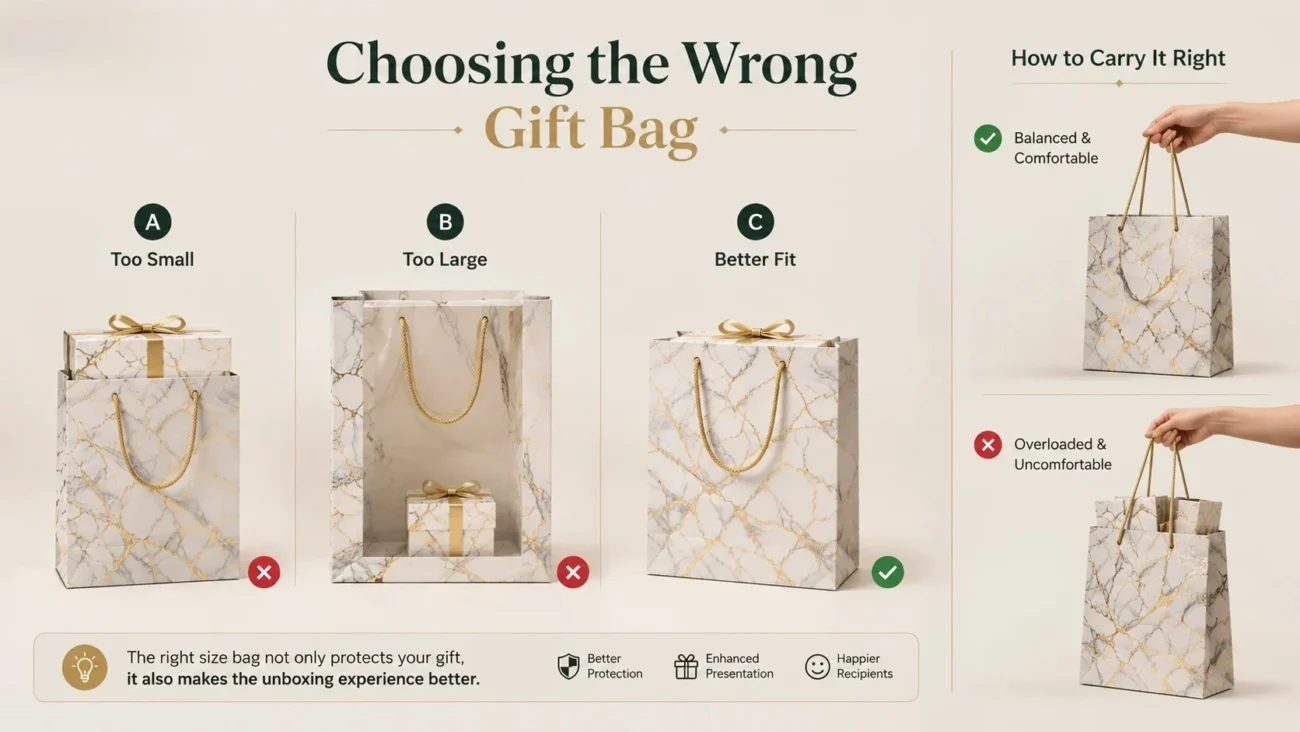
- Choosing a bag that is too small is one of the most common mistakes. Forcing a product into a narrow bag can place unnecessary pressure on the sides and make it difficult to remove the item. The bag should have enough width, height, and depth for the product to sit comfortably without excessive bulging.
- Choosing a bag without considering product weight can create durability problems. Heavier products require suitable paper strength and properly attached handles. The handle construction should therefore be considered alongside the paper itself rather than treated as a separate detail.
- Using only one bag size for very different products can also lead to inefficient packaging. A small accessory, boxed product, clothing item, and larger retail purchase may each require different dimensions. Keeping a practical selection of ready-made sizes can make everyday packaging easier and more consistent.
- Leaving too much empty space is another issue. An oversized bag can allow products to move around, while excessive unused space can make the packaging look disproportionate to its contents. Where appropriate, tissue paper or another suitable packing material can help keep the contents positioned properly.
- Ignoring the intended use of the bag can create another mismatch. A bag selected for a lightweight gift may not be suitable for a heavier retail product, while a purely utility-focused bag may not provide the presentation expected for a gifting occasion.
Businesses comparing different materials, finishes, handle styles, and bag formats can also benefit from understanding the types of paper gift bags available for different products and occasions before selecting their regular packaging range.
Presentation Mistakes That Undercut Gift Packaging
Packaging presentation is not only about choosing an attractive box or bag. The way different elements work together can affect whether the finished package looks organised, appropriate, and consistent. Several small gift presentation mistakes can make otherwise suitable packaging appear rushed or mismatched.
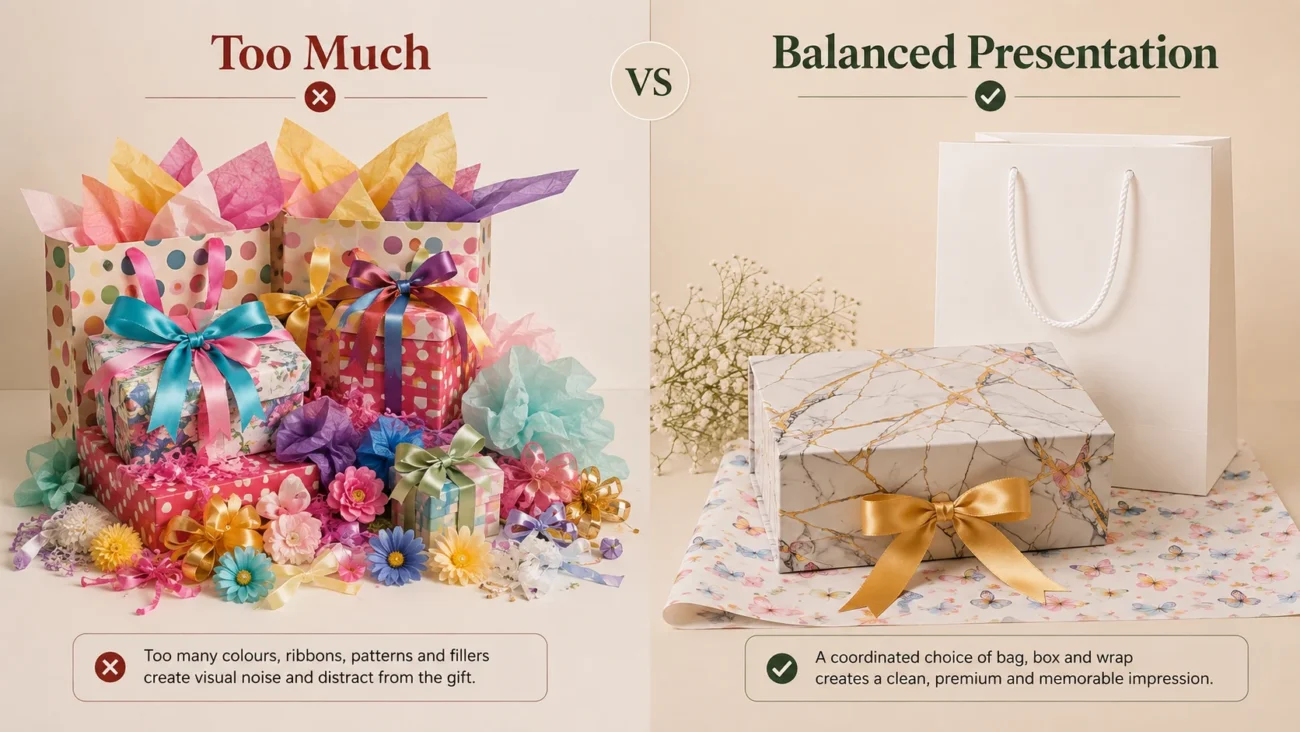
- Using too many competing colours, patterns, or decorative elements is one common mistake. When several visual elements are used at once, the packaging can become cluttered rather than coordinated. A simpler combination of colours and supporting details often creates a clearer presentation.
- Using inconsistent packaging across a group of gifts can also create an uneven result. This is particularly relevant for businesses, events, or occasions where multiple gifts are being prepared together. Using compatible box, bag, or wrapping styles helps create a more consistent overall appearance.
- Poorly folded wrapping paper, uneven edges, loose handles, or incorrectly positioned decorative elements can make the packaging look unfinished. Taking a few extra moments to check the final package before handing it over can prevent these small issues.
- Another mistake is adding decorative elements without considering the packaging itself. A tag, ribbon, tissue paper, or other finishing detail should support the presentation rather than interfere with opening, carrying, or accessing the product.
Finally, businesses should consider the opening experience as well as the exterior appearance. A package that is difficult to open, has unnecessary layers, or causes the contents to spill out can create an inconvenient experience even when the outside looks well prepared.
Sustainability Mistakes in Gift Packaging
Sustainable packaging is not simply about choosing paper instead of another material. The way packaging is selected, used, stored, and disposed of also affects how efficiently materials are used. For both individuals and businesses, avoiding unnecessary packaging can be a practical way to reduce material waste while still maintaining good product presentation.
Some common sustainability-related gift packaging mistakes include:
- Using unnecessarily large packaging — A box or bag that is much larger than the product requires more material and may also require additional filler. Choosing an appropriate size helps reduce unnecessary packaging.
- Using excessive filler — Protective cushioning has an important role for fragile products, but using more filler than necessary increases material consumption. Use enough to keep the product secure without filling unnecessary empty space.
- Adding too many packaging layers — Combining a box, multiple wrapping layers, plastic coverings, excessive tissue, and other decorative elements can create unnecessary material use. Each layer should have a practical or presentation purpose.
- Mixing materials unnecessarily — Packaging that combines paper with plastic components, metallic elements, or other materials can be more difficult to separate for recycling. Where practical, simpler material combinations can make disposal easier.
- Choosing packaging without considering reusability — Some sturdy gift boxes and paper bags can be reused for storage, gifting, or other everyday purposes. Considering whether packaging can have a second use can extend its useful life.
- Ignoring packaging quantity during stock planning — Ordering significantly more packaging than a business can reasonably use may result in damaged, outdated, or unused stock. Packaging requirements should be estimated according to actual sales patterns and expected demand.
- Treating sustainability as a reason to compromise protection — Reducing packaging material should not mean leaving fragile products inadequately protected. The objective is to use packaging efficiently while still providing the level of protection the product requires.
Businesses comparing different packaging materials may also want to understand paper gift bags as an alternative to plastic bags, particularly when considering material use, everyday retail applications, and disposal.
Protection Mistakes: Skipping Fillers and Cushioning
Product protection is one of the most important considerations when packaging fragile, delicate, or loosely fitting items. A strong outer box or bag can help protect the contents, but it does not prevent the product from moving inside the package. Without suitable cushioning, an item can shift, collide with other products, or experience impact during handling and transport.
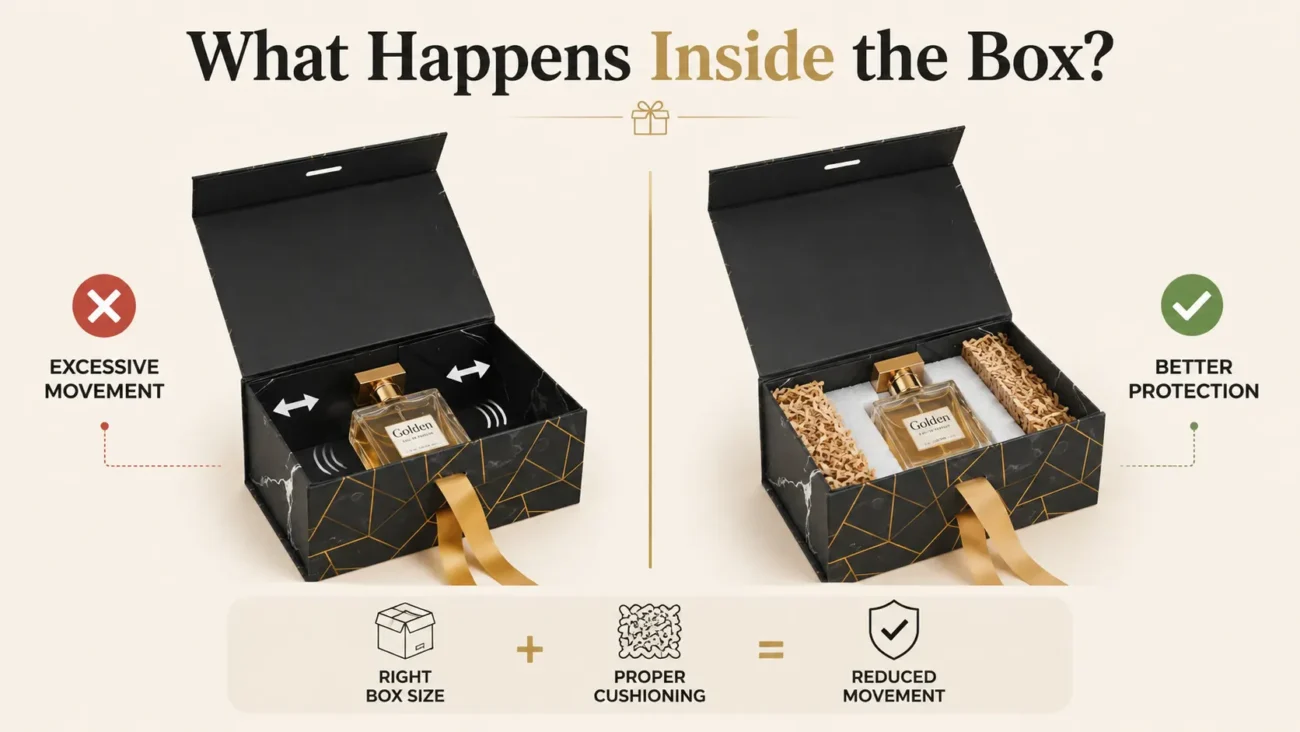
One of the most common gift packaging mistakes is adding too much empty space around the product without considering how that space will affect movement.
Here are some protection mistakes to avoid:
- Skipping protective filler entirely — If there is noticeable empty space around a fragile or delicate item, the product may move during handling. Appropriate filler can help keep it in position.
- Using too little cushioning — A small amount of filler may not be enough to prevent movement. The goal is to provide enough cushioning to reduce shifting without unnecessarily overfilling the package.
- Using the wrong type of filler — Different products require different levels of protection. Fragile glassware, ceramics, bottles, and delicate decorative items may need more cushioning than sturdy products that can tolerate normal handling.
- Using the wrong type of filler — Different products require different levels of protection. Fragile glassware, ceramics, bottles, and delicate decorative items may need more cushioning than sturdy products that can tolerate normal handling.
- Choosing a box that is much larger than the product — Excess space increases movement and usually requires more filler. Selecting a suitable box size can reduce both product movement and unnecessary packaging material.
- Assuming a strong outer box is enough — The outer packaging protects against external handling, but internal cushioning helps prevent the product from moving and absorbing impacts inside the package.
Before closing a gift box, check whether the contents can move significantly when the box is gently handled. If there is excessive movement, consider adding suitable cushioning or using a better-fitting box.
For retail and business packaging, this becomes particularly important when the same packaging format is used repeatedly. Establishing a simple packing method for different product sizes can help maintain consistent protection across orders. Choosing the right gift box size for different products can also reduce unnecessary empty space, minimise product movement, and limit the amount of protective filler required.
Retail and Business Packaging Mistakes
For retailers and other businesses, gift packaging mistakes are not limited to how a single box or bag looks. Packaging decisions also affect stock management, daily operations, product presentation, and purchasing efficiency. A packaging system that works well for one product may not work equally well across an entire product range.
Common mistakes include:
- Using the same packaging size for every product — Products vary in dimensions, weight, and shape. Using one box or bag size for everything can lead to wasted space, poor presentation, or difficulty fitting certain products.
- Underestimating seasonal demand — Festivals, weddings, corporate gifting periods, and promotional events can significantly increase packaging requirements. Running short during these periods can disrupt normal retail operations.
- Keeping too little packaging stock — Businesses should maintain enough commonly used packaging to support regular sales while accounting for expected changes in demand.
- Buying too many different sizes without tracking usage — Offering a large range of packaging sizes can seem useful, but unused sizes can occupy valuable storage space and tie up purchasing budgets. Businesses should identify the sizes they use most frequently.
- Not standardising packing methods — When different employees pack products differently, the same product may leave the store with noticeably different presentation and protection. A simple internal packing method can improve consistency.
- Choosing packaging based only on appearance or price — Packaging should be evaluated against product weight, dimensions, intended use, storage requirements, and expected handling conditions rather than one factor alone.
- Failing to review packaging stock regularly — Tracking which sizes and styles are used most often helps businesses make better purchasing decisions and avoid unnecessary stock accumulation.
For businesses, the goal is not to maintain the largest possible packaging range. It is to maintain a practical selection of packaging that matches the products they sell and the way their operations work. Businesses can also benefit from understanding how organized gift packaging helps retail stores manage stock, improve product presentation, and maintain a consistent customer experience.
Gift Packaging Best Practices: A Quick Checklist
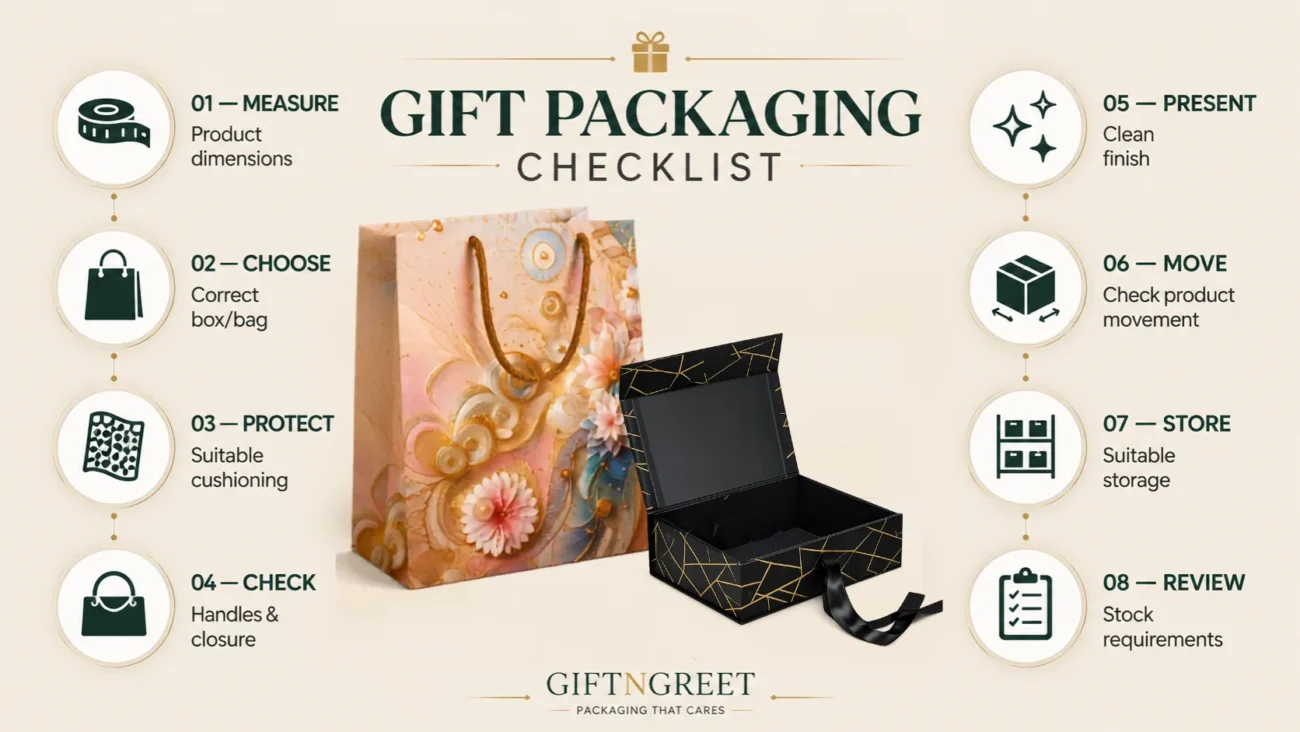
Avoiding common gift packaging mistakes becomes much easier when every package is checked against the same basic requirements. Whether you are preparing one gift or packaging products for regular retail orders, use this checklist before the package is handed over or shipped.
- Measure the product correctly before selecting a box or bag, including any handles, protrusions, or additional components.
- Choose an appropriate size with enough room for the product and any necessary protective material, without creating excessive empty space.
- Match packaging strength to product weight by considering paper GSM, box construction, and handle strength.
- Check the closure and handles to make sure the packaging can be securely closed and comfortably carried.
- Add suitable cushioning when the product is fragile or has enough empty space to move inside the packaging.
- Keep the presentation clean by checking folds, closures, tissue paper, tags, and other finishing details before handover.
- Avoid unnecessary packaging layers and use only the material required for protection and presentation.
- Consider storage requirements when selecting packaging for regular business use, particularly when keeping multiple sizes in stock.
- Review frequently used sizes and quantities to make future packaging purchases more efficient.
A consistent checklist helps turn packaging from an improvised task into a repeatable process, particularly for retailers and businesses handling multiple orders.
How to Package Gifts Properly: A Step-by-Step Approach
Knowing how to package gifts properly is less about adding more decorative elements and more about following a consistent process. The right sequence helps ensure that the product fits correctly, remains protected, and is presented neatly.
- Measure the Product — Start by measuring the product at its widest and tallest points. Include handles, protruding parts, lids, or other components that may affect how the item fits inside the packaging.
- Select the Appropriate Box or Bag — Choose packaging that provides enough room for the product without leaving excessive empty space. If protective cushioning is required, account for that space before selecting the final size.
For businesses handling several product categories, keeping a few commonly used packaging sizes can make daily packing more efficient. - Add Suitable Protection — Fragile or loosely fitting products may require tissue paper, paper filler, cushioning, or another suitable protective material. The amount needed depends on the product and the amount of movement possible inside the packaging.
- Check the Packaging Construction — Before closing the package, check that the box, lid, handles, folds, and closure are functioning correctly. For bags, make sure the handles are properly positioned and suitable for the expected carrying weight.
- Complete the Presentation — Arrange the contents neatly and check the exterior for uneven folds, loose wrapping, damaged surfaces, or other visible issues. A clean final presentation does not require excessive decoration; it requires attention to detail.
- Perform a Final Movement Check — Gently handle the completed package to check whether the contents move excessively. If they do, reconsider the amount of cushioning or whether a different packaging size would provide a better fit.
Following this process consistently can help businesses and individuals avoid many of the common gift packaging mistakes covered throughout this guide. If you are unsure how much space a product requires, our guide on choosing the right gift box size for different products explains how product dimensions and packaging space should be considered when selecting a suitable box.
Why Choose GiftNGreet
GiftNGreet is a paper packaging manufacturer based in New Delhi, offering a range of ready-made packaging products for gifting and retail requirements.
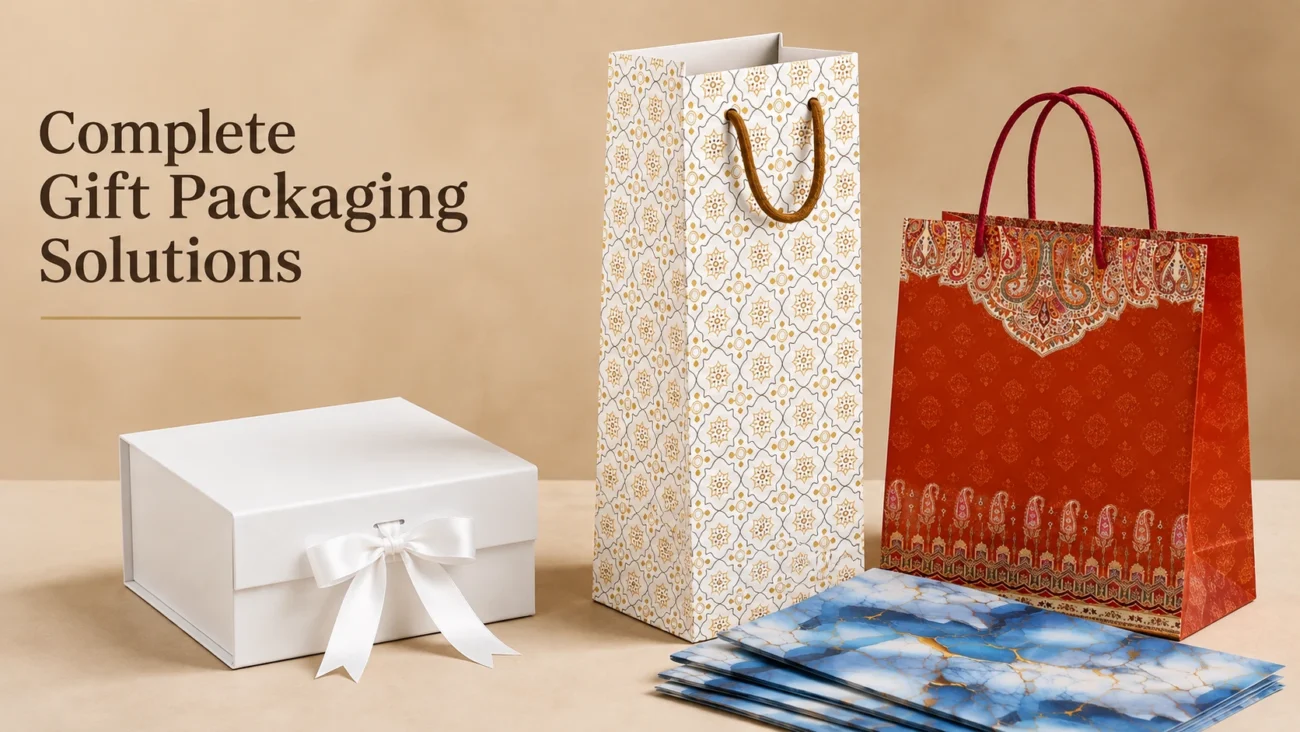
For gift boxes, the current range includes ready-made Foldable Magnetic Lid Boxes, available in marble-pattern designs and plain solid-color variations. Their foldable construction makes them practical for storage, while the magnetic lid provides a secure closure and a straightforward presentation for gifting and retail use.
The company also offers paper gift bags, wine bottle bags, and wrapping paper, giving businesses access to several commonly used packaging formats from one supplier.
For retailers, gift shops, businesses, and bulk buyers, choosing from an established range of ready-made packaging products can simplify product selection and make it easier to maintain consistent packaging across regular requirements.
Explore:
- Ready-made Magnetic Lid Gift Boxes
- Ready-made Paper Gift Bags for Retail and Gifting
- Wrapping Paper Sheets for Gift Packaging
To enquire about available products and bulk purchasing requirements, contact GiftNGreet.
Frequently Asked Questions
Incorrect sizing is one of the most common gift packaging mistakes. A box or bag that is too small can damage or distort the product, while excessive empty space can allow the contents to move during handling.
Measure the wrapping paper before cutting, leave enough material to cover the product without excessive overlap, reinforce stress points where necessary, and secure the finished wrap properly.
Protective filler helps reduce movement inside the package and can provide additional cushioning for fragile or delicate products. The amount and type of filler should depend on the product and how it will be handled.
Common mistakes include selecting a bag that is too small, placing excessive weight inside, overlooking handle strength, and leaving products loose or poorly arranged inside the bag.
Packaging contributes to the first impression of a product and can influence how easily it is handled, opened, carried, and presented. Poor sizing, damaged packaging, or untidy presentation can negatively affect the overall experience.
Businesses can reduce packaging mistakes by standardising commonly used packing methods, tracking packaging stock, selecting suitable sizes for different products, and reviewing packaging requirements before seasonal demand increases.
Accurate sizing, suitable material strength, appropriate protection, secure closures or handles, and a clean final presentation are some of the most important gift packaging best practices.
Start with the product’s dimensions and weight, then consider its fragility, intended use, handling conditions, and presentation requirements. Businesses with several product categories may benefit from keeping a practical selection of packaging sizes and styles. GiftNGreet supplies paper gift bags, gift boxes, and wrapping paper designed for consistent quality and durability. Contact Us to discuss requirements.
Related Reading
- Choosing the Right Gift Box Size for Different Products
- Different Types of Gift Boxes for Every Occasion
- Types of Paper Gift Bags Explained
- How Retail Stores Benefit from Organized Gift Packaging
Manufactured in New Delhi
Packaging Designed For Every Occasion
Explore GiftNGreet’s collection of gift boxes, paper gift bags, wrapping paper, and packaging solutions suitable for gifting, retail businesses, celebrations, and everyday presentation.
Looking for packaging solutions? Visit our Contact Us page for retail and bulk enquiries.