

Packaging Insights
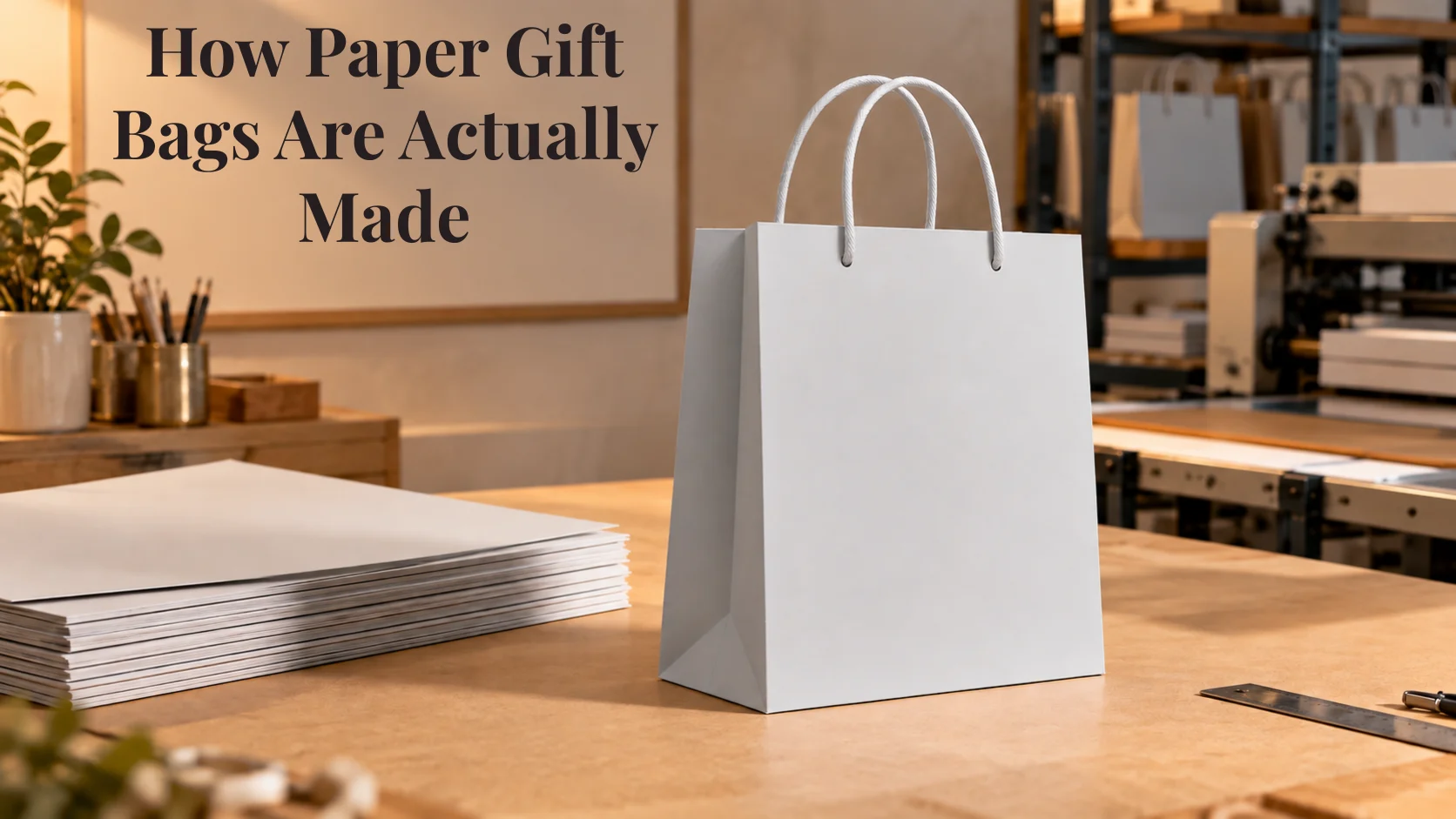
Pick up two paper gift bags — one that feels sturdy and well-made, and one that tears the moment it’s loaded with anything heavier than a card — and it’s rarely obvious just by looking why one holds up and the other doesn’t. The difference almost always comes down to what happened before either bag ever reached a shelf.
Paper gift bag manufacturing is a more involved process than most people assume. The paper, construction, printing, adhesive application, handle attachment, and quality checks all contribute to how a finished bag performs. Understanding these steps makes it easier to distinguish a well-made bag from one that simply looks good at first glance.
This is a walk through that process, start to finish — not a marketing pitch, but a practical look at how paper bags go from flat sheets to finished, load-bearing products, and where quality is actually decided along the way.
The Short Version
The manufacturing process can be simplified into a few key stages:
- Paper selection and GSM set the foundation for the bag’s strength and suitability for different loads.
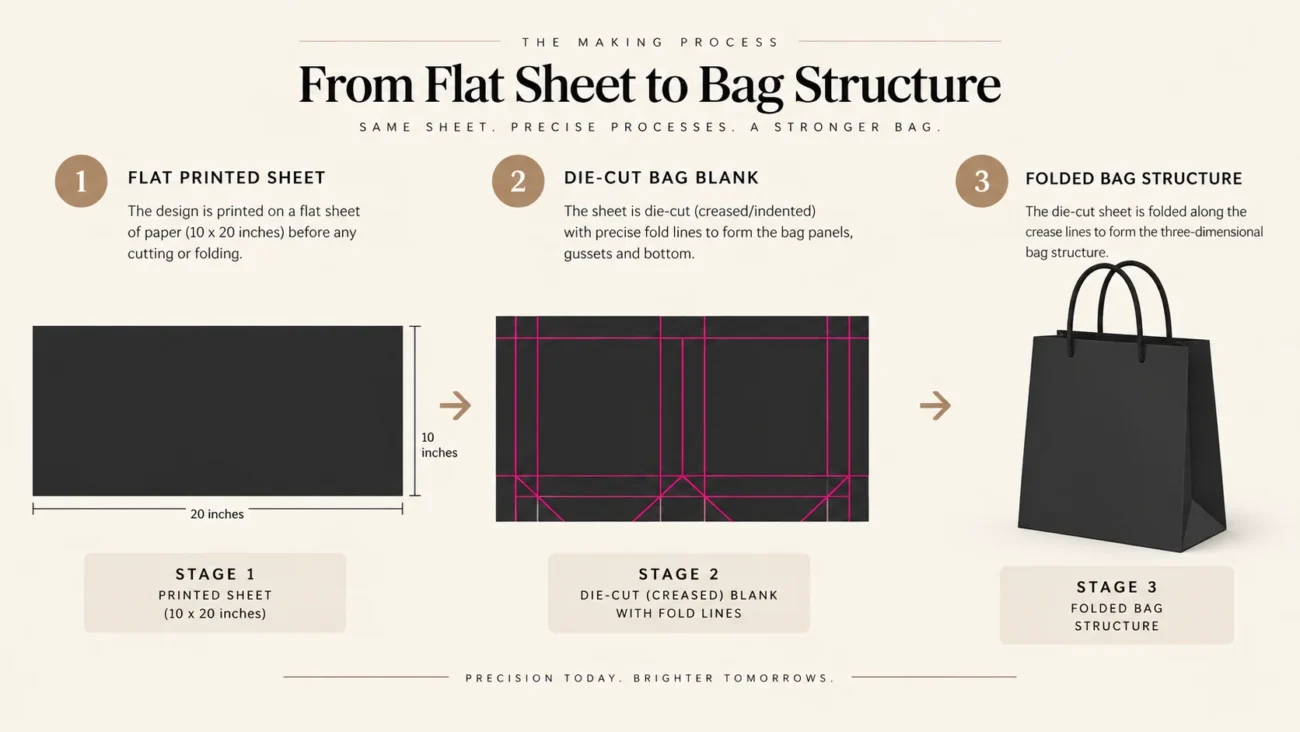
- Printing and die-cutting take place while the material is still in flat sheet form.
- Folding and gluing turn the prepared sheet into the basic bag structure.
- Bottom reinforcement helps the bag support the weight placed inside it.
- Handle attachment is critical because the handle connection must withstand the force created when the bag is carried.
- Finishing affects the surface appearance and, depending on the treatment, can also influence resistance to handling and moisture.
- Quality inspection helps identify dimensional, structural, printing, and assembly problems before the bags are packed and supplied.
A bag that “looks fine” and a bag that’s actually well-made aren’t always the same thing. Much of the difference comes from manufacturing decisions that aren’t immediately visible once the finished bag is sitting on a shelf.
Why Understanding the Manufacturing Process Actually Matters
Most people never think about how paper bags are made — until one fails at the worst possible moment, tearing at the seam while carrying something fragile or slipping out of hand because a handle gives way.
Understanding the process isn’t just interesting trivia. It’s genuinely useful if you’re buying bags in bulk for a business because it tells you what to look for beyond appearance.
The short version is this: a paper bag’s final strength, shape, and appearance are decided by a series of choices made long before it’s finished — starting with the paper itself.
For retailers and businesses sourcing paper gift bags, knowing how the manufacturing process works also makes it easier to ask useful questions about paper weight, construction, handle attachment, reinforcement, and quality control.
Step One: Paper Selection and GSM
Everything about a bag’s eventual strength starts with paper selection, and one of the most important factors within that is GSM — grams per square meter, a measurement used to describe the weight of paper.
GSM is an important consideration, but it should not be treated as the only measure of bag strength. Paper type, construction, adhesive quality, reinforcement, and handle attachment also influence how a finished bag performs.
- Higher GSM paper is generally stronger and more resistant to tearing, making it better suited to bags designed to carry moderate or heavier items.
- Lower GSM paper is lighter and can be appropriate for smaller, lighter products where heavy load-bearing capacity isn’t required.
- Paper type matters alongside GSM — kraft paper, art paper, and recycled paper stocks can behave differently even when their GSM is similar.
- Bag construction also matters — folds, seams, gussets, reinforcement, and the way handles are attached all contribute to the final performance.
- The paper decision sets the foundation — good printing or finishing cannot fully compensate for material that isn’t appropriate for the intended application.
A manufacturer serious about paper bag strength starts the conversation here, rather than treating material selection as an afterthought. The right paper specification also depends on the intended application, which is why understanding the different types of paper gift bags and their uses can help businesses select a suitable format.

Step Two: Printing Paper Gift Bags
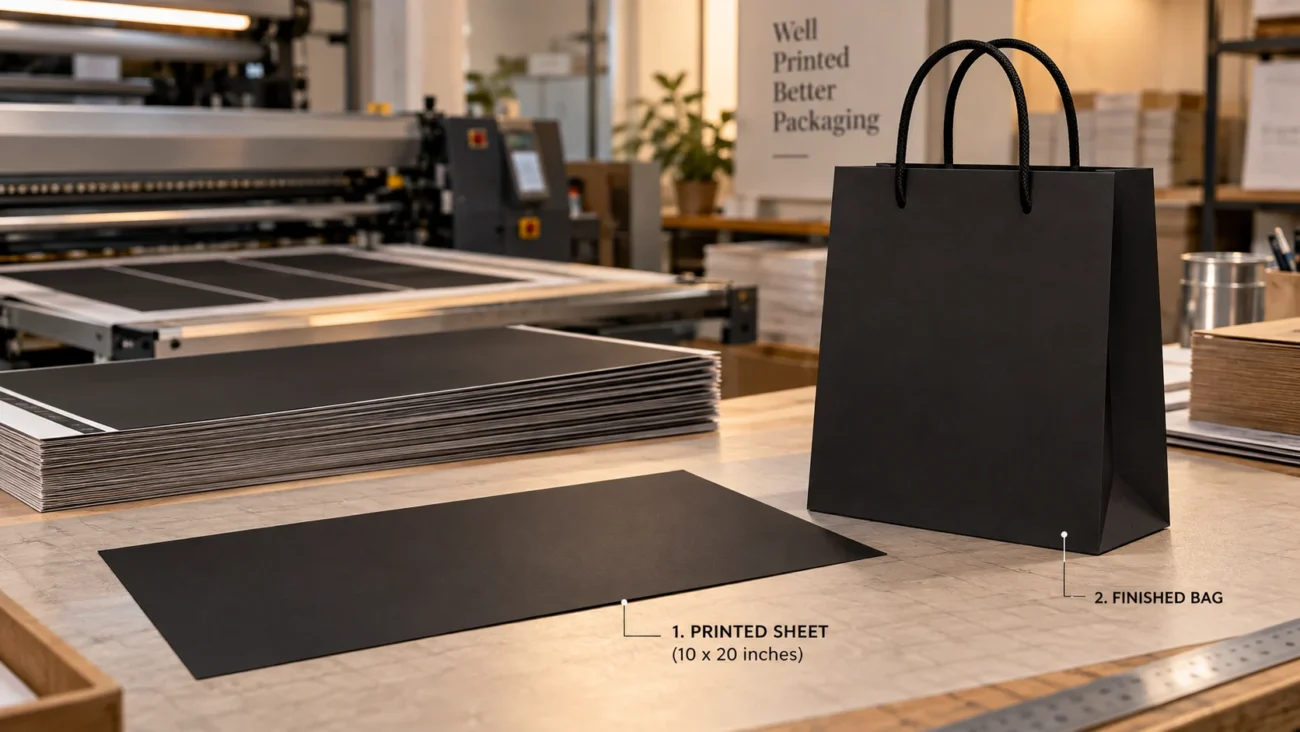
Once the base paper is selected, printing happens while the material is still in flat sheet form, before it is cut or folded into a bag shape.
At this stage, the goal is not simply to put ink onto paper. The printing process needs to produce clear, consistent results across the sheets that will eventually become finished bags.
- Print quality depends on the printing method and how well it is matched to the paper’s surface. Glossy, matte, and uncoated papers can respond differently to ink.
- Color consistency across a production run matters, especially for businesses ordering the same bag style repeatedly and expecting a consistent appearance.
- Registration accuracy — how precisely different printed elements line up — affects the clarity and overall appearance of detailed patterns or designs.
- Print coverage and drying also need to be considered because excessive or poorly controlled ink application can affect the finished surface.
Printing errors caught at this stage are easier to address before the sheets move further through production. Once the material has been cut and converted into a finished bag, correcting a printing problem becomes considerably more difficult. is cut.
Step Three: Die Cutting
Die cutting is where flat, printed sheets arDie cutting is where flat, printed sheets are cut into the specific shape and size needed for a particular bag. Depending on the construction, this can include the main body panels, base sections, side panels, and additional reinforcement pieces.
Accuracy at this stage is important because the dimensions of the cut sheet determine how the different sections will eventually come together.
- Dimensional accuracy helps ensure that the finished bag reaches its intended width, height, and depth.
- Clean, precise cuts reduce irregular edges and help prevent areas that could become weak points during later handling.
- Consistent cutting across a production batch is particularly important for bulk orders, where every bag needs to follow the same basic dimensions.
- Correct positioning of panels and reinforcement sections helps ensure that subsequent folding and assembly take place as intended.
This is largely a mechanical, precision-driven step, but small inconsistencies here can show up later as uneven folds, misaligned panels, or differences in the final shape of the bag.
Step Four: Folding Paper Gift Bags
Folding shaFolding shapes the cut, printed paper into the actual three-dimensional structure of the bag — including the base, side gussets, and panel edges that will eventually be joined with adhesive.
Although folding may appear straightforward, accuracy matters because the folds establish the geometry of the finished bag.
- Fold lines need to be positioned accurately, or the paper can crease unevenly or weaken along an unintended line.
- Gusseted sides, which allow a bag to expand and accommodate bulkier products, depend on precise folding to sit neatly when empty and open properly during use.
- Panel alignment matters because poorly positioned folds can make subsequent gluing and assembly more difficult.
- Consistent folding across a production batch helps ensure that finished bags maintain a similar shape and appearance.
This step sets up everything that follows. A bag that is folded inaccurately can be harder to glue cleanly and may not sit or open correctly once finished.
Step Five: Gluing and Adhesive Strength
Once the paper has been cut and folded, adhesive is used to turn the flat structure into a functional bag. This stage may seem straightforward, but gluing plays an important role in the bag’s overall strength and consistency.
The adhesive needs to be applied evenly along the required seams and joining areas. Too little adhesive can create weak spots, while excessive or uneven application can affect the appearance and construction of the finished bag.
The type of adhesive also needs to be suitable for the paper and the weight the bag is expected to carry. The setting or drying time matters as well. If the adhesive has not bonded properly before the next manufacturing stage, seams can shift or separate.
For businesses purchasing paper gift bags in larger quantities, adhesive quality is therefore worth considering alongside paper GSM. A bag can use sufficiently strong paper and still perform poorly if its seams are not bonded correctly.
Step Six: Bottom Reinforcement
The bottom of a paper gift bag experiences considerable stress because it supports the weight of whatever is placed inside. This makes bottom construction and reinforcement an important part of the manufacturing process.
Depending on the bag’s construction and intended use, the base may include an additional layer of paper or board to provide greater support. Reinforcement helps distribute the load across the bottom rather than allowing the weight to concentrate on a small area.
Without suitable reinforcement, a bag may sag, lose its shape, or develop tears around the base when carrying heavier items. This becomes particularly important when the bag is larger or intended to hold products with greater weight.
Bottom reinforcement also contributes to how the bag sits when placed on a surface. A properly constructed base helps the bag maintain its shape instead of collapsing easily.
The key point: paper strength alone does not determine how well a gift bag performs. The way that paper is constructed into the base is equally important.
Step Seven: Handle Attachment and Handle Strength
Handles are one of the most noticeable parts of a paper gift bag — and one of the areas where poor construction can become obvious very quickly.
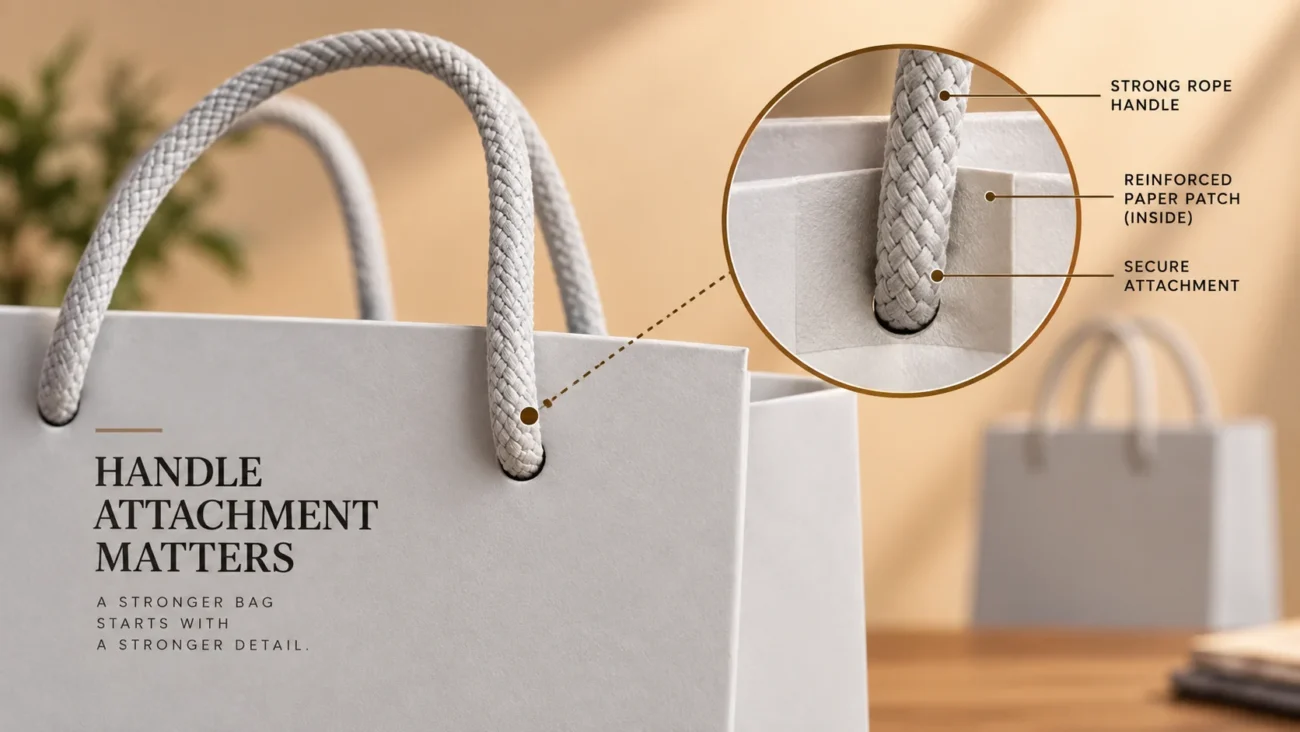
A handle may be made from nylon rope, ribbon, twisted paper, or another suitable material, depending on the bag design. But the handle material itself is only part of the equation. How the handle is attached to the bag determines how effectively it can transfer the weight being carried.
The attachment points need to be positioned accurately and secured properly. Reinforcement may also be used around these points to distribute stress over a larger area of paper. This reduces the likelihood of the paper tearing around the handle when the bag is lifted.
Handle strength should also correspond to the intended use of the bag. A lightweight bag designed for small items does not necessarily require the same construction as a larger bag expected to carry heavier products.
For businesses buying paper gift bags in bulk, checking the handle attachment is one of the simplest ways to assess construction quality. Look at where the handle meets the bag, not just the handle material itself.
Step Eight: Finishing of Paper Gift Bags
After the main construction is complete, the bag may go through additional finishing processes depending on its intended appearance and handling requirements.
Finishing can include treatments such as matte or glossy lamination, coatings, or other surface details. These processes can change how the paper feels and looks while also affecting how the surface handles everyday wear.
For example, lamination may provide additional resistance to scuffing and surface moisture compared with untreated paper. It can also influence the visual finish of printed designs.
However, finishing should not be confused with the basic structural strength of the bag. A surface treatment cannot compensate for weak paper, poor adhesive bonding, inadequate reinforcement, or incorrectly attached handles.
That distinction is useful when evaluating paper gift bags: structural construction comes first, while finishing adds another layer of appearance and surface performance.
Step Nine: Paper Gift Bags Quality Inspection and Quality Control
Manufacturing does not end when the bag has been assembled. Quality inspection and quality control help ensure that finished bags meet the required construction and presentation standards before they are packed and supplied.
Several aspects can be checked during this stage:
- Dimensions: confirming that the finished bag matches the required size.
- Construction: checking seams, folds, adhesive bonding, and the bottom structure.
- Handle attachment: inspecting handle positioning and attachment points.
- Printing: checking for noticeable printing defects, registration issues, or inconsistent appearance.
- Load performance: where appropriate, testing whether the bag can handle the intended type of use.
- Batch consistency: comparing bags across the production run to identify variations.
Quality control is particularly important for bulk orders. A single acceptable sample does not necessarily mean an entire production batch will be consistent. Regular checks throughout manufacturing help identify problems before a large quantity reaches the customer.

What This Means for Businesses Buying Paper Gift Bags in Bulk
Understanding how paper gift bags are manufactured gives businesses a more practical way to evaluate suppliers, particularly when purchasing larger quantities.
Instead of judging a bag only by its appearance, buyers can ask more specific questions about its construction and production:
- What paper GSM is being used?
- What type of paper is suitable for the intended products?
- How are the handles attached and reinforced?
- How is the bottom constructed?
- What type of adhesive is used for the seams?
- What quality checks are carried out during production?
- How is consistency maintained across a bulk order?
- Can a sample be evaluated before placing a larger order?
For retailers and businesses, these questions can be much more useful than simply asking whether a bag is “good quality.”
The same principle applies when selecting paper gift bags for retail and gifting. The right choice depends on the product being carried, expected load, bag size, construction, and presentation requirements.
When ordering in bulk, consistency matters just as much as the quality of an individual bag. Differences in dimensions, printing, handles, or construction can become much more noticeable when hundreds or thousands of bags are being used across a business.

Why This Process Knowledge Is Worth Having
You do not need to understand every machine or manufacturing specification to make a better packaging decision.
The useful part is knowing where quality actually comes from.
A paper gift bag that performs well is the result of several stages working together: suitable paper selection, accurate cutting and folding, reliable adhesive bonding, proper bottom construction, secure handle attachment, appropriate finishing, and quality inspection.
That knowledge also makes it easier to identify potential problems. If a bag tears around the handle, the issue may be related to the attachment or reinforcement rather than the paper itself. If the bottom collapses, the problem may be related to base construction. If bags vary noticeably within the same order, production consistency may need closer attention.
For businesses sourcing in quantity, asking specific questions about these stages provides a much clearer basis for comparing paper bag manufacturers and suppliers.
Explore GiftNGreet Packaging
Frequently Asked Questions
Paper gift bags are generally produced through a series of stages that include paper selection, printing, die cutting, folding, gluing, bottom construction, handle attachment, finishing, and quality inspection. Each stage contributes to the final bag’s appearance and performance.
Strength depends on several factors, including paper type and GSM, bag dimensions, construction, adhesive bonding, bottom reinforcement, and handle attachment. GSM is important, but it is not the only factor that determines performance.
GSM stands for grams per square meter. It indicates the weight of the paper used. Higher GSM can generally provide a heavier and more substantial paper, but the actual strength of a finished bag also depends on paper characteristics and construction.
Handle failure can occur when the attachment point, reinforcement, adhesive, or overall construction is not suitable for the load being carried. The handle material itself is therefore only one part of handle strength.
Bottom reinforcement refers to additional material or construction used to strengthen the base of a bag. It helps distribute the weight of the contents and can reduce sagging or tearing around the bottom.
Start by checking the paper, dimensions, seams, bottom construction, and handle attachment. If possible, evaluate a sample and test it with the type of products the bag will actually carry. Also ask the supplier how quality is checked across the production batch.
Lamination can improve resistance to certain types of surface wear and moisture, depending on the material and application. However, it does not replace proper structural construction. Paper selection, seams, reinforcement, and handle attachment still play important roles.
Variations can result from differences in cutting, folding, printing, adhesive application, handle positioning, dimensions, or other production stages. Consistent manufacturing processes and quality checks help reduce these variations.
Understanding the basic manufacturing process helps retail buyers ask better questions when comparing suppliers. It allows them to look beyond appearance and consider factors such as material, construction, handle strength, consistency, and quality control.
Related Reading
- Types of Paper Gift Bags Explained
- Guide to Paper Gift Bags for Retail Businesses
- Common Gift Packaging Mistakes to Avoid
- Kraft Paper Bags: Uses, Benefits & Applications
Manufactured in New Delhi
Packaging Designed For Every Occasion
Explore GiftNGreet’s collection of gift boxes, paper gift bags, wrapping paper, and packaging solutions suitable for gifting, retail businesses, celebrations, and everyday presentation.
Looking for packaging solutions? Visit our Contact Us page for retail and bulk enquiries.