
Packaging Insights
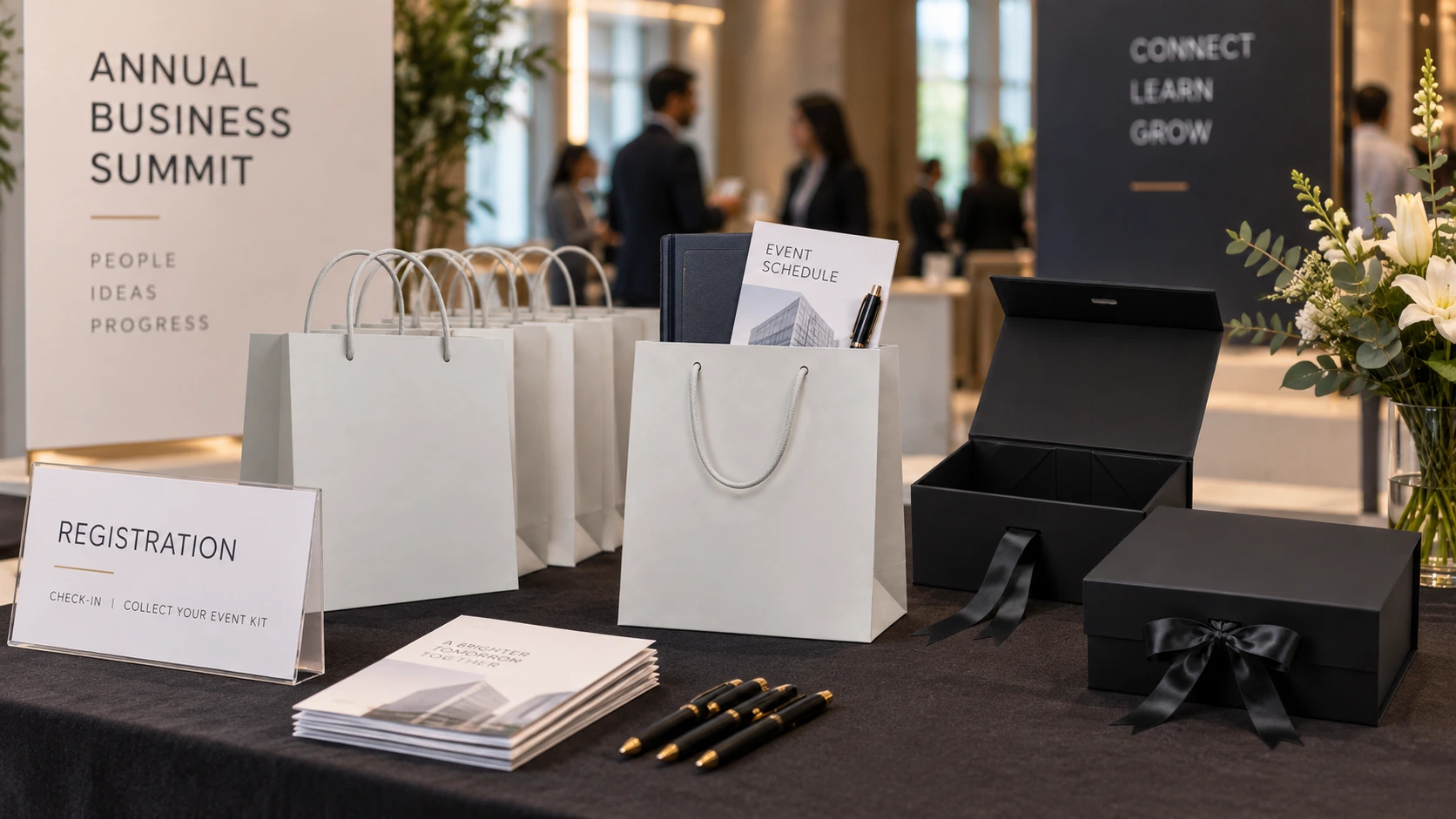
Walk into any conference and the first thing many attendees do is collect a bag from the registration table, glance inside, and get their first physical impression of the event before a session has even started. Corporate event packaging — the bags, kits, and materials handed out at registration — does more work than most organizers give it credit for. It is one of the few physical elements every attendee receives, and it may remain on their desk or in their workspace long after the event has ended.
This is a practical guide to getting that packaging right, from conference bags to delegate kits, without turning it into a last-minute sourcing problem shortly before the event.
The Short Version
- Conference bags are often the first physical touch point attendees have with an event.
- Delegate kits should be planned around what will actually go inside them, rather than choosing the bag first.
- Bag size and handle strength should match the expected contents and weight.
- Bulk orders need to account for production or sourcing timelines, delivery, and a reasonable quantity buffer.
- Consistency across the full order generally matters more than adding unnecessary packaging variations.
- A reliable supplier who can confirm product specifications, quantities, samples, and timelines early can make event preparation much easier.
Why Corporate Event Packaging Deserves Real Planning
Packaging for corporate events tends to get planned late, often after venues, speakers, catering, and other major arrangements are already confirmed. It can seem like a relatively small item on a long event checklist. However, it is also one of the few things that almost every attendee physically receives and carries during or after the event.
A well-planned conference bag can support the organized feel of an event from the moment attendees register. A bag that is too small, difficult to carry, or unable to handle its contents can create an avoidable problem, even when the rest of the event has been carefully planned.
Planning also becomes easier when the packaging is considered alongside the delegate kit contents. The number and weight of materials, the type of event, the expected attendee count, and whether different attendee groups receive different items should all be established before the final bag quantity and size are selected.
For organizers, the goal isn’t to make packaging complicated. It is to make sure the packaging fits the event requirements, handles the expected contents, and can be sourced with enough time to spare.
Conference Packaging: What It Actually Covers
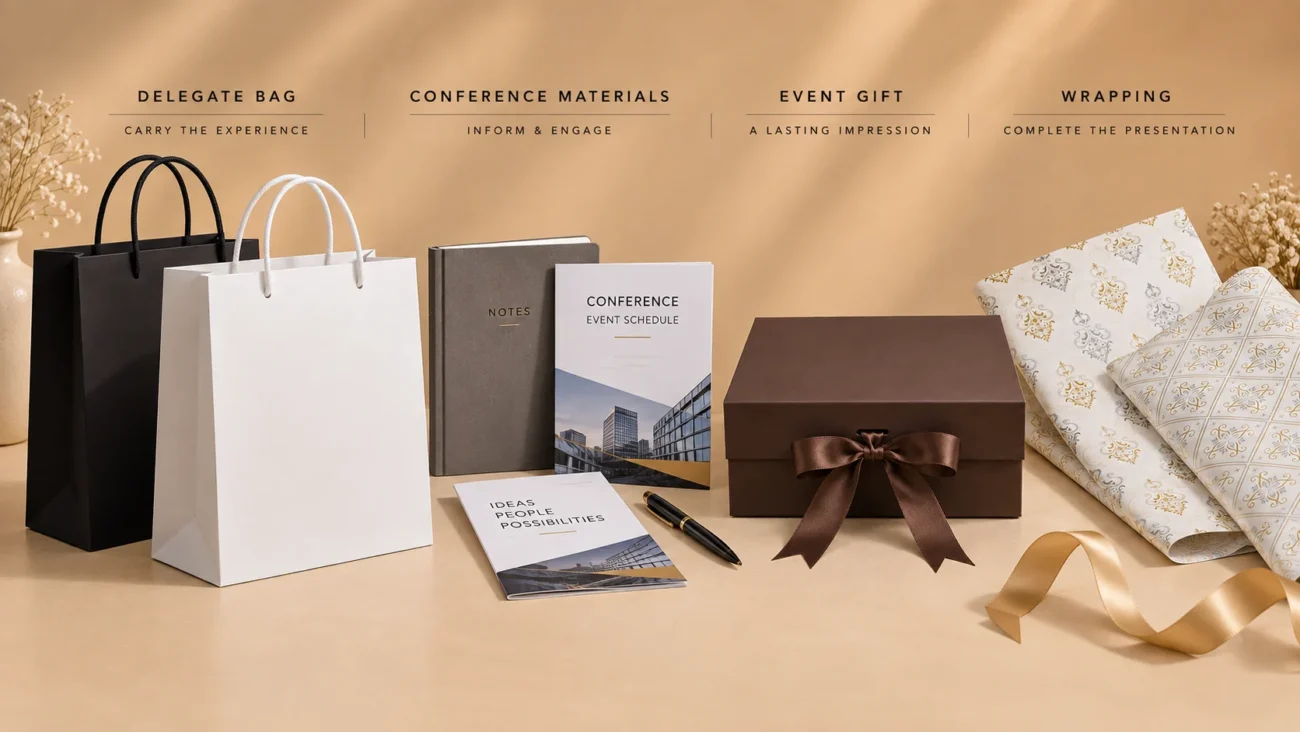
Conference packaging is a broader category than it might first sound like. It can include the main bag or carrier as well as the packaging used for materials and gifts distributed during the event.
It typically covers:
- The bag or carrier attendees receive at registration
- Materials included within a delegate or conference kit
- Packaging for smaller giveaway items
- Boxes or other packaging used for speaker and sponsor gifts
- Packaging used for post-event materials or gifts when applicable
Thinking about conference packaging as a complete system — rather than simply “the bag” — can make planning more coordinated. It also makes it easier to identify which items need to be ordered in bulk and which can be handled separately.
Conference Kits and Delegate Kits: Planning the Contents First
A conference kit, sometimes called a delegate kit, is the collection of materials an attendee receives as part of the event. It is worth planning the contents before selecting the packaging because those contents determine what the bag actually needs to accommodate.
- List the Contents First: Start by listing everything expected to go into the kit.
This might include:- Notepad or notebook
- Pen
- Event schedule
- Name badge
- Printed information
- Brochures
- Promotional materials
- Small giveaway items
- Consider the Combined Weight: Individual items may seem lightweight, but printed materials and multiple inserts can add up quickly. The finished kit should be considered as a complete load rather than judging each item separately.
- Account for Different Attendee Types: Speakers, sponsors, VIP guests, and general attendees may receive different materials. If so, the packaging requirements may also differ.
- Allow Some Flexibility: It is useful to leave a little room for additions. Last-minute inserts, updated schedules, or additional materials can make a tightly packed kit difficult to manage.
The packaging should therefore be selected around the actual contents and expected load, with enough capacity to accommodate reasonable changes.
Conference Bags: Choosing the Right Type
Conference bags are the most visible part of corporate event packaging, and their suitability depends heavily on what they need to carry.
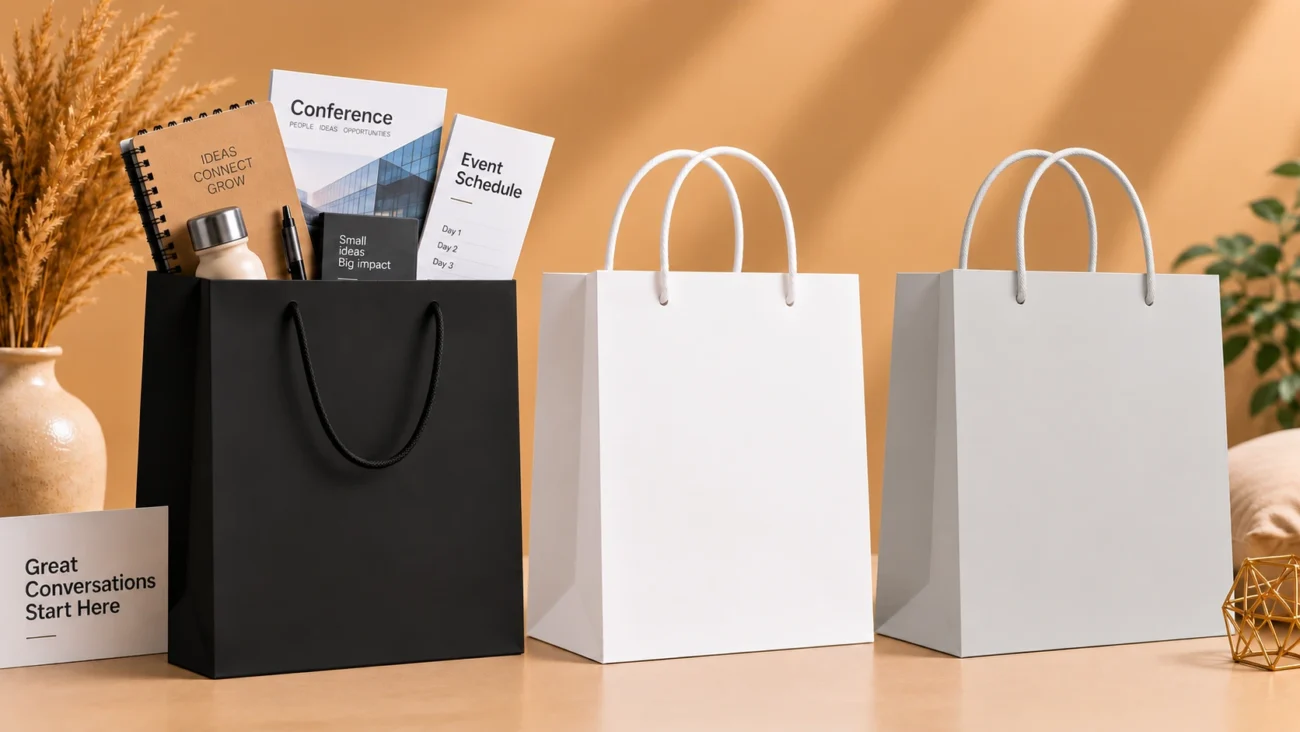
- Paper bags with sturdy handles can work well for lighter delegate kits containing items such as notepads, brochures, schedules, and small giveaways.
- Kraft paper bags can suit conferences looking for a straightforward paper-based packaging option.
- Decorative or solid-color paper bags can provide visual variety or complement an event’s general color direction without requiring a complicated packaging system.
- Handle strength matters because attendees may carry their bags around a venue for several hours rather than simply taking them from registration to their vehicle.
- Bag dimensions should match the contents, giving attendees enough room to place the kit inside without forcing or overloading the bag.
For most conferences, the practical objective is straightforward: choose a bag that fits the delegate materials comfortably, can handle the expected load, and is available in the required quantity within the event timeline.
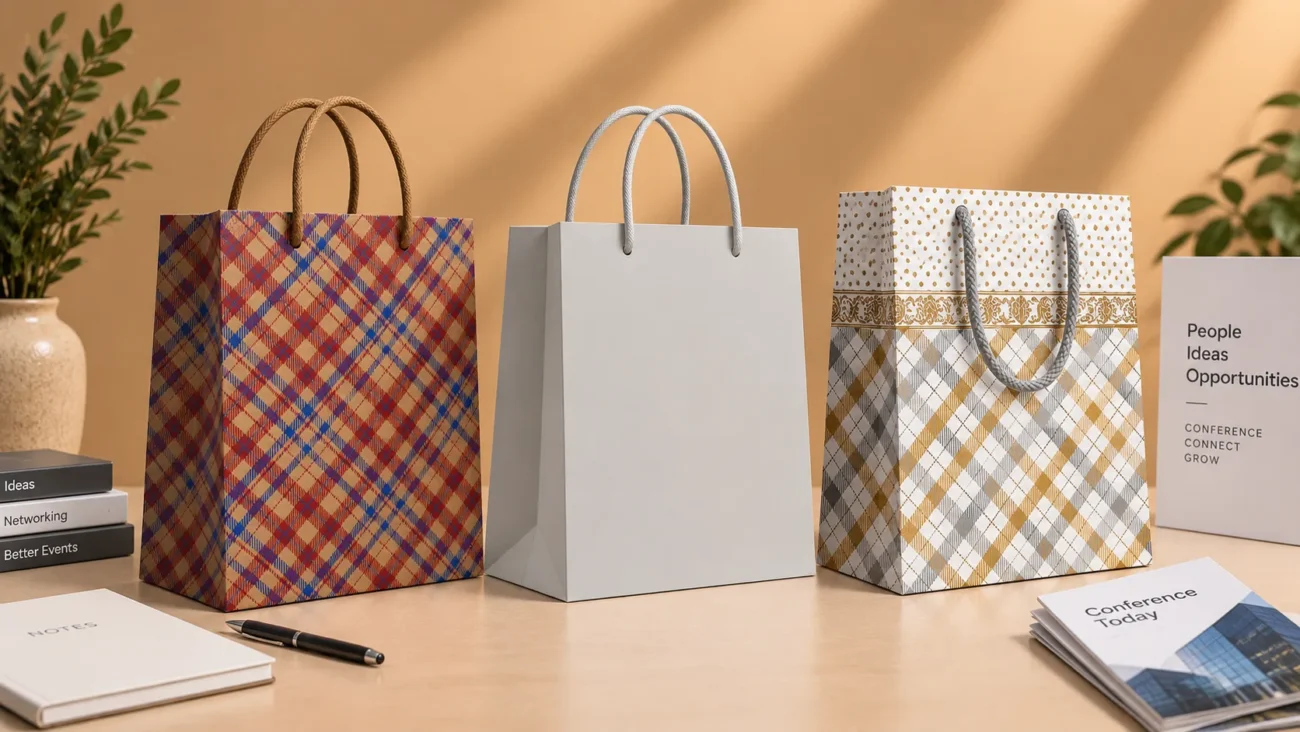
Corporate Event Packaging: Bags and Delegate Bags
Not every attendee necessarily needs exactly the same packaging. A general delegate, speaker, sponsor, or VIP guest may receive different materials, so the bag should be selected around what each group is expected to carry.
For general attendees, a paper conference bag with sturdy handles is usually suitable when the kit contains items such as notebooks, brochures, folders, stationery, or other relatively lightweight materials. The key is to make sure the bag dimensions provide enough room without leaving excessive unused space.
For speakers, sponsors, or special participants, the packaging may need to accommodate additional materials or a separate gift. In these cases, a slightly different bag size or a coordinated gift box can help keep the contents organized.
The important point is not necessarily to create a different packaging system for every attendee category. Instead, define the main attendee groups first and choose a manageable range of bag sizes or packaging formats around their actual requirements.
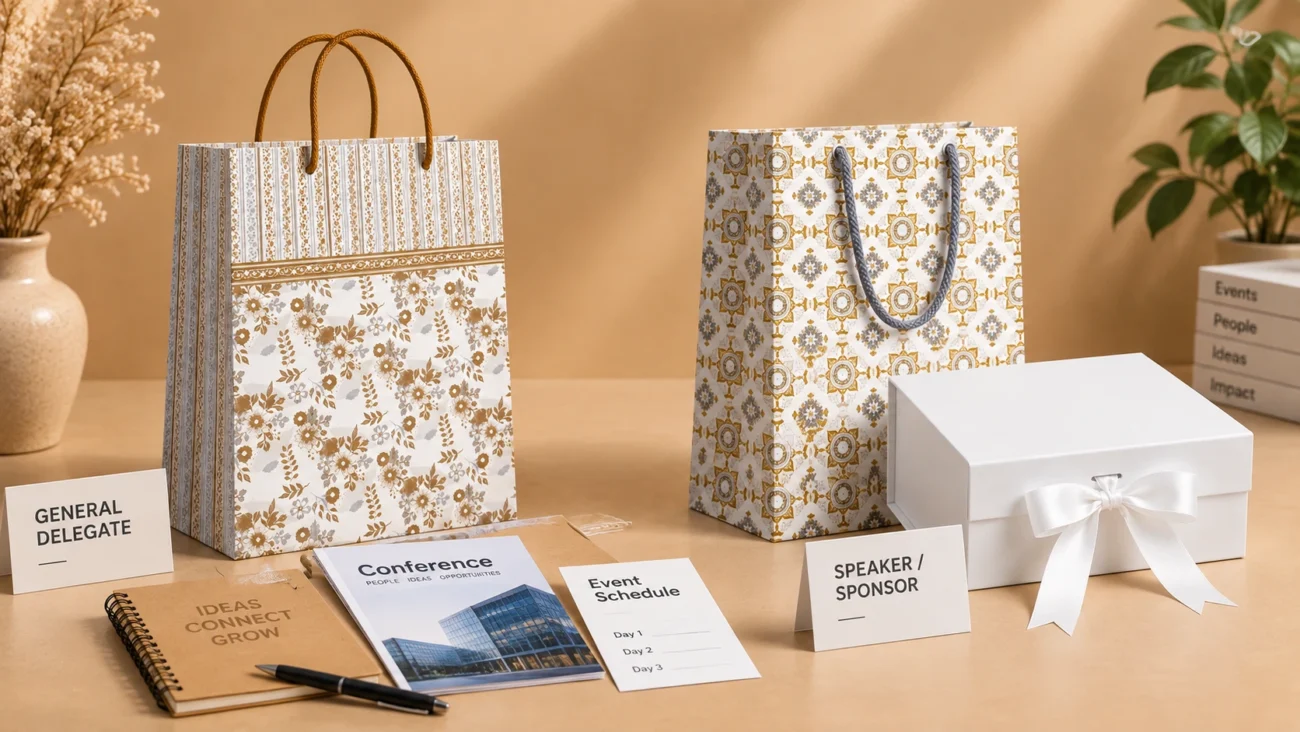
Corporate Event Packaging Solutions: Thinking Beyond Just the Bag
CA conference bag is often the most visible part of the packaging, but it is not the entire system.
Depending on the event, corporate event packaging solutions can include:
- Conference or delegate bags
- Packaging for speaker and sponsor gifts
- Gift boxes for selected attendees
- Packaging for event merchandise or giveaways
- Wrapping paper for smaller presentation requirements
- Separate packaging for materials distributed after the event
This broader approach is useful because different items may have different packaging requirements. A notebook and brochure can work comfortably inside a paper bag, while a boxed speaker gift may need a more structured presentation format.
For businesses planning several packaging elements together, it also helps to consider how the different formats will look alongside one another. Consistent colors, simple design choices, and appropriate sizing can make separate packaging components feel like part of the same event setup.
Conference Packaging Solutions: Planning for Scale
The packaging requirements for a 100-person workshop are very different from those for a multi-day conference with thousands of attendees.
For smaller events, sourcing can often be relatively straightforward. For larger events, however, quantity planning becomes much more important because even a small calculation error can leave organizers with too little or too much packaging.
Start by confirming:
- Expected attendee count
- Confirmed delegate categories
- Contents of each kit
- Required bag or box sizes
- Quantity required for each category
- Expected delivery date
- A reasonable quantity buffer for replacements or unexpected attendees
The buffer should be based on the event’s circumstances rather than being added blindly. A registration process with fluctuating attendance may require more flexibility than a tightly controlled invitation-only event.
Storage should also be considered. Hundreds or thousands of bags and boxes can occupy significant space before distribution, so packaging that can be stored efficiently can make event preparation easier.
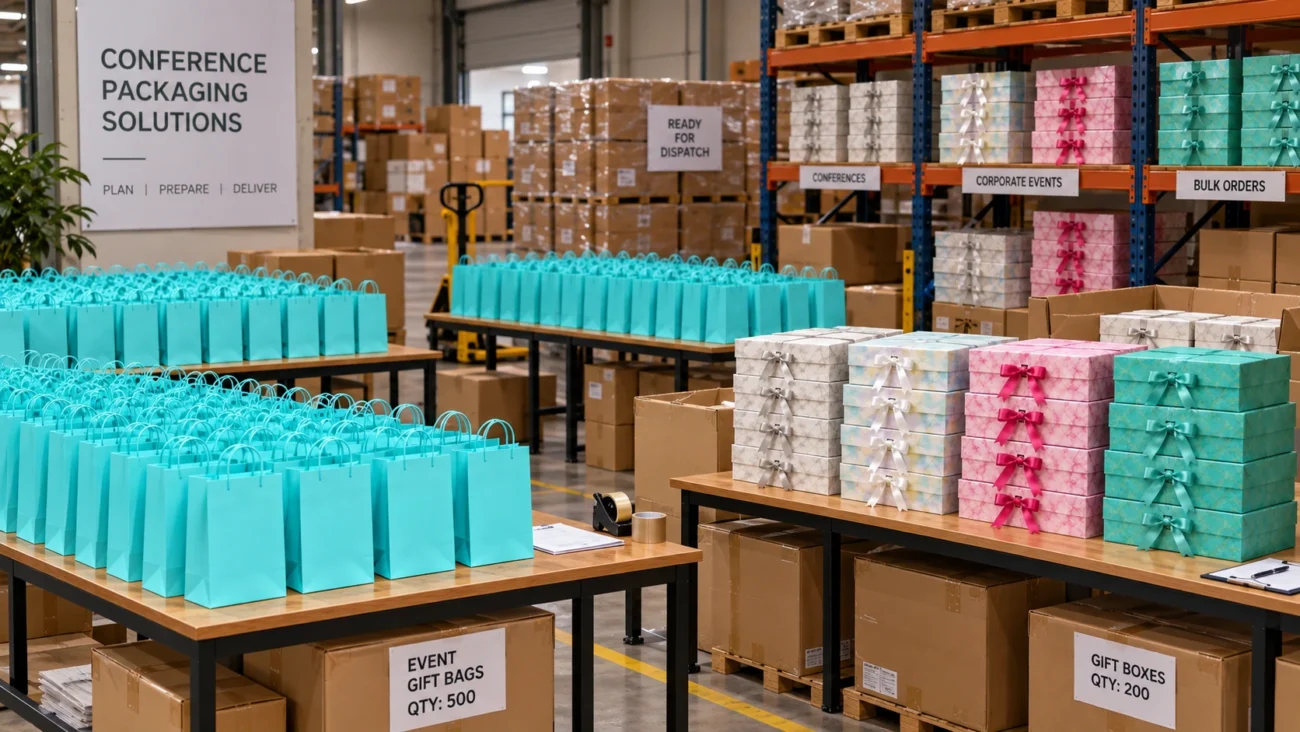
Sourcing Ready-Made Corporate Event Packaging for Businesses
For businesses looking for ready-made conference bags, the main advantage is having an established range of formats and designs to choose from rather than treating every event as a completely separate sourcing exercise.
Ready-made paper bags can work particularly well when the requirements are straightforward: a suitable size, appropriate handle strength, and a design that fits the event’s overall presentation.
For example, solid color paper bags can provide a simple visual direction, while Kraft Paper Carry Bags can work when a straightforward paper-based appearance suits the event. Decorative paper bags may be considered when the event has a more visually oriented presentation.
Before placing a large order, businesses should still check the practical specifications:
- Bag dimensions
- Paper weight or GSM
- Handle construction
- Expected load
- Quantity available
- Sample quality
- Delivery timeline
For a wider understanding of how paper bags are constructed and what affects their performance, businesses can also review the factors discussed in our guide to how paper gift bags are actually made.
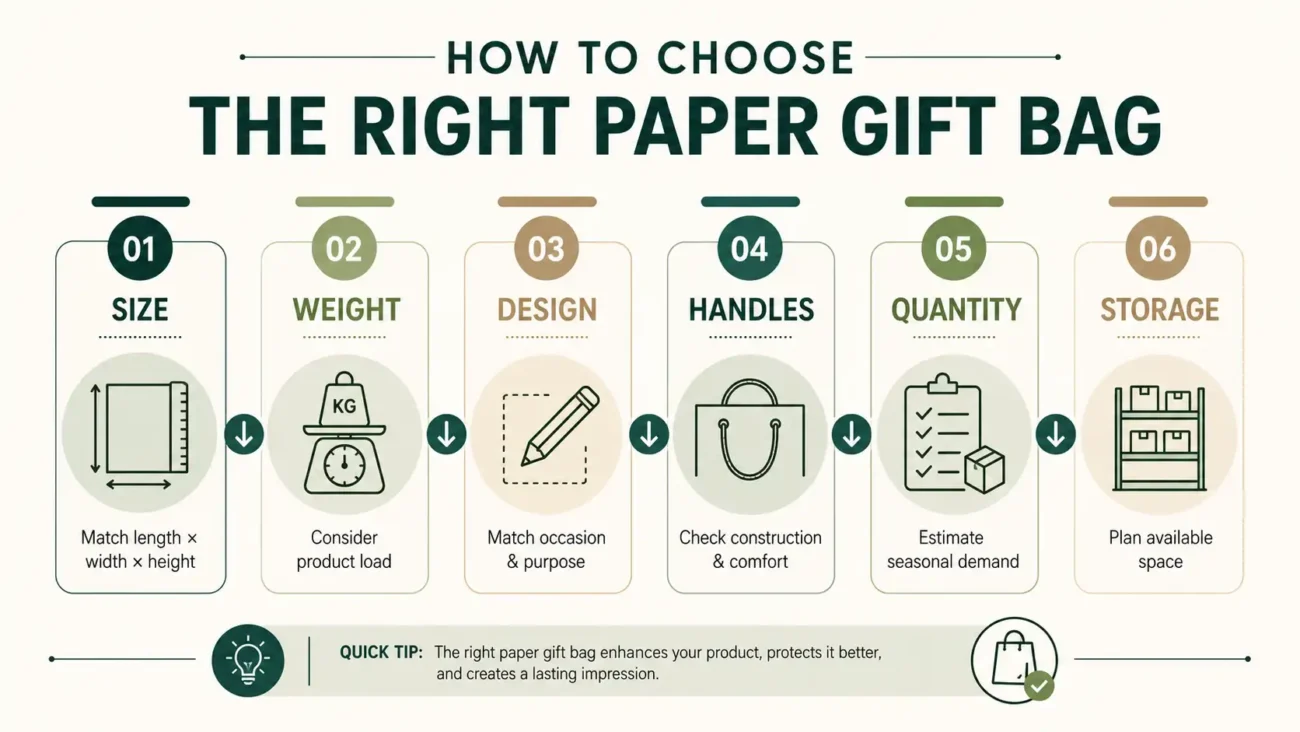
Corporate Gift Packaging Within Events
Some corporate events include a separate gift for speakers, sponsors, partners, or selected attendees. These gifts may require packaging that is different from the standard conference bag.
A gift box can provide a more structured way to present smaller corporate gifts, particularly when the item needs to remain organized rather than simply being placed inside a larger delegate bag.
Foldable magnetic lid boxes are one option businesses can consider when the contents suit a structured box format. GiftNGreet’s ready-made range includes Foldable Magnetic Lid Boxes in marble-pattern and plain solid-color variations.
Explore ready-made gift boxes for corporate event packaging.
The important consideration is matching the box dimensions to the actual gift. A box that is unnecessarily large can create wasted space, while one that is too small can make the contents difficult to arrange.
Corporate Event Gift Packaging: A Few Practical Notes
Corporate Event Packaging often have a different role from standard delegate materials. A notebook or conference folder may be functional, while a speaker or sponsor gift is usually intended to be presented separately.
That means corporate event gift packaging should be planned alongside the gift itself rather than added at the last minute.
A few practical points make the process easier:
- Match packaging to the gift size: Avoid boxes or bags that leave excessive empty space.
- Consider the distribution method: Gifts handed out at registration may need different packaging from gifts presented individually.
- Keep the packaging coordinated: If the event already uses a particular bag style or color, related gift packaging can follow the same visual direction.
- Plan quantities separately: Speaker and sponsor gifts may require different quantities from the main delegate packaging.
- Allow time for checking: Make sure the selected box or bag can accommodate the actual gift before ordering in bulk.
For businesses planning the wider corporate gifting element of an event, our guide to corporate gift packaging ideas for conferences and business events covers additional packaging considerations.
Choosing a Conference Kit or Conference Bags Supplier in India
Selecting a supplier is not only about finding a suitable bag or box. For Corporate Event Packaging, the supplier also needs to fit the project’s quantity, timing, and packaging requirements.
Before placing an order, ask practical questions such as:
- What sizes and formats are available?
Check whether the supplier offers the dimensions and packaging formats required for your delegate kits, rather than selecting a bag first and trying to adjust the contents around it. - What are the paper and construction specifications?
Ask about paper GSM, handle construction, reinforcement, dimensions, and other specifications relevant to the expected load. - Can a sample be checked before the bulk order?
A sample allows the event team to check the actual size, appearance, construction, and suitability for the intended contents. - What is the expected production and delivery timeline?
Confirm the timeline before committing to quantities. Build in enough time for receiving, checking, and distributing the packaging. - Can the supplier provide multiple packaging formats?
If the same event requires bags as well as gift boxes or wrapping materials, sourcing these from a supplier with a suitable product range can simplify coordination. - How will bulk-order consistency be maintained?
For larger events, consistency matters. Ask how the supplier handles specifications and quality checks across the order so that the delivered packaging remains consistent with the approved sample.
For businesses sourcing paper bags in larger quantities, it is also useful to understand how packaging decisions affect bulk-order cost, quality, lead time, and supplier reliability before placing the order.

Bringing the Planning Together
Corporate event packaging becomes much easier to manage when it is treated as part of event planning rather than a last-minute purchasing task.
The process can be kept straightforward:
- Confirm the delegate kit contents.
- Separate attendee, speaker, sponsor, and gift requirements where necessary.
- Choose bags and boxes according to actual dimensions and expected load.
- Check samples before committing to a large quantity.
- Confirm availability, delivery timelines, and required buffer.
- Keep the different packaging formats visually coordinated.
GiftNGreet is a paper packaging manufacturer based in New Delhi, supplying Kraft Paper Carry Bags, Decorative Paper Carry Bags, Solid Color Paper Carry Bags, Foldable Magnetic Lid Boxes, and Wrapping Paper as ready-made packaging options for businesses and events.
For businesses looking for ready-made gift packaging, selecting a suitable box or bag based on product size, presentation requirements, and intended use can help create a more consistent customer experience.
Explore:
Wrapping Paper Sheets for Gift Packaging
Ready-made Magnetic Lid Gift Boxes
Ready-made Paper Gift Bags for Retail and Gifting
To enquire about available products and bulk purchasing requirements, contact GiftNGreet.
Frequently Asked Questions
A delegate kit can include items such as notebooks, folders, brochures, schedules, stationery, event information, merchandise, and other materials relevant to the event. The exact contents depend on the event and attendee group.
The appropriate bag depends on the size and weight of the delegate kit. Paper bags with suitable dimensions and sturdy handles can work well for relatively lightweight conference materials. The bag should be selected after considering the complete contents rather than appearance alone.
They can be, particularly when speakers or sponsors receive additional materials or gifts. However, separate packaging is not always necessary. A coordinated approach using different sizes, formats, or colors can provide distinction without creating an unnecessarily complicated system.
Lead time depends on the packaging type, quantity, availability, supplier, and delivery location. Businesses should confirm these factors with the supplier well before the event and leave time for receiving and checking the order.
A reasonable buffer can be useful because attendance numbers may change and additional bags may be needed for replacements or unexpected requirements. The appropriate quantity depends on how certain the final attendee count is.
Gift boxes, particularly foldable magnetic lid boxes for smaller items, tend to offer a more considered presentation than a bag for this kind of gifting.
Start by defining a simple visual direction for the event and apply it across the main packaging formats. Consistent colors, complementary designs, and appropriate sizing can help bags and gift packaging feel like part of the same event setup.
Ask about available sizes, paper GSM, handle construction, samples, quantity requirements, availability, lead time, delivery, and quality-control procedures. For larger orders, also discuss how consistency will be maintained across the batch.
Yes, and it’s often simpler — sourcing bags, boxes, and wrapping paper from a single supplier reduces coordination effort and helps keep the overall look consistent.
Related Reading
- Packaging Ideas for Corporate Gifting
- Choosing Packaging for Bulk Orders
- Packaging Solutions for Gift Shops
- How Manufacturers Produce Quality Paper Gift Bags
Manufactured in New Delhi
Packaging Designed For Every Occasion
Explore GiftNGreet’s collection of gift boxes, paper gift bags, wrapping paper, and packaging solutions suitable for gifting, retail businesses, celebrations, and everyday presentation.
Looking for packaging solutions? Visit our Contact Us page for retail and bulk enquiries.