
Packaging Insights
Open any packaging catalogue when you’re starting out, and it can feel like a test you haven’t studied for. Bags in a dozen sizes, boxes in different styles, tissue paper, ribbons, tags, stickers, wrapping paper, and fillers—all of it looks useful, and many items come with minimum order quantities that tie up money you would rather spend on stock or marketing. The truth is that most small businesses need less packaging than they think, and they don’t need everything at once. This guide covers small businesses packaging from the ground up: what to buy first, how much to order, where it’s sensible to save money, and when to expand your range. It’s written for businesses selling gifts, accessories, clothing, handmade products, and other items that customers carry away in a bag or box.
The Short Version
- Start with two or three carry bag sizes rather than a complete range.
- Add one protective inner layer, such as suitable tissue or wrapping, and one finishing detail, such as a tag.
- Buy a small number of boxes only if your products need them.
- Treat courier shipping packaging as a separate requirement from packaging used for presentation and handover.
- Spend on fit, construction, and reliability; avoid unnecessary extras at the beginning.
- Order enough for a few weeks of expected sales, with a small buffer.
- Test a sample with your actual products before committing to a bulk order.
Why Packaging Feels Like a Bigger Decision When You’re Small
A large retailer may be able to absorb a packaging mistake more easily. For a small business, ordering the wrong bags or boxes can tie up money, take up valuable storage space, and create problems with customer orders.
Three factors make the decision particularly important:
- Cash is limited. A large quantity of unsuitable bags can leave less money available for inventory, marketing, or day-to-day expenses.
- Storage is limited. Bags and boxes take up room, and many small businesses don’t have a dedicated stockroom.
- Demand is uncertain. When a business is new, it may be difficult to predict which products will sell most often, which sizes will be needed, or how many orders will arrive.
This uncertainty is exactly why a staged approach works better than placing a large first order. Start with what you know you need, test it in real use, and expand as sales reveal what is missing.
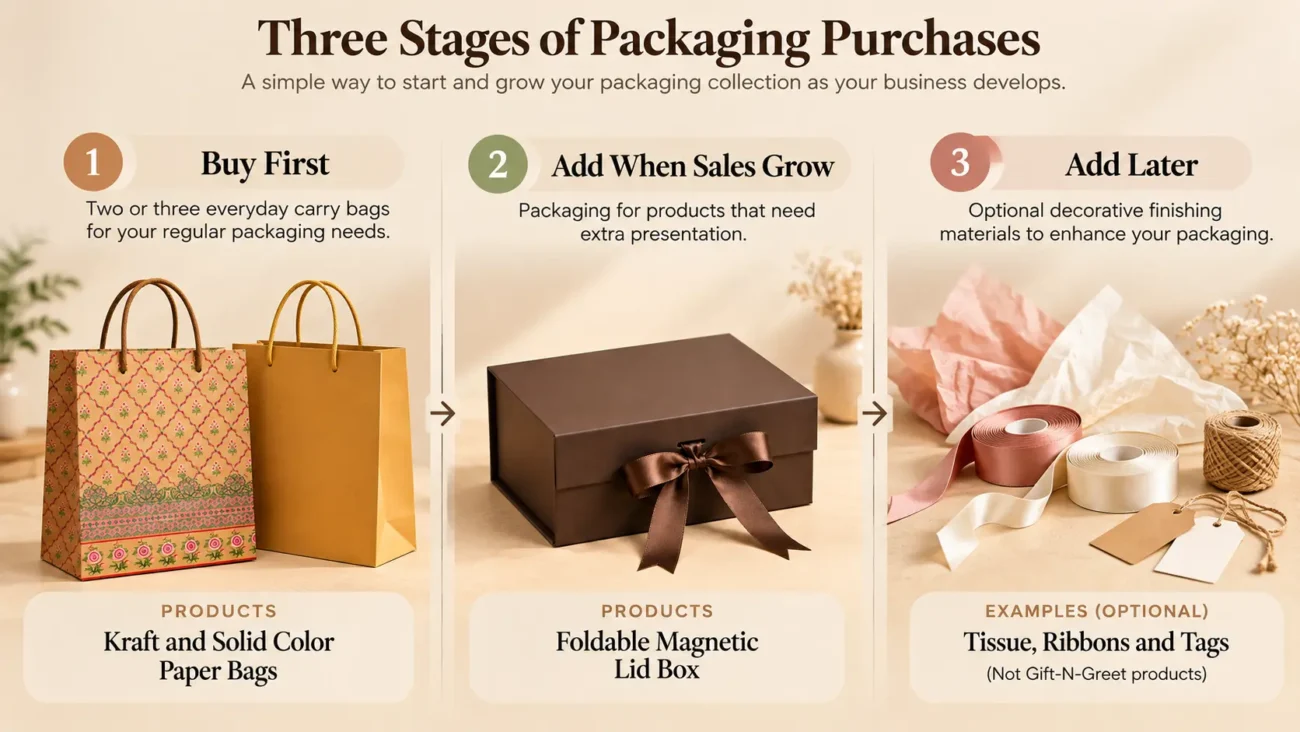
A Simple Way to Think About It: Three Stages
It helps to divide packaging purchases into three groups.
- Buy first: Essential supplies needed to fulfil your first sales.
- Add once sales are steady: Items that improve presentation, product protection, or packing efficiency.
- Add later, if needed: Extras that may be useful but are not essential to your current business.
Many small businesses can operate with the first group for some time. The goal is not to have every packaging option available; it is to have a small, practical range that meets the needs of your most common orders.
Essential for Small Businesses Packaging
The essential for small businesses packaging can be reduced to a short list. Start with the items that help you pack and hand over your products safely, then add more when your sales justify it.
- A Carry Bag in Two or Three Sizes: A carry bag is one of the most useful packaging items for businesses that hand products directly to customers. Instead of buying every available size, review your product range and choose two or three sizes that cover most of your sales. Our paper bag size guide for measuring products and choosing the right bag dimensions explains how to compare width, gusset, and height before ordering.
As a starting example, the supplied GiftNGreet paper bag dimensions indicate that Nano, Small, and Medium bags may cover products ranging from compact boxed accessories to books and folded clothing. Check the current product dimensions before making a selection, and test the fit with the actual items you sell.
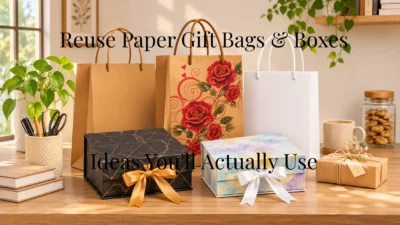
Kraft paper bags can suit a simple, understated presentation, while solid-colour bags offer another straightforward option. The important thing is to choose bags that fit your products and can support their weight. - One Protective Inner Layer: A suitable inner layer can help protect a product and make the package easier to arrange. Tissue paper may be useful for certain dry, non-fragile products, while other items may need more protective packaging.
Choose the inner layer according to the product. Food, oily items, and moisture-sensitive goods need appropriate packaging of their own; an ordinary paper carry bag should not be treated as oil-proof or moisture-proof.
Start with a small quantity of any additional materials until you understand how often you use them. - A Small Number of Boxes, If You Need Them: Not every small business needs gift boxes. If you sell products that benefit from a structured container—such as selected accessories, boxed gifts, or gift assortments—it may be worth keeping a few suitable boxes in stock.
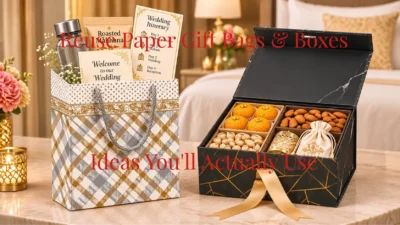
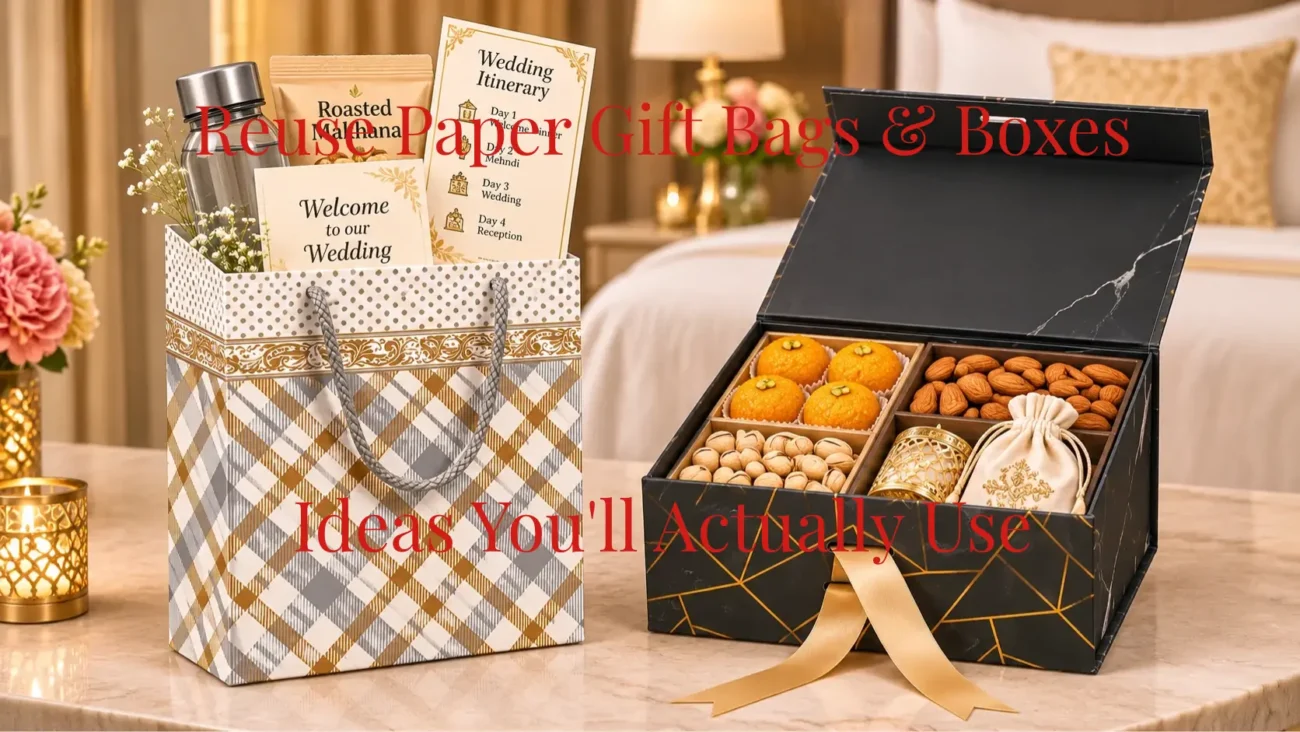
Foldable magnetic lid boxes are one option to consider. Their foldable construction can help with storage, while the lid provides a defined opening and closing format. Choose a box only when its dimensions and construction suit the product.
If a carry bag or the product’s existing packaging does the job, you can delay buying gift boxes until demand gives you a clear reason to add them. - One Finishing Touch: A simple finishing detail, such as a tag or ribbon, can make packaging look more complete. Choose one detail that suits your business and use it consistently instead of purchasing several decorative extras at the beginning.
For example, a consistent tag style or a restrained colour combination can help orders look organised without adding unnecessary complexity or cost. Treat ribbons, tags, and stickers as optional supplies rather than essentials for every business. - Shipping Packaging, If You Ship: One important distinction for new sellers is that carry bags and presentation gift boxes are not automatically suitable for courier shipping. If you send products to customers, you may also need an appropriate outer shipping carton or mailer, plus protective materials suited to the item and the journey. The product’s weight, fragility, dimensions, and shipping method determine what protection is needed.
Plan shipping packaging separately from the bag or box used to present the product. Do not assume a paper carry bag will withstand courier handling simply because it is large enough to hold the item.
What to Buy First, by Type of Business
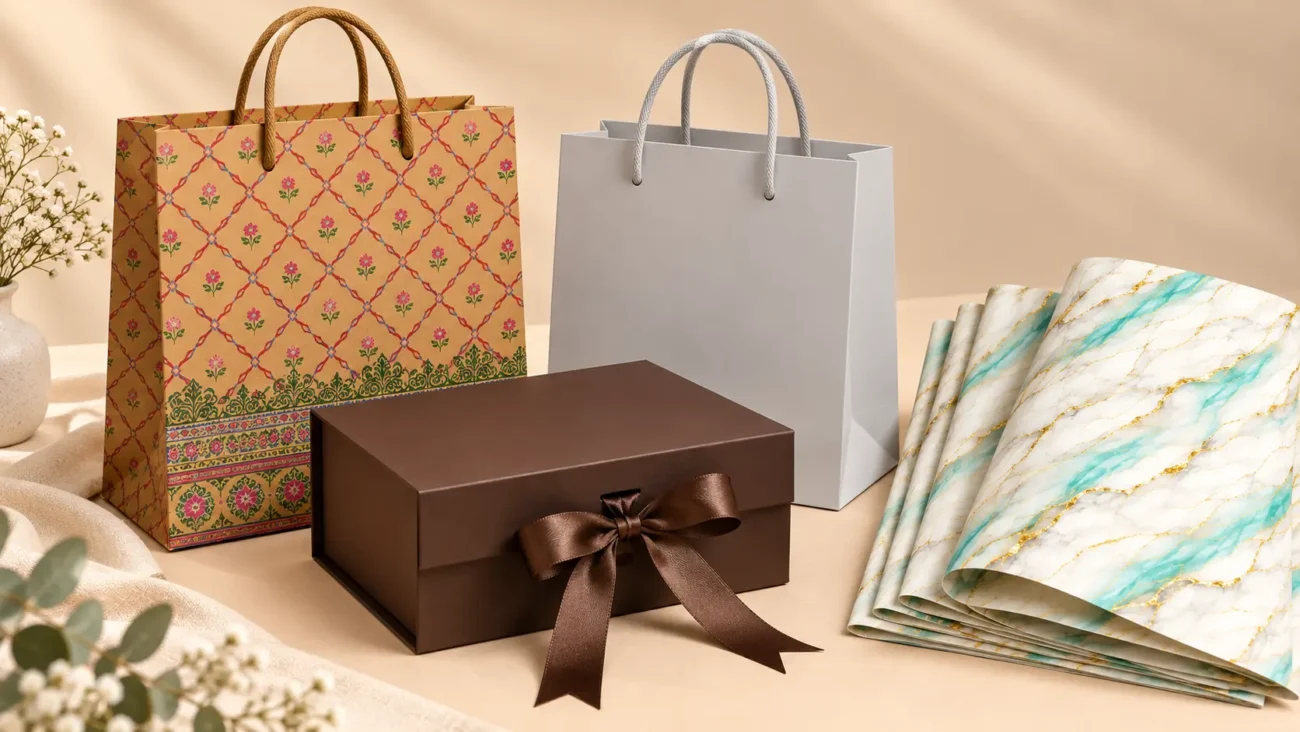
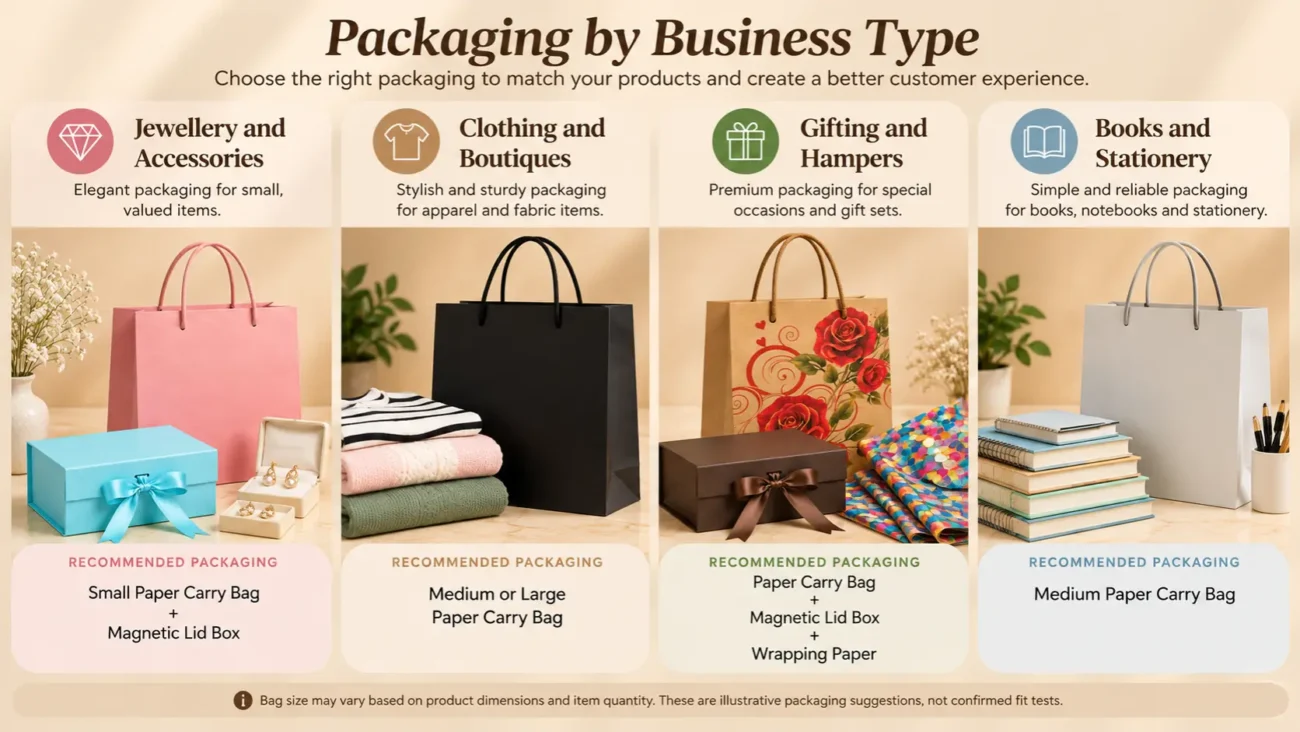
The right starting point depends on what you sell, how customers receive their purchases, and how much protection each product needs. Instead of buying a complete packaging range immediately, begin with the supplies that support your most common orders.
| Business type | Start with | Add when sales grow |
|---|---|---|
| Jewellery and accessories | Small carry bags, tissue paper and a few suitable gift boxes | Larger bags and additional box sizes for gift sets |
| Clothing and boutiques | Medium and large carry bags, tissue paper and simple tags | Boxes for gifting seasons or selected products |
| Handmade candles and cosmetics | Suitable protective inner packaging, small or medium bags, and boxes where needed | Additional box sizes and packaging for gift sets |
| Gifting and hampers | Medium and large bags, wrapping paper sheets and suitable boxes | A wider range of box sizes for different combinations |
| Books and stationery | Medium carry bags and protective wrapping where required | Boxes for gift editions or bundled products |
| Home-based food sellers | Appropriate food-safe containers and protective packaging first | Carry bags in suitable sizes for customer handover |
These are starting points, not fixed rules. A jewellery seller who ships delicate items will need different packaging from one whose customers collect orders in person.
For food businesses, the packaging that directly holds the food must be suitable for that purpose. A paper carry bag can support presentation and handover, but it should not replace the appropriate food-safe inner container. The same principle applies to other products: buy packaging according to the product’s actual needs, not simply because another business uses it.
Small Business Packaging Supplies: Where to Spend and Where to Save
When working with a limited budget, the goal is not to make every packaging element elaborate. It is to make sure the essentials perform reliably and look consistent.
- Where to Spend:
- Choose bags that suit your products. The bag should have enough room for the product without being unnecessarily large. Check the handle attachment, base construction and overall finish, especially if customers will carry heavier items.
- Prioritise protection where it matters. Delicate, breakable or easily scratched products may need suitable inner packaging. Spending a little more on appropriate protection can help prevent avoidable damage and replacement costs.
- Check quality before placing a larger order. Request samples where available and test them with your actual products. A bag that looks suitable in a photograph may not work well when filled.
- Keep your presentation consistent. Using a small selection of complementary bag sizes and colours can create a more organised appearance than mixing many unrelated styles. Consistency does not require expensive additions; it requires making deliberate choices.
- Where to Save:
- Avoid buying too many sizes at once. Start with the sizes that fit most of your regular orders. Add less frequently used sizes when you have evidence of demand.
- Keep decorative extras optional. Ribbons, tags, stickers and elaborate fillers may be useful for selected products or occasions, but they are not essential for every order.
- Limit the number of designs. Managing several styles can increase storage requirements and leave you with slow-moving stock. A smaller, practical range is easier to manage.
- Avoid buying packaging that serves no clear purpose. Before ordering an extra box, wrap or accessory, ask whether it protects the product, improves presentation, or solves a recurring customer need. If it does none of these, it can probably wait.
The basic rule is straightforward: spend on fit, function and reliable construction before spending on decorative details.
Affordable Small Businesses Packaging: Practical Ways to Keep Costs Down
Affordable packaging is not necessarily the cheapest packaging available. It is packaging that does its job without tying up too much money in unused stock or unnecessary extras.
Here are practical ways to manage the cost.
- Start With a Small, Useful Range: Choose two or three bag sizes based on your most common products. If you sell several types of products, measure them before selecting the sizes. A smaller range makes ordering and storage simpler. It also helps you understand which sizes move quickly and which ones are rarely used.
- Compare the Cost Per Unit: When comparing suppliers, look beyond the total order price. Divide the total cost by the number of usable units to calculate the cost per bag or box. Also consider delivery charges, minimum order quantities and any additional costs. A larger order may reduce the unit price, but it is not automatically better value if the packaging takes months to use.
- Avoid Oversized Packaging: A bag or box that is much larger than the product can waste material and make the contents harder to secure. Select dimensions that accommodate the product comfortably, including any necessary protective layer. For guidance on choosing appropriate dimensions, use the paper bag size guide for measuring products and choosing the right bag dimensions.
- Use Decorative Extras Selectively: You do not need tissue paper, ribbons, tags and fillers for every order. Decide which products benefit from extra presentation and reserve those additions for them. For everyday purchases, a suitable bag with a neat finish may be sufficient. For gifts or special purchases, an additional layer may be worthwhile.
- Consider Storage Before Ordering: Packaging needs space, particularly when purchased in bulk. Foldable boxes can be useful when storage space is limited, provided their size and construction suit the product. Store bags and paper products in a clean, dry place away from moisture, dust and crushing. Poor storage can damage packaging before it is used, reducing the value of your purchase.
- Increase Order Quantities Gradually: Once you have tracked sales over several weeks, you can estimate how quickly each packaging size is used. Use that information to plan your next order rather than guessing. Buying in bulk can become more practical when demand is predictable. Until then, keeping stock manageable is often more useful than chasing the lowest advertised unit price.
The aim is to build a packaging range that supports your current business and can expand as your sales become more consistent.
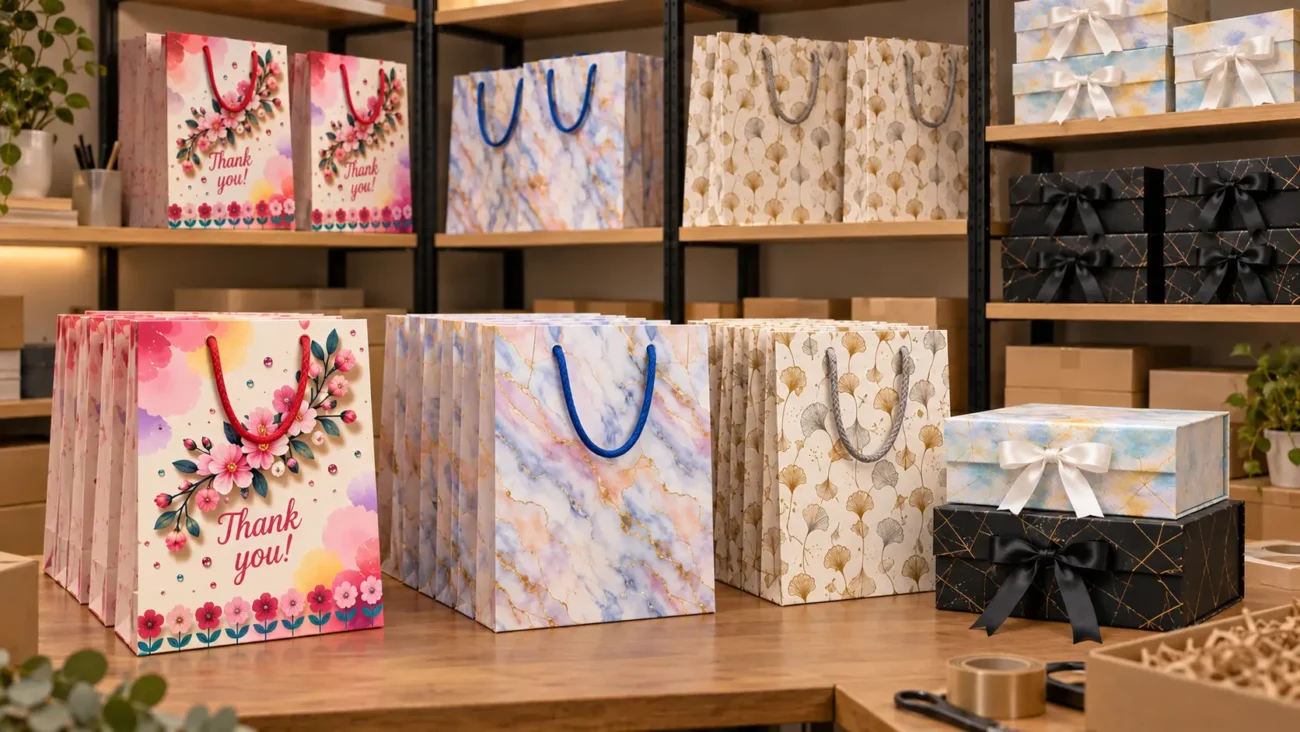
Small Businesses Packaging | How Much to Order the First Time
Your first packaging order should be based on expected sales, available storage and the amount of money you can comfortably set aside. There is no single quantity that works for every small business.
A practical starting point is to estimate how many orders you expect to fulfil over the next few weeks and how much packaging each order will require.
For example, if you expect to fulfil around 40 orders per month and most orders need one carry bag, you can use that estimate to plan your initial stock. However, leave room for uncertainty if sales are irregular or you are launching a new product.
Before placing your first order, consider these points:
- Estimate your usage: Identify how many bags, boxes or protective materials you need for a typical order.
- Start with common sizes: Prioritise the sizes that fit most of your products.
- Check minimum order quantities: Ask suppliers about their minimum quantities before committing to an order.
- Consider storage: Make sure you have enough clean, dry space to store the packaging properly.
- Keep some money available: Avoid tying up your entire packaging budget in stock that may take a long time to use.
If a supplier offers a lower price for a larger quantity, compare the savings with the risk of holding unused stock. A slightly higher unit price may be more manageable when demand is still uncertain.
As your business develops, review packaging usage regularly and adjust your next order according to actual sales rather than relying entirely on your initial estimates.
Test Before You Commit: Small Businesses Packaging
Packaging can look suitable in a catalogue or product photograph but behave differently in everyday use. Testing samples before placing a larger order helps you identify problems early.
If samples are available, check the following:
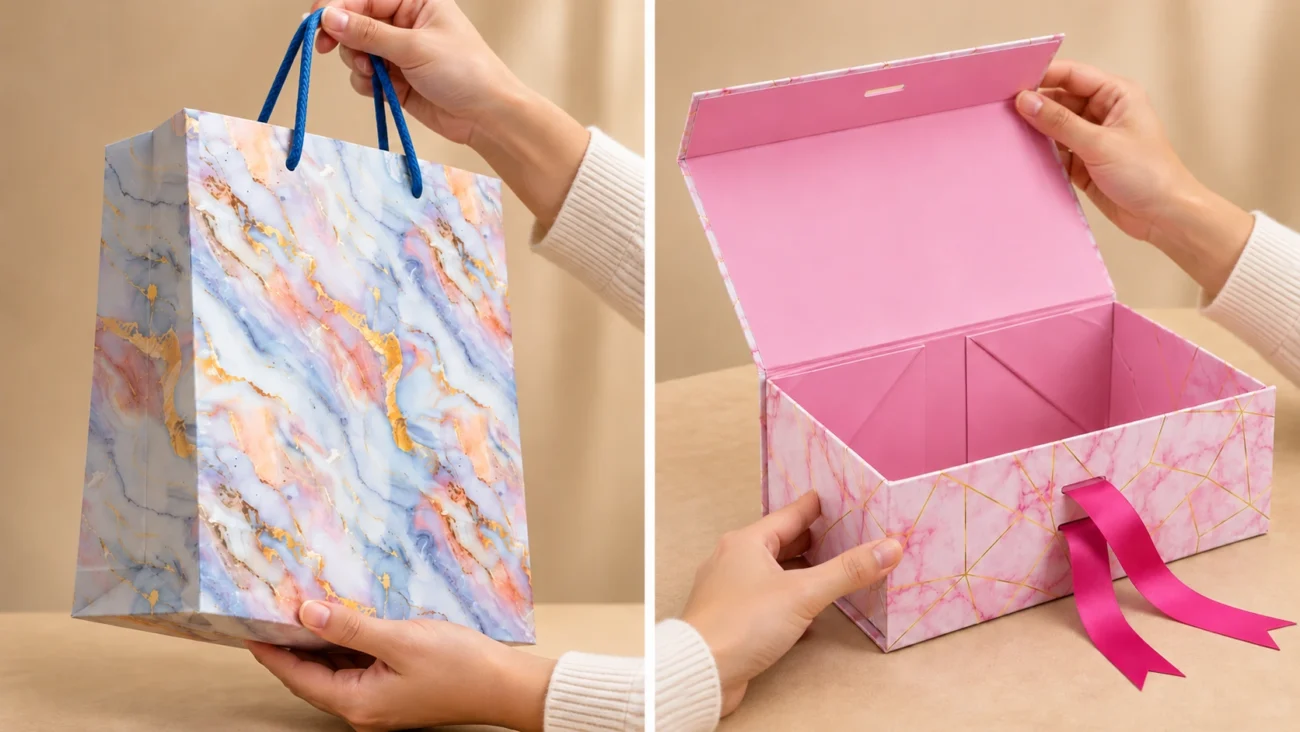
- Product fit: Place your actual product inside the bag or box. Check that it fits comfortably and can be removed without damaging the packaging.
- Construction: Inspect the base, folds, handles and overall finish. If the packaging will hold heavier products, test it with a representative load under normal handling conditions.
- Appearance: Check the colour, printing, surface finish and overall consistency. Make sure the packaging suits the products you intend to sell.
- Practical handling: Carry the bag, open and close the box where applicable, and observe how the packaging performs during normal customer handover.
- Storage requirements: Check whether the packaging can be stored efficiently and whether it needs protection from dust, moisture or pressure.
Testing is especially useful when comparing suppliers or considering a new size. It gives you a better basis for judging whether the packaging is suitable before you commit more of your budget.
Small Businesses Packaging | Looking Established in Budget
OA small business does not need an extensive packaging range to present its products professionally. A few consistent, practical choices can make the buying experience feel more organised. Start by choosing packaging that suits the type and size of your products. Avoid bags that are unnecessarily large or boxes that leave too much empty space around the contents.
Next, maintain consistency. Using a limited selection of colours, bag sizes and finishing details helps create a recognisable presentation. You can introduce additional styles later when there is a clear reason to do so. Keep the packaging neat, too. Store it properly, check for damaged or creased pieces before use, and avoid adding decorative elements that make packing unnecessarily complicated.
For businesses that want to improve their presentation over time, why consistent packaging helps brand presentation can help guide decisions about colours, materials and overall appearance. The key is to make the packaging feel considered without making every order more expensive or time-consuming to prepare.
Choosing a Supplier for Small Businesses Packaging
The right supplier should offer packaging that suits your products, order requirements and budget. Price matters, but it should not be the only factor you consider.
Before placing an order, ask suppliers:
- What is the minimum order quantity? This helps you determine whether the order fits your budget and expected demand.
- Are samples available? Samples allow you to check dimensions, construction and appearance before buying in quantity.
- What sizes and designs are available? A suitable ready-made range may cover your needs without requiring you to buy unnecessary variations.
- What is the expected delivery time? This helps you plan stock replenishment and avoid running out during busy periods.
- Are the specifications consistent across orders? Ask how product dimensions, materials and finishes are described so you know what to expect.
- What are the complete costs? Check the unit price, delivery charges and any other applicable fees before comparing quotations.
It is also worth asking how packaging is packed for transport and what happens if delivered items are damaged or do not match the agreed specifications.
For a broader checklist, read this guide on sourcing gift packaging in bulk and comparing suppliers, samples and lead times.
Small businesses should prioritise suppliers whose products and ordering terms are clear. Do not assume that every supplier accepts small trial orders; confirm the minimum quantity and other conditions directly before making a decision.
Common Small Businesses Packaging Mistakes
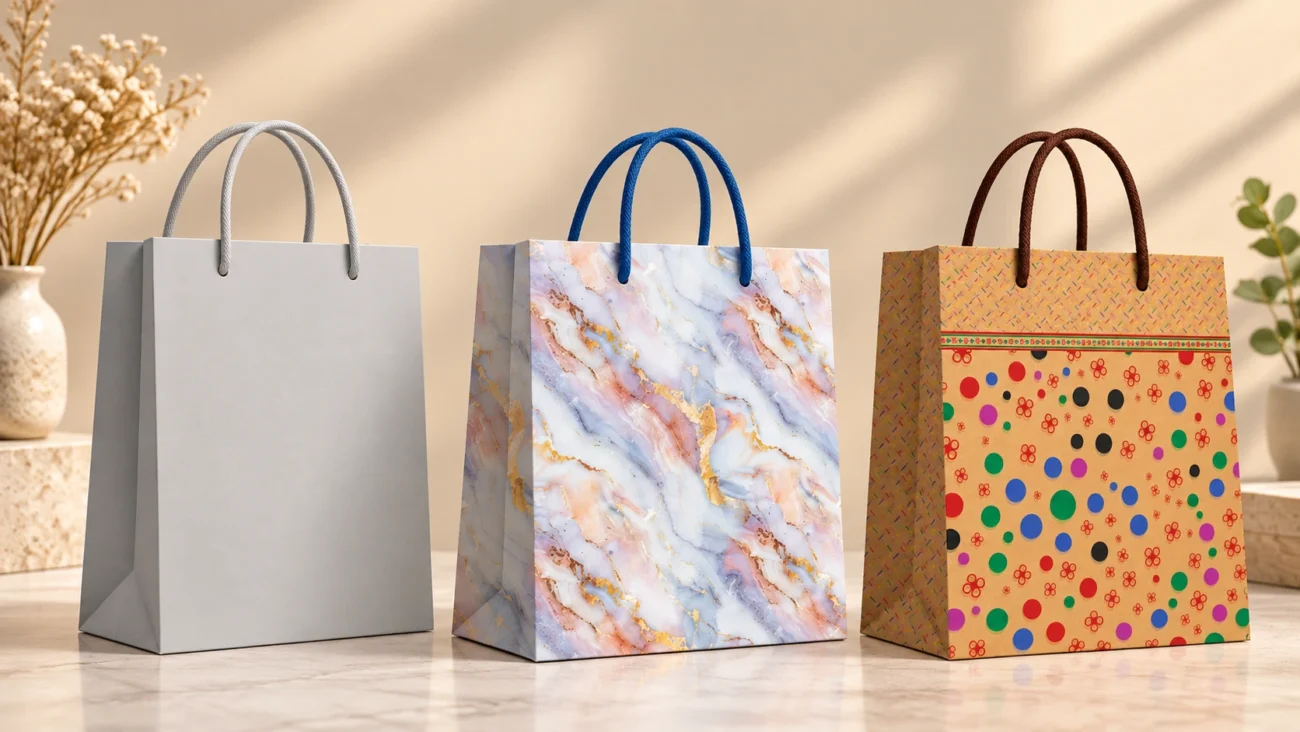
Packaging problems often arise when businesses buy too much, choose unsuitable sizes or make decisions based on appearance alone. Avoiding a few common mistakes can help you use your budget more effectively.
- Buying Too Many Sizes at Once: A large variety may seem useful at first, but slow-moving sizes can occupy storage space and tie up money. Begin with the sizes that accommodate your most common orders and expand when actual demand justifies it.
- Choosing Packaging That Does Not Fit: An oversized bag can look awkward, while packaging that is too small may damage the product or make packing difficult. Measure your products and account for any protective material before selecting dimensions.
- Focusing Only on the Lowest Price: A low unit price is not always the best deal if the packaging is unsuitable, inconsistent or difficult to use. Compare construction, dimensions, delivery costs and minimum quantities alongside price.
- Ordering in Bulk Before Understanding Demand: Bulk purchasing can reduce unit costs, but it can also leave you with excess stock. Start with a manageable quantity when sales are uncertain and increase orders once your usage becomes more predictable.
- Spending Too Much on Decorative Extras: Ribbons, tags and elaborate fillers can increase costs and packing time. Use them where they serve a clear purpose rather than automatically including them with every purchase.
- Treating Presentation Packaging as Shipping Protection: Carry bags and gift boxes are not automatically suitable for courier transport. Shipped products may need appropriate outer cartons, cushioning, sealing and protection based on the item’s weight, fragility and delivery conditions.
- Ignoring Storage Conditions: Paper packaging can become creased, dirty or damaged if stored in unsuitable conditions. Keep unused stock dry, clean and protected so that it remains usable.
Avoiding these mistakes allows you to build a packaging range around practical requirements rather than unnecessary variety.
When to Add More
You do not need to purchase every packaging option at the beginning. Expand your range when your existing supplies no longer meet your customers’ needs or when sales patterns show a clear reason to introduce something new.
Consider adding more packaging when:
- A particular bag size is regularly running out.
- Customers frequently purchase products that need a different size or type of packaging.
- You introduce a new product category that requires additional protection.
- Gift sets or seasonal orders become a regular part of your sales.
- Your order volume becomes predictable enough to support larger purchases.
- Your existing packaging is creating avoidable problems during packing or handover.
Review your packaging stock periodically. Note which sizes sell quickly, which ones remain unused and which products require additional protection. This information can guide your next purchase.
Businesses serving different customer groups may also need different packaging priorities. For example, packaging solutions for gift shops can help retailers assess their packaging requirements, while businesses selling clothing may benefit from reviewing packaging solution for boutiques.

Start Small, Then Build
Choosing packaging for a small business does not have to mean purchasing a complete range from the beginning. Start with the supplies that protect your products, support everyday orders and provide a suitable presentation for customers. Focus first on practical bag sizes, appropriate protective materials and boxes where they are genuinely needed. Keep decorative additions optional, test samples before larger purchases, and use actual sales to guide future orders.
As your business grows, review your packaging requirements and introduce additional sizes or styles only when they solve a clear problem. This approach helps you manage storage, control spending and avoid unnecessary stock. For businesses looking for ready-made paper packaging, GiftNGreet offers a range of paper carry bags, kraft paper bags, foldable magnetic lid boxes and wrapping paper sheets. Explore the available categories to compare options for your products and packaging requirements.
Frequently Asked Questions
Most small businesses can begin with a few suitable carry bag sizes, protective inner packaging where required, and boxes for products that need a structured container. The exact requirements depend on the products sold and whether orders are handed over in person or shipped.
Common supplies include paper carry bags, tissue paper, suitable product boxes and protective materials. Shipping businesses may also need outer cartons, cushioning and sealing materials. Start with what your products actually require rather than purchasing every available option.
Start with a limited range of sizes, compare suppliers’ complete costs, test samples before larger orders and avoid decorative extras that do not serve a clear purpose. Increase order quantities as demand becomes more predictable.
Estimate your expected orders over the next few weeks and calculate how much packaging each order will use. Consider minimum order quantities, storage space and available cash before deciding how much to buy. If demand is uncertain, avoid committing to more stock than you can reasonably use.
Paper carry bags and gift boxes are generally intended for presentation or customer handover, not necessarily for courier transport. Shipped products may require suitable outer cartons, cushioning, sealing and additional protection depending on their weight, fragility and delivery conditions.
Not every business needs gift boxes. They are useful for products that benefit from a structured container, such as gift sets or selected accessories. If most customers purchase everyday items that fit comfortably in carry bags, boxes can be added later when demand justifies them.
Ask about minimum order quantities, available sizes and designs, sample availability, delivery timelines, complete pricing and product specifications. Also clarify how damaged goods or differences from the agreed specifications are handled.
Smaller orders can be more practical when sales are unpredictable or storage space is limited. Bulk orders may reduce the cost per unit, but they can tie up money in unused stock. Compare the savings against your expected usage before deciding.
Small businesses can source packaging from manufacturers, wholesalers and packaging suppliers. Compare available sizes, product specifications, minimum quantities, samples and delivery terms before placing an order. Choose a supplier whose ready-made range and ordering conditions suit your requirements.
Related Reading
- Paper Bag Size Guide: How to Choose the Right Size for Every Product
- How to Source Gift Packaging in Bulk
- Packaging Solutions for Boutiques
- Common Gift Packaging Mistakes to Avoid
Manufactured in New Delhi
Packaging Designed For Every Occasion
Explore GiftNGreet’s collection of gift boxes, paper gift bags, wrapping paper, and packaging solutions suitable for gifting, retail businesses, celebrations, and everyday presentation.
Looking for packaging solutions? Visit our Contact Us page for retail and bulk enquiries.