
Packaging Insights
Boutiques live and die on details that many other retail categories don’t have to think about — the fit of a garment, the feel of a fabric, and the way a small store creates a carefully considered shopping experience. Boutique packaging is part of that same list, whether a store treats it that way or not. A customer walking out with a well-finished paper bag carries a small piece of the shop’s presentation into the world, while inconsistent or poorly suited packaging can make the purchase feel less complete.
This is a practical look at what boutique packaging actually involves — the bags, boxes, and finishing details that matter — and how to source them in a way that supports a boutique’s overall presentation without becoming a constant hassle to manage.
The Short Version
- Packaging is one of the few boutique details customers physically carry out of the store.
- Paper bags handle most everyday purchases, while boxes can be used when a more structured presentation is appropriate.
- Finishing touches such as tissue paper and ribbon can make a noticeable difference to the overall presentation.
- A distinctive ready-made packaging range can give a boutique plenty of variety without relying on one-off sourcing.
- Material choice, reuse, and end-of-life considerations are increasingly relevant when selecting packaging.
- Sourcing regularly from a reliable supplier can keep the packaging system easier to manage as a boutique grows.
Why Packaging Matters More in a Boutique Than in Most Retail
A boutique isn’t competing purely on price or convenience — it often relies on presentation, curation, and the overall shopping experience. Packaging for boutiques either reinforces that experience or quietly works against it.
A garment or accessory handed over in a flimsy, mismatched, or poorly sized bag can make an otherwise well-presented purchase feel like an afterthought. On the other hand, a suitable paper bag, box, or finishing detail can extend the shop’s attention to presentation right through to the point the customer leaves.
This is also one area where a smaller boutique can create a more consistent packaging experience. A large retailer may need packaging that works across hundreds of product categories and locations, while a boutique can select a smaller set of packaging formats that match the products it actually sells.
The important point is that packaging doesn’t need to be complicated. The right sizes, suitable formats, and consistent use can have a greater effect than simply stocking a large number of different packaging options.
Paper Bags: The Everyday Face of a Boutique
For most boutiques, paper bags are the packaging customers see most often, which makes them worth getting right before anything else.
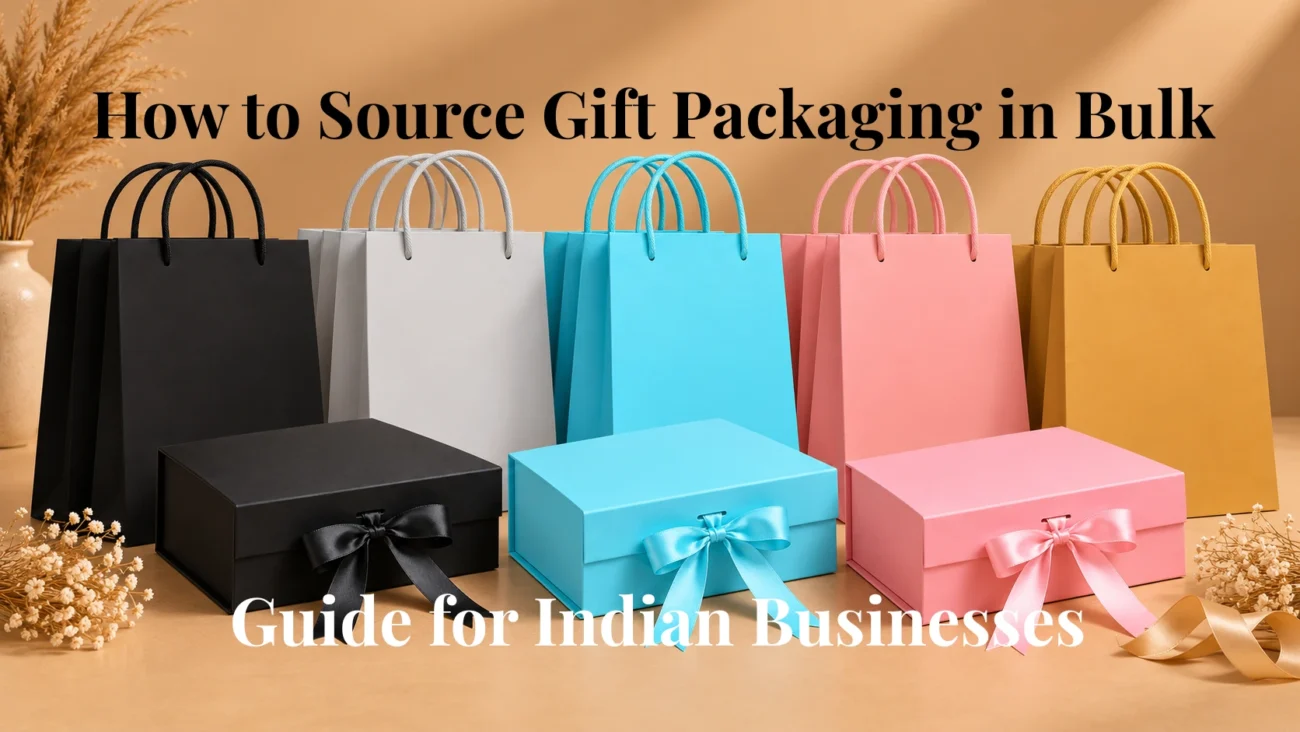
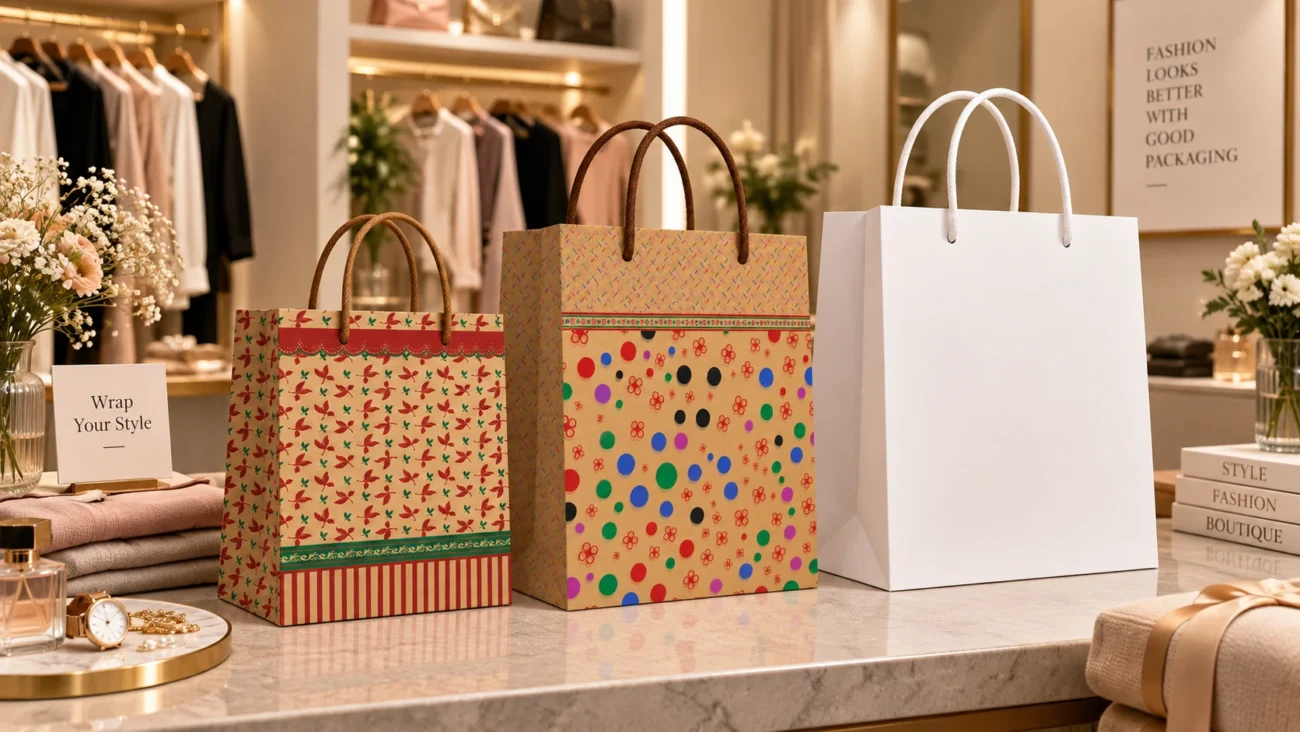
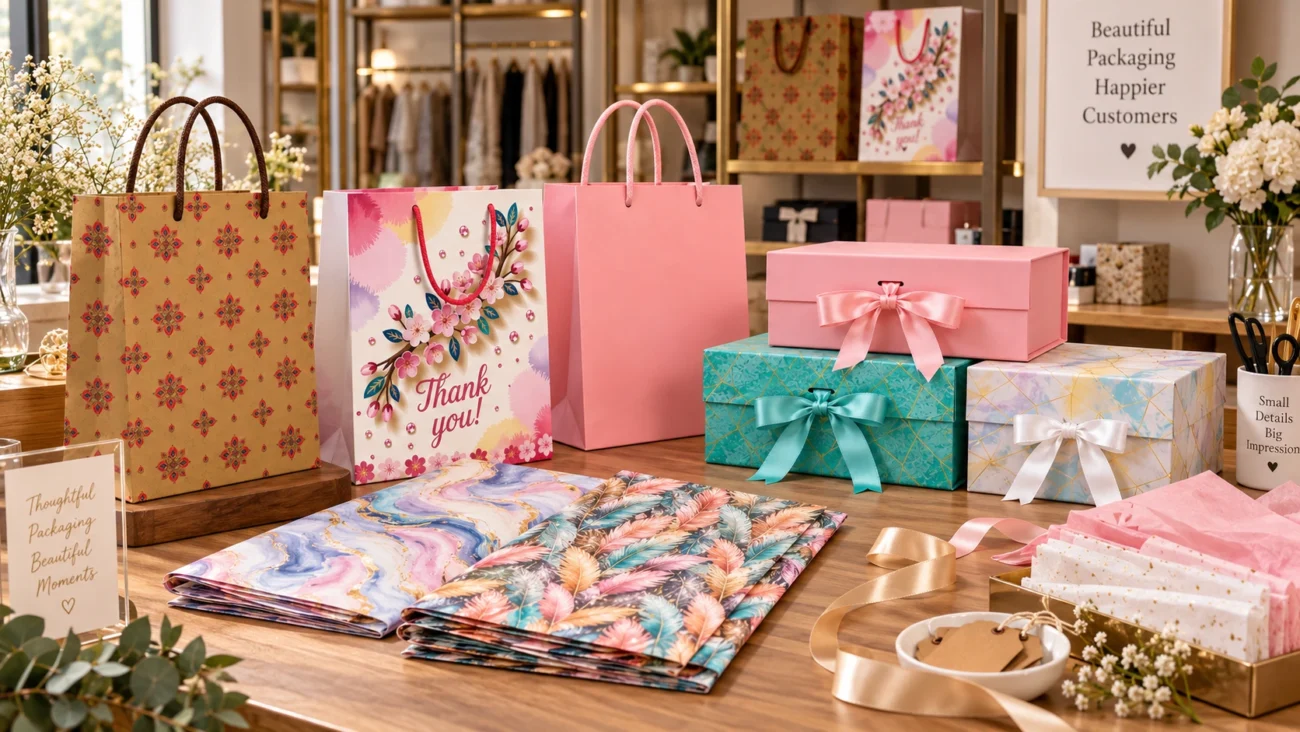
- Solid color paper bags offer a clean, versatile option that can work across different boutique styles without competing with the product inside.
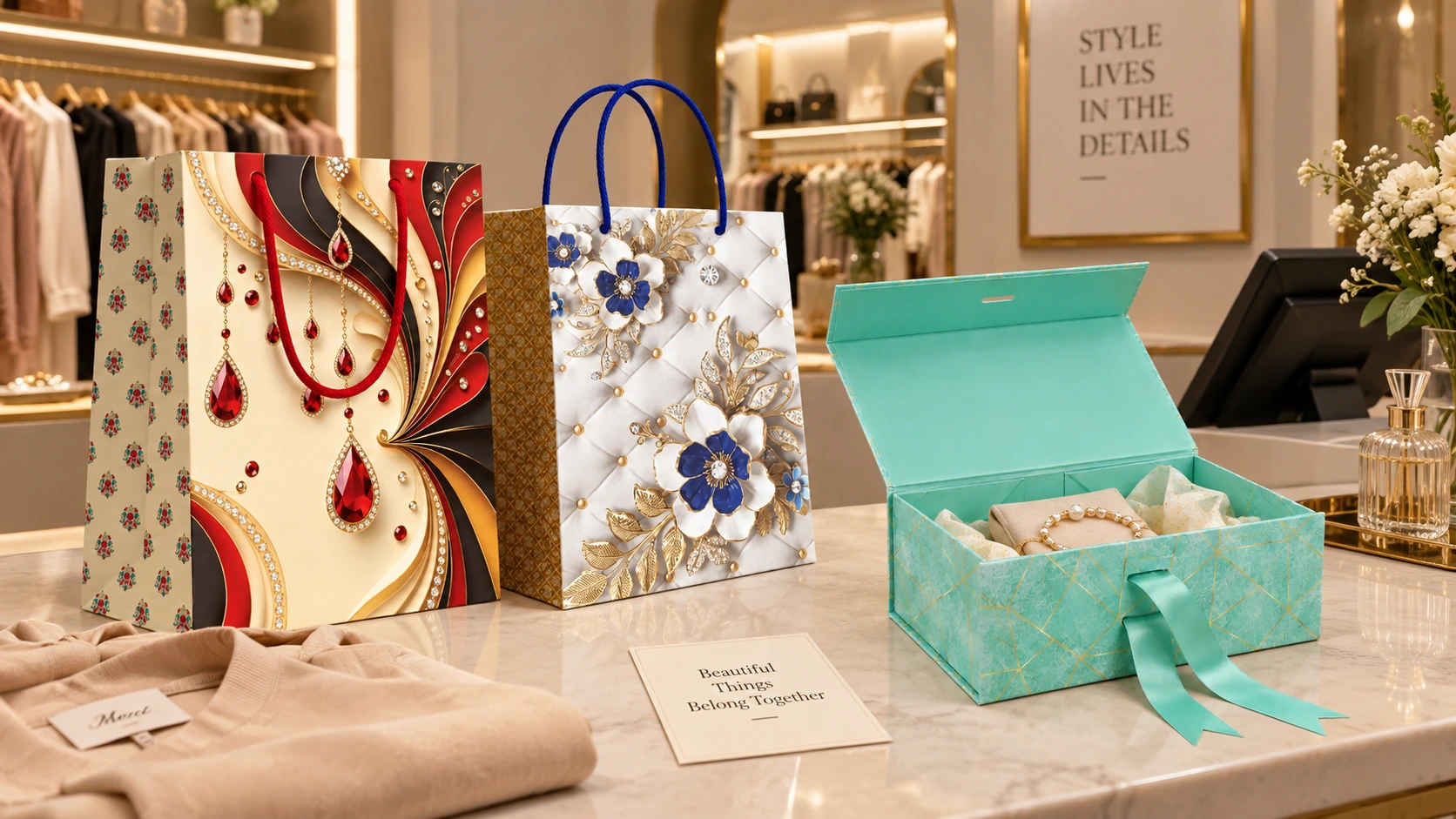
- Decorative paper bags can introduce patterns, colors, and seasonal variation without requiring additional wrapping.
- Rope handles provide a practical carrying option for garments and accessories, provided the handle attachment and overall bag construction are suitable for the intended load.
- Consistency matters as much as style — using a coordinated selection of bags can make the packaging experience more recognizable than constantly changing between unrelated designs.
A boutique doesn’t need a huge bag range to get this right. One or two well-chosen styles, supported by a sensible range of sizes, can be more practical than a much wider selection that is difficult to manage.
For boutiques deciding which formats to stock, understanding the [different types of paper gift bags and their uses] can help when matching bag styles to products, occasions, and presentation requirements.
Gift Boxes: For Higher-Consideration Purchases
Gift boxes can be useful for boutiques selling accessories, jewellery-adjacent items, or products where a bag alone doesn’t provide the type of presentation the customer wants.
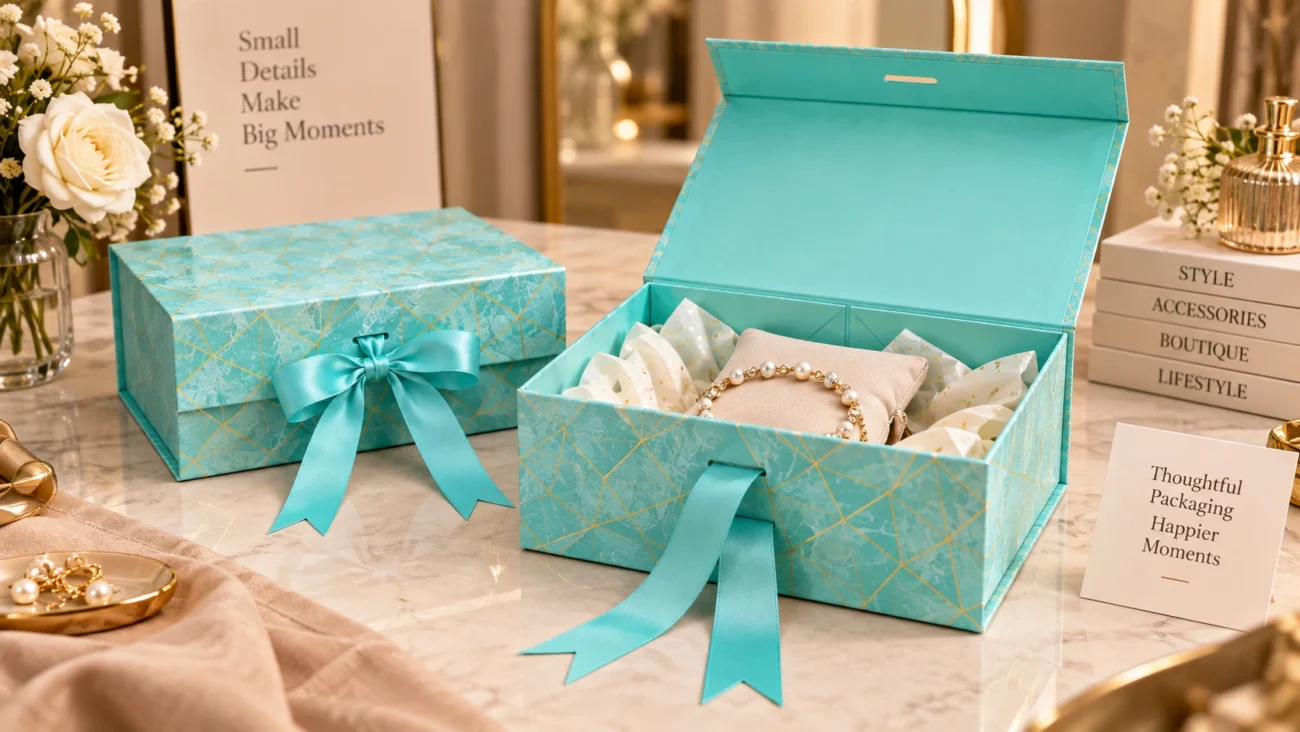
- Foldable magnetic lid boxes can suit smaller accessory items and provide a structured format that is different from a conventional carry bag.
- Different box sizes and shapes can accommodate products that need to remain contained and neatly arranged.
- Boxes can be used selectively, particularly for gifting or products that benefit from a more structured presentation, rather than replacing bags for every purchase.
Most boutiques don’t need to box every single item. Using boxes where they genuinely serve a purpose keeps the packaging system practical while still giving customers another presentation option when it is appropriate.n’t need to box every single item — using boxes selectively, where they genuinely add value, keeps costs sensible while still giving customers a stronger presentation option when it matters.
Wrapping and Finishing Accessories: Where the Details Live
Wrapping and finishing accessories — tissue paper, ribbon, and tags — are often what separates a straightforward retail transaction from a more complete boutique presentation.
- Tissue paper lining a bag or box adds color and a layer between the product and packaging. It can also help fill small gaps and keep items arranged neatly.
- Ribbon can bring the different packaging elements together visually, especially when its color complements the bag, box, or wrapping paper.
- Tags provide a simple place for a handwritten note, care information, or a basic thank-you message.
- Consistency matters more than complexity. A simple combination of tissue and ribbon, used consistently, can create a more recognizable presentation than several finishing elements applied differently from one purchase to another.
These accessories also give boutiques flexibility. The same paper bag can be presented differently depending on whether the purchase is an everyday transaction, a gift, or a seasonal purchase.

Distinctive, Ready-Made Packaging: Getting a Look Without a Special Order
Every boutique wants its packaging to feel distinctive rather than generic, but that doesn’t necessarily require packaging sourced specifically for one store. A strong ready-made packaging range can provide enough variety for many boutique requirements.
- A broad decorative range provides visual variety while keeping sourcing relatively straightforward.
- Solid colors combined with consistent finishing — such as a particular ribbon or tissue color — can help create a recognizable packaging combination.
- Consistency in how ready-made elements are used can be more effective than constantly changing packaging. Repeating the same bag, color combination, or finishing approach helps customers associate those elements with the boutique.
For smaller or newer boutiques, a ready-made range can also make purchasing easier. Instead of managing different packaging requirements individually, the store can establish a small selection of bags, boxes, and supporting materials and reorder the options that work best.
The focus should be on finding ready-made packaging that fits the boutique’s products and presentation, rather than creating unnecessary complexity in the sourcing process.
Boutique-Level Presentation: The Small Things That Add Up
Boutique-level presentation isn’t really about any single expensive element. It is the result of several small, consistent choices that work together.
- Matching packaging colors with the store’s overall visual direction, even loosely, can connect the in-store experience with what customers take home.
- A clean, uncluttered presentation generally works better than combining too many colors, patterns, or accessories at once.
- Small consistent details — such as the same tissue arrangement, ribbon style, or tag placement — can create a more organized packaging routine.
- Suitable packaging sizes also matter. An oversized bag or box can make the presentation feel less practical, while packaging that fits the product appropriately is easier to handle and store.
None of this requires a large packaging range. It requires deciding on a practical set of choices and applying them consistently from order to order.
Sustainable Packaging: Increasingly Part of the Boutique Experience
Packaging materials are increasingly part of how businesses think about their overall customer experience. For boutiques, this can include consideration of the material used, how much packaging is required, whether it can be reused, and how it may be disposed of after use.
- Paper-based bags and boxes can be suitable for many boutique applications, but recyclability depends on the specific construction, coatings or mixed materials, and the recycling facilities available locally.
- Kraft paper packaging can provide a natural-looking material option, although its environmental impact should not be judged by appearance alone.
- Reusable packaging can extend the useful life of a bag or box when it is sufficiently durable and customers choose to use it again.
- Using an appropriate amount of packaging is also important. More material does not automatically mean better packaging.
The aim should be to select packaging based on the product, required durability, material use, reuse potential, and realistic end-of-life options rather than relying on broad sustainability claims.
For a more detailed look at these considerations, you can link naturally to eco-friendly paper packaging and what businesses should know.
Wholesale and Bulk Supply: Keeping the System Manageable
Once a boutique settles on its packaging choices, wholesale and bulk supply can help keep that system running smoothly rather than turning packaging into a recurring purchasing task.
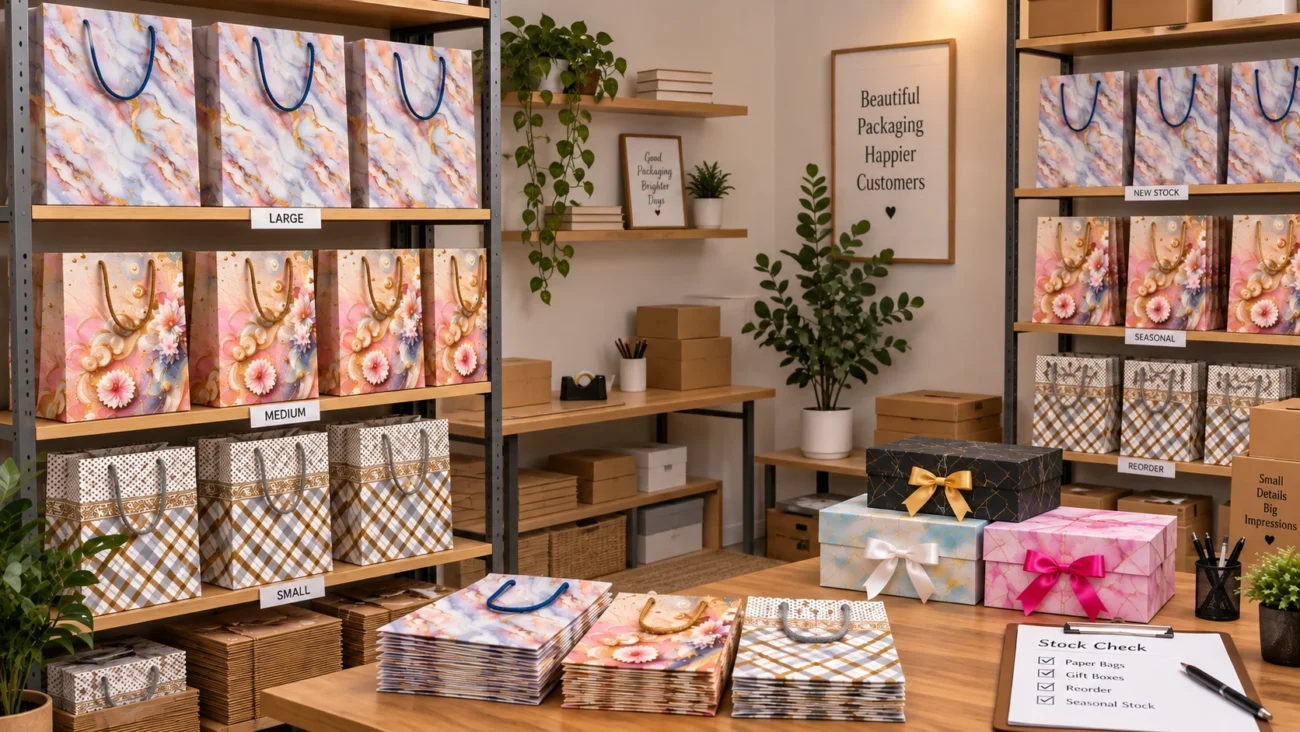
- Buying in bulk can reduce the cost per unit compared with frequent smaller purchases, depending on order quantities and supplier terms.
- Planning around predictable demand periods — such as festive seasons, sale periods, and gifting occasions — helps reduce the risk of running short when packaging requirements increase.
- Storage matters, particularly for smaller boutiques. Foldable box options can help make better use of limited backroom or storage space.
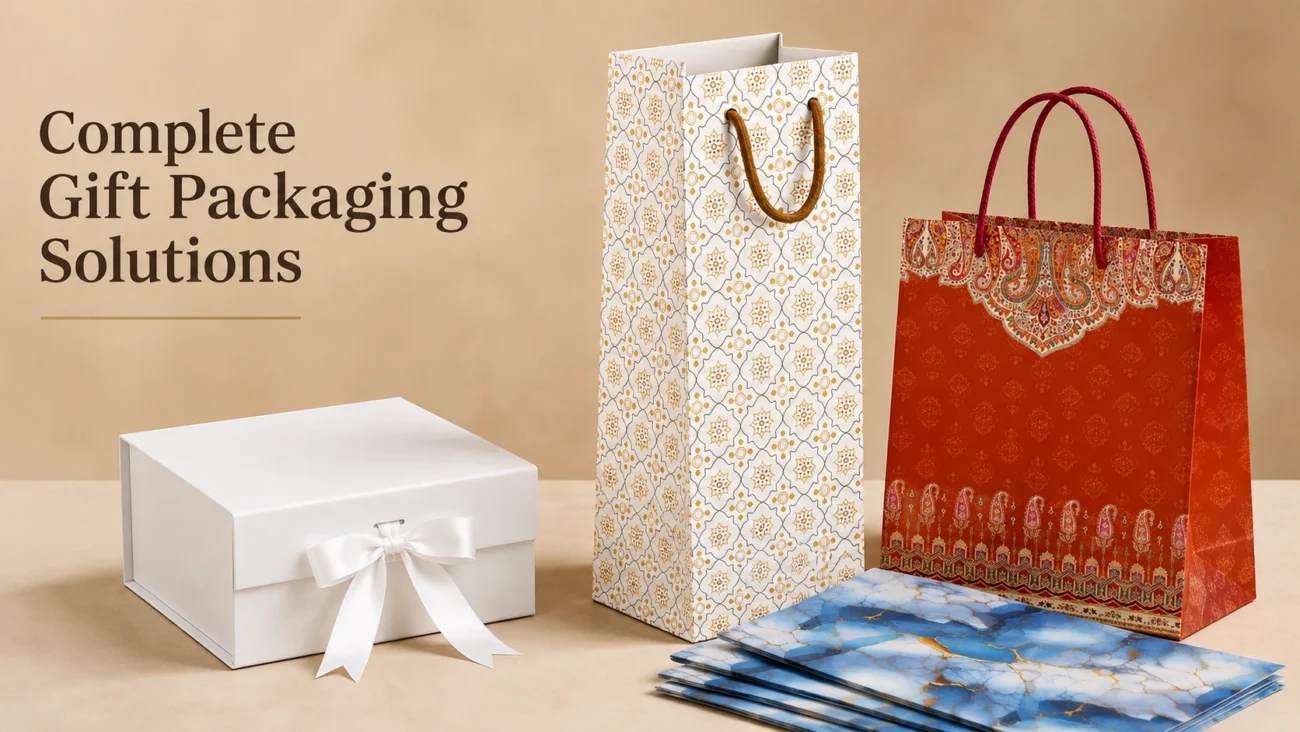
- Sourcing bags, boxes, and related packaging from one supplier can simplify ordering and communication while helping maintain consistency across the packaging range.
However, buying in bulk should still be based on actual requirements. Ordering more packaging than a boutique can reasonably store or use can tie up working capital and create unnecessary inventory.
A practical approach is to identify the packaging formats and sizes that move most frequently, estimate average usage, and then set reorder quantities around those patterns.
For a more detailed approach to evaluating larger packaging purchases, you can internally link to choosing packaging for bulk orders and the factors that actually matter.
Choosing a Packaging Manufacturer or Supplier in India
For boutiques sourcing packaging locally, the right packaging manufacturer or supplier in India can make a real difference to how smoothly packaging is managed month to month.
Price is only one part of the decision. A supplier should also be evaluated on product consistency, available packaging formats, lead times, communication, and the ability to meet repeat requirements.
When comparing suppliers, consider:
- Look at the Product Range: A supplier covering multiple relevant packaging types can simplify purchasing. For boutiques, this may include paper bags, gift boxes, and wrapping materials.
- Check the Ready-Made Range: Ask what ready-made sizes, colors, patterns, and formats are regularly available. A suitable existing range can make repeat ordering much easier.
- Confirm Lead Times: Understand the expected time between placing an order and receiving the packaging. This becomes particularly important before festive seasons and periods of increased retail demand.
- Evaluate Product Consistency: For repeat orders, consistency in dimensions, construction, printing, handles, and finishing can be just as important as the initial sample.
- Request a Sample Before a Larger Order: Whenever possible, evaluate an actual sample before committing to larger quantities. Check the bag’s dimensions and handle attachment, or examine the box construction and folding mechanism, depending on the product.
- Consider Reordering: A supplier relationship becomes more useful when the packaging that works for the boutique can be sourced again without unnecessary changes or complications.
The practical question is not simply “Who sells packaging?” but “Who can consistently supply the packaging formats my boutique actually uses?”
Bringing It All Together
None of this needs to happen overnight. Most boutiques build their packaging approach gradually — a suitable paper bag choice first, a small box range added as the product mix calls for it, and finishing touches introduced as the overall presentation develops.
What tends to separate a boutique whose packaging feels distinctive from one whose packaging feels generic isn’t simply having more packaging. It is consistency applied deliberately, order after order.
A practical boutique packaging system might include a few dependable paper bag sizes, selected gift boxes, a manageable range of wrapping paper, and supporting materials such as tissue and ribbon. As sales patterns become clearer, the boutique can adjust the range according to actual demand.
GiftNGreet, a paper packaging manufacturer based in New Delhi, supplies Kraft Paper Carry Bags, Decorative Paper Carry Bags, Solid Color Paper Carry Bags, Foldable Magnetic Lid Boxes, and Wrapping Paper as part of its ready-made packaging range for businesses.
For boutiques looking for paper gift bags for retail and boutique packaging requirements, the relevant product range can be explored through the paper gift bags category.
Explore GiftNGreet Packaging
Frequently Asked Questions
Most boutiques need a practical range of paper bags, a limited selection of gift boxes for suitable products, and finishing accessories such as tissue paper and ribbon. The exact mix depends on the products sold, average order size, and gifting requirements.
Not necessarily. Paper bags are generally more practical for everyday purchases, while boxes can be reserved for products or occasions where a more structured presentation is appropriate. Using both formats selectively can keep the packaging system practical.
A suitable ready-made packaging range, combined with consistent finishing details such as tissue, ribbon, and tags, can create a recognizable look. Using the same combinations repeatedly can also make the packaging more consistent from one purchase to another.
Packaging materials can influence how customers perceive a business, but sustainability should be considered practically. Factors such as material use, durability, reuse, construction, and local recycling facilities are more useful indicators than simply choosing a product described as sustainable.
Start with a few consistent details. Coordinating the paper bag or box with tissue paper, ribbon, or tags can improve the overall presentation without requiring a large number of packaging components.
Usually less than many boutiques initially assume. A small selection of suitable bag sizes, a few box formats, and a manageable range of wrapping materials can cover most requirements. The range can then be expanded according to actual customer demand.
Look for a supplier with suitable packaging formats, a reliable ready-made range, clear lead times, consistent product specifications, and the ability to provide samples for evaluation before larger purchases.
Yes. Foldable boxes can be stored in a more compact form before assembly than fully assembled boxes, which can be useful when storage space is limited. The actual space saving depends on the box construction and how it is supplied.
Yes. Packaging is one of the few parts of the shopping experience that customers physically carry away from the store. Appropriate sizing, consistent presentation, and suitable materials can therefore contribute to how the overall purchase experience is remembered.
Related Reading
- Packaging Solutions for Gift Shops
- Guide to Paper Gift Bags for Retail Businesses
- Why Consistent Packaging Helps Brand Presentation
- How Retail Stores Benefit from Organized Gift Packaging
Manufactured in New Delhi
Packaging Designed For Every Occasion
Explore GiftNGreet’s collection of gift boxes, paper gift bags, wrapping paper, and packaging solutions suitable for gifting, retail businesses, celebrations, and everyday presentation.
Looking for packaging solutions? Visit our Contact Us page for retail and bulk enquiries.